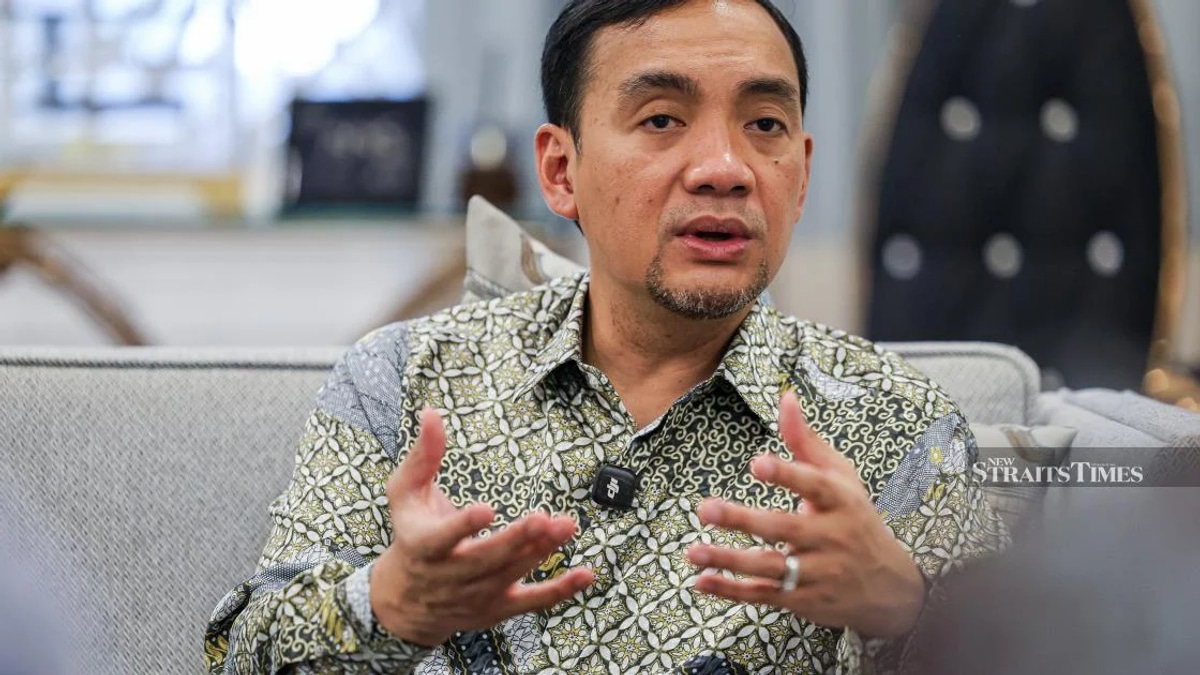
Machang member of parliament Wan Ahmad Fayhsal Wan Ahmad Kamal has issued a stark warning about the deteriorating health of Bersatu, asserting that the party stands on the precipice of institutional collapse. His claims directly implicate party president Tan Sri Muhyiddin Yassin, accusing the long-time political figure of failing to manage the mounting internal tensions that have plagued the party through rational and decisive leadership approaches.
The warning from Wan Ahmad Fayhsal carries particular weight given his position within the parliamentary delegation and his visibility in national politics. His decision to publicly articulate these concerns suggests that underlying grievances within Bersatu have reached a critical threshold, with senior party figures now willing to voice their frustrations openly rather than containing disputes within internal mechanisms. This shift towards public criticism indicates a breakdown in party discipline and cohesion that typically precedes broader institutional crises.
Bersatu, established in 2016 by Muhyiddin and other former UMNO dissidents, has long positioned itself as a significant player within Malaysia's Malay-Muslim political space. However, the party's recent trajectory has been marked by successive electoral disappointments and internal schisms. The 2022 general election proved particularly damaging, and subsequent years have seen party membership fluctuate as senior figures reassess their political commitments and future prospects within the organization.
Muhyiddin's stewardship of Bersatu has come under increasing scrutiny in recent months. Originally credited with strategic acumen in coalition-building, particularly through his construction of the Perikatan Nasional alliance, his management of internal party affairs has drawn criticism from multiple quarters. Observers argue that his approach to resolving disputes has often lacked transparency and consistency, creating perception of favoritism and arbitrary decision-making that has eroded confidence among the broader membership base.
The timing of Wan Ahmad Fayhsal's intervention is significant within the broader context of Malaysian politics. Bersatu's instability directly threatens the viability of Perikatan Nasional itself, the coalition that currently functions as the primary opposition force challenging the Anwar Ibrahim-led government. Should Bersatu implode, the entire opposition framework would require fundamental restructuring, potentially disadvantaging smaller parties and shifting the balance of peninsular politics substantially.
Internal conflicts within Bersatu have manifested across multiple dimensions. Disagreements over party direction, strategy towards other political actors, and resource allocation have created factional tensions. The absence of clearly defined dispute resolution mechanisms has meant that conflicts often fester, gradually poisoning the organizational atmosphere and prompting senior members to contemplate their future participation. Some analysts suggest that Muhyiddin's previous successes in national politics may have instilled a leadership style that struggles to adapt to the demands of managing a multi-faceted party organization during periods of relative weakness.
The Malaysian political landscape has historically demonstrated that perceived weakness within major parties tends to accelerate membership departures. Politicians operating within a party perceived as declining or unstable face pressure from within their constituencies and from party rivals to reassess their political homes. This dynamic, if triggered in Bersatu, could create a self-reinforcing spiral of declining viability that becomes increasingly difficult to reverse through organizational measures alone.
For Malaysian political observers, Bersatu's potential destabilization carries broader implications beyond the party's immediate interests. The country's political system has gradually shifted towards a multi-coalition architecture, and the health of secondary coalitions like Perikatan Nasional influences the overall competitive dynamism of the system. A collapse of Bersatu would not simply represent an internal party matter but would constitute a significant reconfiguration of Malaysia's political landscape at the national level.
Wan Ahmad Fayhsal's public criticism also reflects frustration among parliamentary-level members who maintain direct engagement with constituents. These politicians bear the daily consequences of party instability through their interactions with voters and local stakeholders. When such members begin voicing concerns publicly, it signals that internal party mechanisms have failed to adequately address grievances, and that leadership has lost the confidence necessary to manage dissent through conventional channels. This breakdown in internal governance structures typically presages more significant upheavals within political organizations.
The specificity of Wan Ahmad Fayhsal's allegations regarding Muhyiddin's rational management capacities suggests deeper substantive disagreements beyond mere personality conflicts. His framing of the issue centres on governance and decision-making quality rather than simply interpersonal tensions, which carries greater resonance with politically sophisticated audiences and party members concerned about institutional trajectories. This rhetorical approach lends credibility to his warnings and distinguishes them from routine partisan complaints.
Moving forward, Bersatu faces a critical juncture. The party requires either a significant organizational reset with renewed commitment to transparent governance structures or substantial leadership transitions that restore confidence among members and stakeholders. Muhyiddin's response to these public criticisms will substantially shape whether the party can stabilize or whether Wan Ahmad Fayhsal's warnings prove prescient. The broader Malaysian political community, particularly within opposition circles, will be monitoring these developments closely as they navigate their own strategic calculations regarding coalition structures and political alliances.