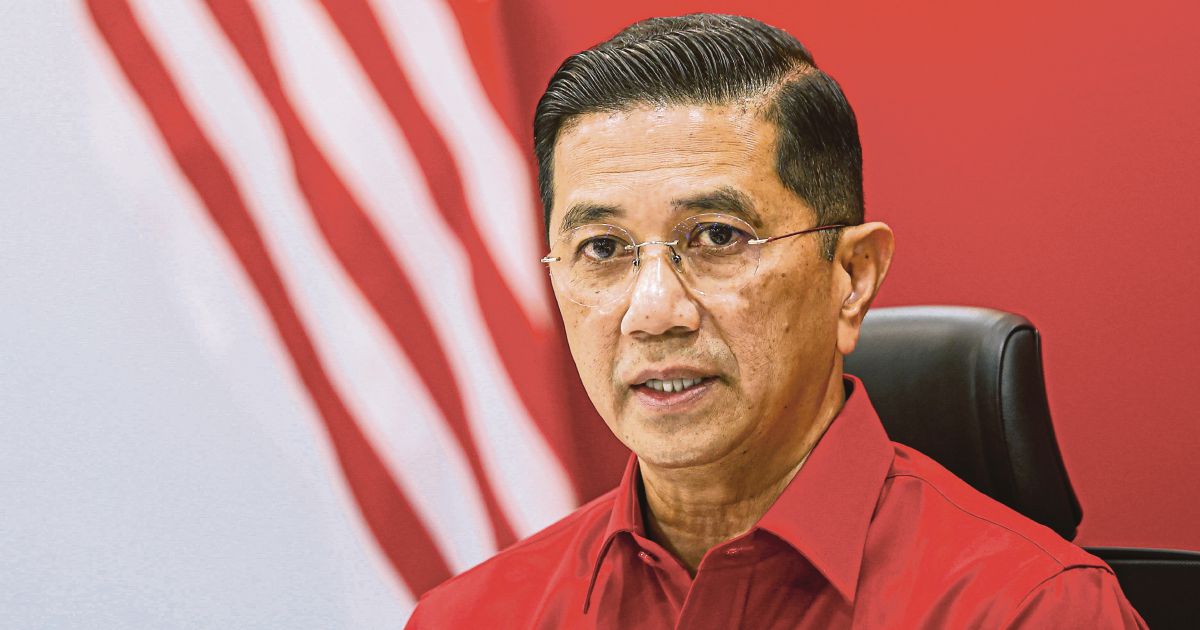
Bersatu has firmly disputed PAS president Tan Sri Abdul Hadi Awang's claim that the party has automatically withdrawn from Perikatan Nasional (PN), reigniting tensions within Malaysia's fractious opposition coalition landscape. The disagreement surfaced after Tan Sri Muhyiddin Yassin announced that Bersatu would pursue the formation of a new political alliance, prompting the PAS leader to suggest that this move had ipso facto terminated Bersatu's membership in PN.
The row reflects the deepening instability within PN, the coalition that emerged as a significant political force following the 2022 general election. Since then, the three-component alliance comprising Bersatu, PAS, and Perikatan Keadilan Rakyat (PKR's splinter faction initially), has faced persistent internal discord over leadership, strategy, and political direction. Bersatu's assertion that its membership remains active contradicts Hadi's interpretation and suggests fundamentally different understandings of constitutional procedures governing coalition membership and withdrawal.
The constitutional question at the heart of this dispute carries substantial weight in Malaysian politics. Unlike political parties themselves, which have formal constitutional recognition and clear procedural requirements for membership changes, coalitions operate through voluntary agreements and mutual understanding among their constituent parties. This ambiguity has created space for conflicting interpretations about what actions constitute formal withdrawal and whether membership can lapse automatically or requires explicit notification and procedural steps.
Muhyiddin's move to explore alternative coalitions has destabilised the PN structure that once provided a coherent opposition voice. When PN initially formed, it represented a consolidation of disparate anti-establishment forces, offering a counterweight to the Pakatan Harapan government that preceded it. However, the coalition never achieved the organisational cohesion and ideological alignment necessary for sustained unity, particularly given the fundamental differences between PAS's Islamist orientation and Bersatu's more flexible ideological positioning.
For Malaysian observers, this internal collapse carries significant implications for national politics. A fragmented opposition provides the ruling coalition considerable breathing room to consolidate power without facing organised, unified challenge. The emergence of multiple competing coalitions, each claiming legitimacy and seeking to attract smaller parties and independent members, creates a dispersed political landscape that may ultimately benefit established incumbent parties regardless of election results.
The timing of this dispute also matters considerably. With no immediate national election scheduled, the coalition's internal rupture develops without the unifying pressure that electoral deadlines typically impose. Political parties often suppress internal grievances when facing imminent electoral contests, but absent such pressure, accumulated frustrations and competing ambitions surface more readily. This pattern has played out repeatedly in Malaysian coalition politics over recent decades.
Bersatu's resistance to Hadi's narrative also reflects calculations about the party's political viability and future trajectory. As the smallest and most recently established among PN's components, Bersatu risks marginalisation within any coalition structure dominated by PAS's superior numerical strength and grass-roots organisation. Exploring alternative alignments offers Bersatu leverage to negotiate more favourable terms within any reconstituted coalition, or potentially to position itself as kingmaker in future political realignments.
PAS, conversely, has moved to frame Bersatu's actions as abandonment rather than strategic repositioning, an important distinction in Malaysian political discourse. By characterising Bersatu's move as withdrawal rather than negotiation, PAS seeks to delegitimise Bersatu's claims to coalition membership while simultaneously strengthening PAS's own position as the senior partner maintaining continuity. This narrative battle shapes how other parties and voters interpret the coalition's collapse.
The broader context of Malaysian politics suggests that such coalition breakdowns have become increasingly common, reflecting the volatility of post-2018 political realignment. The 2022 election marked a watershed moment that shattered previously stable political structures, and the resulting uncertainty has created constant incentives for repositioning and realignment. Few actors believe the current political arrangement will prove durable, which reduces their willingness to make long-term commitments to existing coalitions.
For regional observers, Malaysia's coalition instability holds lessons about the fragility of electoral arrangements built on temporary convenience rather than shared vision. Unlike some Southeast Asian neighbours with more institutionalised party systems, Malaysia's fluid coalition politics creates persistent uncertainty that can hinder policy implementation and long-term planning. Investors, international partners, and development institutions struggle to assess Malaysia's political trajectory when core coalitions lack stability.
The resolution of Bersatu and PAS's membership dispute remains unclear, with both parties maintaining their competing positions. Whether formal mechanisms exist to settle such questions definitively within PN's framework remains ambiguous, suggesting that resolution may ultimately depend on the personal relationships among top leaders and their willingness to negotiate compromise rather than formal constitutional procedures.

