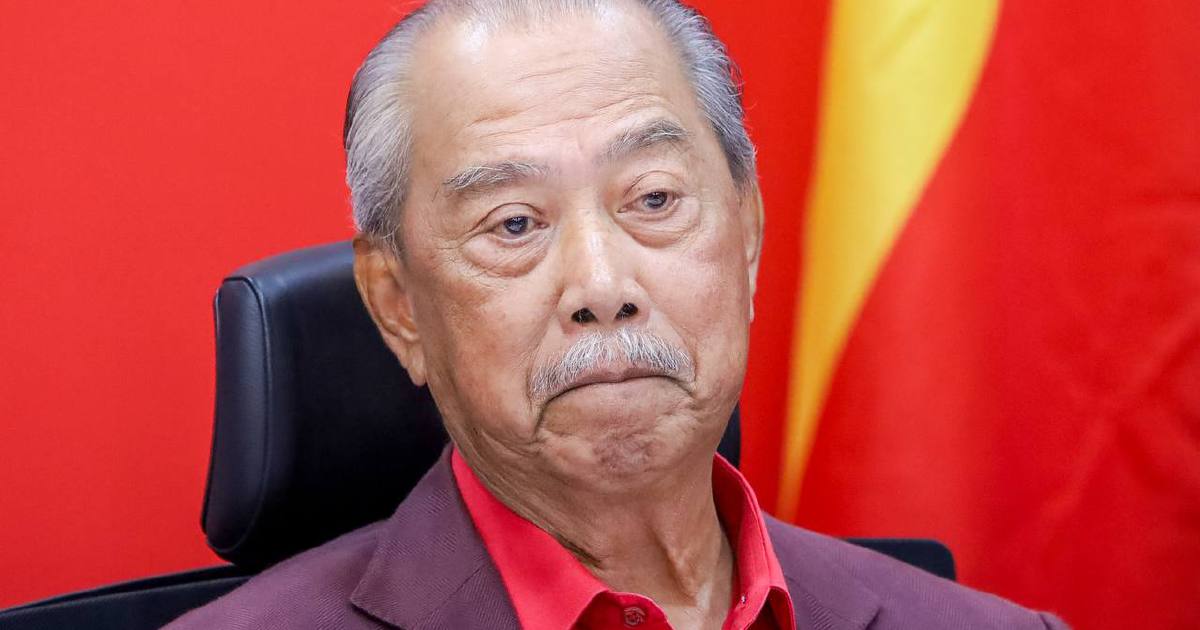
Parti Pribumi Bersatu Malaysia has reaffirmed its commitment to the Perikatan Nasional alliance, signalling stability within Malaysia's opposition coalition at a time when political uncertainties persist across the country. Party president Tan Sri Muhyiddin Yassin declared that his formation will maintain its membership within PN while preparing for electoral contests in Johor and Negri Sembilan, where the coalition aims to project a unified front to voters through the shared PN logo.
The declaration carries weight in the context of Malaysia's fractured political landscape, where coalition loyalties have proven notoriously fragile. Since Bersatu's founding in 2016 as an offshoot from UMNO, the party has navigated multiple political realignments, including a brief spell leading the government from 2020 to 2021. Its continued presence within PN strengthens the coalition's organisational depth and provides additional resources for contesting seats across the peninsula.
Perikatan Nasional itself comprises several partners, most notably PAS, the Islamist party that has emerged as the PN's strongest component in recent electoral cycles. The coalition has been attempting to build a cohesive alternative to the ruling Pakatan Harapan coalition, though internal dynamics remain complex. By securing Bersatu's explicit commitment to use the PN logo in upcoming contests, the alliance demonstrates sufficient internal consensus on electoral strategy, at least for these two significant states.
Johor represents particularly fertile political ground for the coalition. The state has traditionally been a UMNO stronghold, though Pakatan Harapan achieved notable electoral gains there in 2023 when voters showed receptivity to opposition messaging. For Perikatan Nasional, leveraging its combined strength across PN components could yield competitive outcomes in a state where no single opposition force has yet achieved dominant positioning.
Negeri Sembilan presents a different dynamics profile. The state has been less thoroughly contested by PN in recent cycles, offering potential for growth if the coalition can effectively mobilise its supporters and coordinate messaging across party lines. The decision to contest under unified PN branding rather than component party logos suggests confidence in the coalition's electoral brand and an assessment that PN's combined identity resonates with voters in both states.
Muhyiddin's announcement arrives amid broader Malaysian political conversations about coalition stability and electoral readiness. The opposition has faced ongoing scrutiny regarding its capacity to mount coordinated challenges to the government's supermajority. By publicly anchoring Bersatu within PN and committing to shared electoral symbols, the party president provides reassurance to coalition partners and supporters about continuity of arrangements that have been under intermittent strain.
The timing of this commitment also reflects calculations about electoral momentum. Malaysia's electoral cycle remains fluid, with several state elections potentially forthcoming depending on dissolution decisions by sitting state governments. Perikatan Nasional's preparation for contests in Johor and Negri Sembilan indicates the coalition expects electoral activity in these states within a definable timeframe, whether through regular expiry of state assembly terms or earlier dissolutions.
For Bersatu specifically, maintaining PN membership while accessing the coalition's electoral machinery provides strategic advantages. The party operates from a relatively smaller base than some coalition partners, but benefits substantially from PN's greater organisational footprint and established grassroots networks. In states like Johor, where electoral contests have proven competitive, such coalition advantages could prove decisive in marginal constituencies.
The coalition's reliance on shared symbols rather than component party identity also signals evolving opposition strategy. Rather than emphasising party differences, PN increasingly presents itself as a unified entity to voters, potentially reducing fragmentation concerns that plague Malaysian opposition politics. This approach mirrors successful coalition models internationally, where voters increasingly back team brands rather than individual party labels.
However, the arrangement does not eliminate underlying tensions within Perikatan Nasional. Policy disagreements and resource competition between components persist, and electoral coordination across different constituencies and states requires constant negotiation. Bersatu's assurance of loyalty should therefore be understood as reflecting current conditions rather than foreclosing future disputes.
For Malaysian voters and political observers, Bersatu's declaration underscores that opposition politics continues organising around coalition frameworks. The federal political structure, combined with Malaysia's geographic and demographic diversity, incentivises alliances that enable opposition forces to aggregate votes across different constituencies and states. Perikatan Nasional's attempt to present a unified front in Johor and Negri Sembilan contests follows this fundamental logic.
Looking forward, the electoral performance in these two states will carry implications beyond their immediate political boundaries. Strong showings could fortify PN's positioning ahead of future national electoral contests, while disappointing results might reignite internal coalition tensions. For now, however, Muhyiddin's commitment represents sufficient consensus for coordinated electoral preparation and deployment of shared branding that should enhance the coalition's visibility and perceived viability among voters.