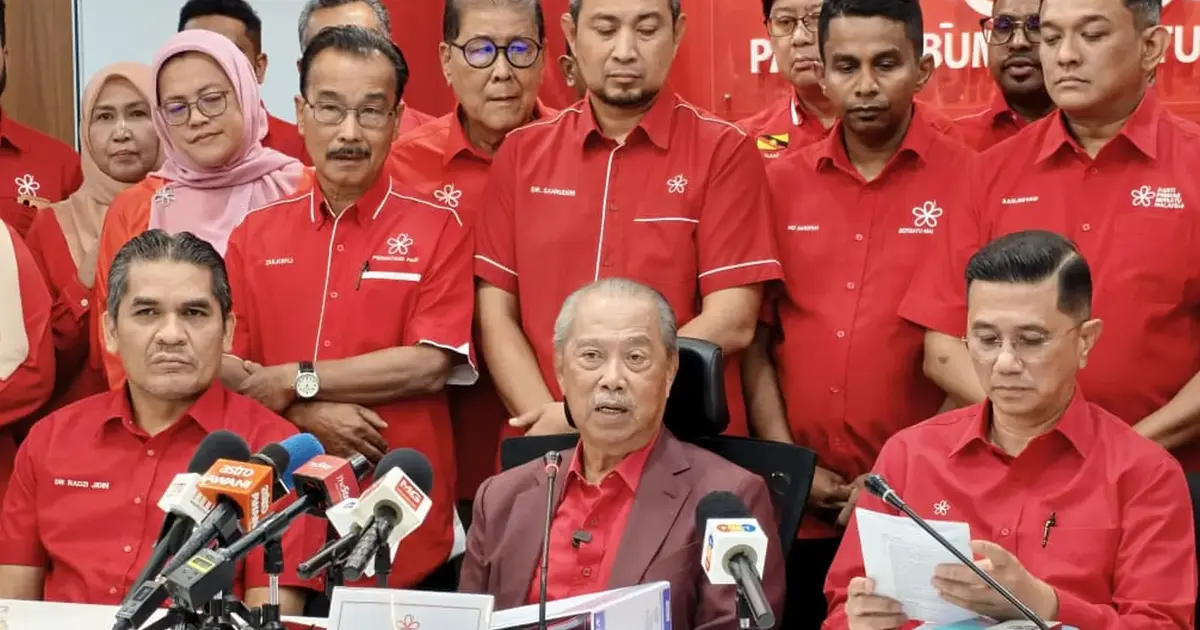
Bersatu has reaffirmed its commitment to the Perikatan Nasional coalition, with party president Muhyiddin Yassin publicly confirming that the organisation will continue its membership within the broader alliance. The declaration comes as Malaysia's fractious political landscape continues to evolve, with multiple coalitions vying for influence and positioning themselves ahead of potential electoral contests.
Muhyiddin's statement underscores a deliberate strategy of signalling stability within PN at a time when coalition partnerships across the country remain under considerable scrutiny. The Bersatu president grounded his party's decision in what he characterised as grassroots acceptance of the coalition model, suggesting that public sentiment has validated the partnership arrangement. This framing transforms what might otherwise appear as a tactical political manoeuvre into a reflection of wider democratic preferences, at least as interpreted by party leadership.
The significance of Bersatu's continued participation in PN extends beyond simple alliance mathematics. Bersatu emerged from the fractious 2020 political upheaval when Muhyiddin led a government formation that fundamentally reshaped Malaysian politics, drawing support from Umno, PAS, and smaller parties. Although that administration eventually collapsed, Bersatu's presence within any coalition carries symbolic weight related to that contested period and the subsequent realignments that followed.
For the Perikatan Nasional coalition itself, securing Bersatu's commitment represents a genuine consolidation effort. PN has positioned itself as an alternative to Pakatan Harapan, Malaysia's principal opposition grouping, offering voters a distinct political choice. The coalition's ability to maintain internal cohesion while managing divergent interests among its constituent parties—particularly the relationship between Bersatu and PAS, which command differing ideological orientations—remains an ongoing challenge that affects its electoral viability.
The emphasis on public acceptance carries particular weight in Malaysia's current political environment. Coalitions that fracture or appear unstable tend to suffer electorally, as voters grow increasingly wary of partnerships perceived as purely transactional or fragile. By explicitly connecting Bersatu's continued participation to demonstrated public backing, Muhyiddin attempts to project an image of a coalition anchored in genuine support rather than mere political convenience. This messaging strategy proves especially important for Bersatu itself, which has faced criticism from detractors who view it as opportunistic.
Bersatu's trajectory since its formation has been marked by considerable volatility. The party was established by Muhyiddin and defectors from Umno, initially positioning itself as a reformist alternative within Malay-Muslim politics. Yet its rapid entry into government and equally swift exit created perceptions of instability that the party continues to counter. Remaining within PN allows Bersatu to maintain relevance and ministerial positions while working toward rehabilitation of its public image through institutional participation and policy delivery.
The broader PN coalition encompasses PAS, which has strengthened considerably in recent years, particularly following its significant parliamentary gains. The dynamic between Bersatu and PAS within the coalition framework merits close attention, as the Islamist party's growing influence could reshape coalition priorities and policy directions. Muhyiddin's confirmation of Bersatu's commitment suggests confidence in managing this relationship, though such partnerships invariably involve ongoing negotiation around ideological differences and resource distribution.
From a Malaysian political economy perspective, coalition stability carries implications for governance continuity. Investors and international observers monitor political arrangements closely, as frequent government collapses and coalition upheaval create uncertainty that affects economic decision-making. PN's commitment to maintaining structural integrity, even as individual parties navigate internal challenges, contributes to a degree of predictability in the political marketplace that stakeholders value.
Regionally, Bersatu's stance within PN also reflects broader patterns of coalition politics across Southeast Asia. Malaysia's experience with multiparty coalitions, both their successes and failures, offers instructive lessons about sustaining political partnerships amid competing interests. The region's observers increasingly recognise that coalition management skills prove as important as individual party strength in determining electoral outcomes and governance effectiveness.
Looking forward, Muhyiddin's emphasis on public acceptance as the foundation for Bersatu's continued PN participation suggests the party leadership views electoral validation as crucial to the coalition's legitimacy. This framing implies that future electoral performance will serve as a key test of whether the stated public backing genuinely exists or whether Bersatu's interpretation of grassroots sentiment requires recalibration based on actual voting patterns. For Malaysian voters and observers tracking coalition dynamics, this commitment signals PN's intention to contest future elections as an intact unit, barring unforeseen political developments that might precipitate renewed realignments.