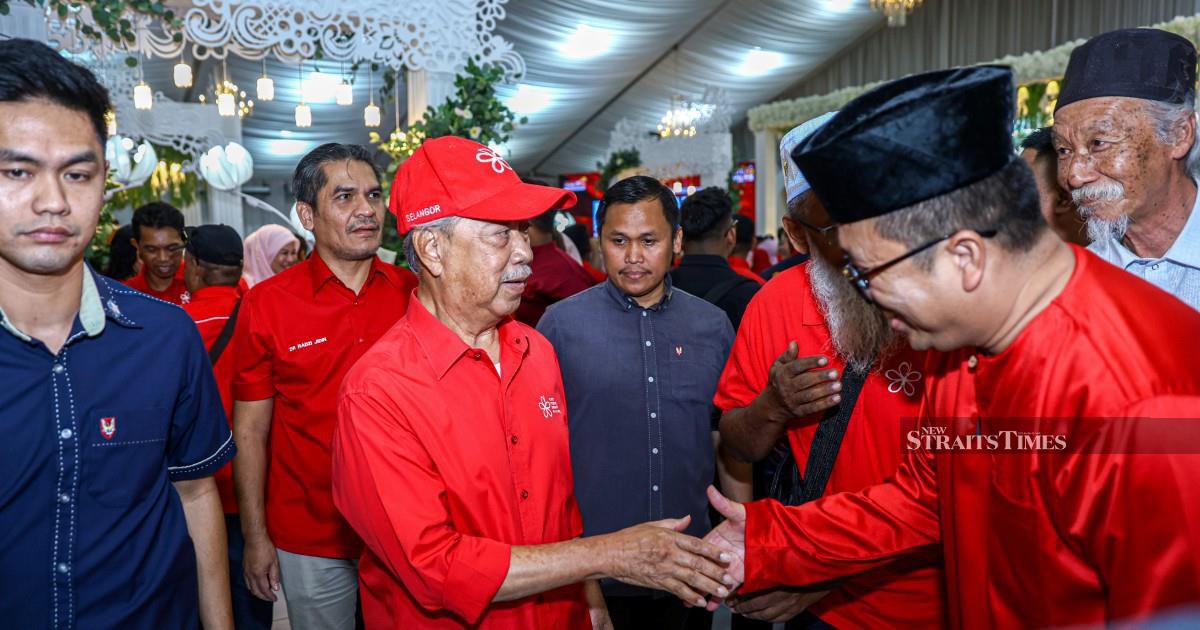
Bersatu is preparing to break away from Perikatan Nasional and establish a new political alliance, according to party president Tan Sri Muhyiddin Yassin, marking a significant development in Malaysia's fractious political landscape. The announcement represents a dramatic shift in the party's electoral strategy ahead of the next general election, and comes amid growing tensions within the Islamist-led coalition that has defined opposition politics since 2020. The blueprint for this restructuring is expected to materialise following the Negri Sembilan state election, which serves as the immediate political benchmark for the party's next moves.
Muhyiddin's decision to distance Bersatu from Perikatan Nasional reflects deepening internal divisions within a coalition that once held considerable promise as a united anti-Pakatan Harapan force. The Bersatu leader's characterisation of the current political environment as "toxic" under PAS's stewardship reveals fundamental disagreements over coalition direction and governance principles. These tensions have simmered beneath the surface for some time, but Muhyiddin's public remarks suggest the situation has deteriorated to the point where continued collaboration has become untenable for his party. The fundamental question of who should lead the opposition—and on what ideological terms—appears to be the crux of the disagreement between these formerly allied parties.
For Malaysian political observers, this development carries profound implications for the nation's electoral trajectory. The potential fragmentation of Perikatan Nasional would reshape opposition politics and alter the competitive dynamics that have governed elections since the 2018 transition away from Barisan Nasional's dominance. A weakened or divided opposition could strengthen the government's position, while a unified alternative coalition might pose a more formidable challenge. Muhyiddin's initiative to form a new coalition suggests Bersatu believes it can better serve its political interests outside the current PAS-dominated structure, even if it means starting from scratch in constructing alliances.
The Negri Sembilan election assumes significance as both a testing ground and a catalyst for broader political realignment. By waiting until after this state election to formally launch his new coalition, Muhyiddin appears to be creating space for his party to assess electoral performance and perhaps use results as leverage in ongoing negotiations with potential coalition partners. This measured approach also allows time for other dissatisfied political actors to coalesce around Bersatu's alternative vision. The state election thus functions as more than a mere electoral contest—it represents a transition point between two distinct periods of opposition configuration in Malaysia.
The sustainability and viability of Bersatu's proposed new alliance remains an open question. The party faces the fundamental challenge of attracting partners who see value in breaking existing relationships and investing in an untested coalition structure. In Malaysian politics, where coalition stability has historically proved elusive, such ventures carry significant risk. Bersatu itself has experienced multiple realignments since its formation, suggesting the party's leadership possesses flexibility in forming partnerships. However, the credibility of any new alliance depends on whether it can articulate a coherent governing vision and secure enough parliamentary seats to remain relevant.
Regional dynamics add another layer of complexity to these coalition machinations. The success or failure of Bersatu's realignment could influence political dynamics across Southeast Asia more broadly, where Malaysia's status as a significant democratic player carries weight. International investors and neighbouring governments have vested interests in Malaysian political stability and predictability. A period of coalition instability could create uncertainty that reverberates through regional markets and diplomatic relations. The timing of Muhyiddin's announcement, therefore, has implications that extend beyond Malaysia's borders.
For party members and grassroots supporters of both Bersatu and other potential coalition partners, the coming months will determine whether this reconfiguration strengthens their collective political position. Bersatu's members must weigh whether abandoning the Perikatan Nasional alliance offers genuine advantages or represents merely a reshuffling of the same political forces that have struggled to unseat the government. The party's ability to articulate a compelling reason for this change will prove crucial in maintaining membership cohesion during what promises to be a turbulent transition period.
PAS, meanwhile, faces the prospect of leading a significantly diminished Perikatan Nasional if Muhyiddin's plans come to fruition. The Islamic party's dominance within the coalition may have contributed to Bersatu's discomfort, but losing a coalition partner would further concentrate both the benefits and liabilities of electoral outcomes on PAS alone. This development underscores the broader challenge facing all Malaysian political parties: constructing durable alliances capable of withstanding the pressures and disputes that inevitably arise during coalition governance. The calculus that sustained Perikatan Nasional appears to have shifted irreversibly, triggering a recalibration of opposition politics at a critical juncture.
For the government under Anwar Ibrahim, these opposition machinations might provide temporary respite from unified pressure, yet the ultimate outcome depends on how effectively and quickly a new anti-government coalition can consolidate. Malaysian voters will eventually decide whether the new configuration offers a more credible alternative to the current administration. In the interim, political uncertainty will likely remain elevated as various actors negotiate their positions within the emerging new order. The Negri Sembilan election thus assumes outsized significance as the crucible in which Malaysia's opposition politics will be fundamentally recast.

