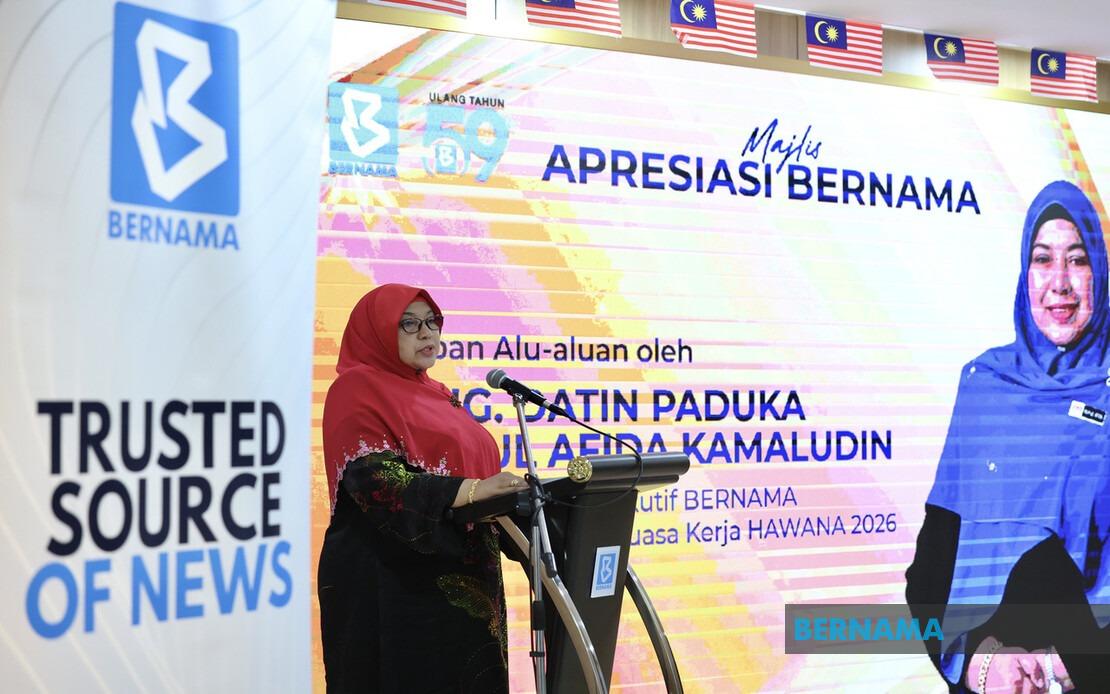
Malaysia's national news agency is doubling down on its mission to cultivate patriotic sentiment across the country as August progresses toward the National Day festivities. Bernama, operating under the Ministry of Communications, has positioned itself as a key institutional player in channelling the spirit of nationalism through its newsroom operations and broader engagement with the public. The agency's leadership has articulated a clear vision of leveraging its platform and organisational reach to amplify messaging around national pride and civic consciousness during the critical weeks ahead.
Datin Paduka Nur-ul Afida Kamaludin, who heads the news agency as chief executive officer, outlined the strategic importance of Bernama's role within the government's communications apparatus. As a state-owned entity under the Communications Ministry, the agency carries responsibility extending beyond conventional news gathering and distribution. She stressed that Bernama functions as an implementation partner for ministerial programmes and initiatives, translating policy objectives into narrative form for public consumption. This dual mandate—serving both as an independent news gatherer and as an executor of government communications strategy—positions the agency at the intersection of journalism and public administration.
The pathway to fostering patriotism within the organisation itself represents a ground-up approach that Bernama is pursuing through targeted workplace initiatives. The agency has encouraged staff members to display the Jalur Gemilang, the Malaysian flag, at both their official workspaces and residential homes. This symbolic gesture extends beyond mere decoration; it represents an attempt to embed national consciousness into the daily rhythms of employees' professional and personal lives. By making flag display a visible marker of organisational participation in National Month observances, Bernama seeks to create a shared experience of patriotic commitment that transcends hierarchical boundaries within the newsroom.
The "Satu Rumah, Satu Jalur Gemilang" campaign—translating roughly to "One House, One Flag"—carries particular significance in Malaysian civic culture. This initiative explicitly invites employees to translate their workplace patriotism into domestic practice, attempting to bridge the gap between institutional identity and family life. The theme implicitly acknowledges that genuine patriotic sentiment must permeate multiple spheres of Malaysian life rather than remaining confined to official ceremonies or government buildings. By framing flag display as a household matter, the campaign positions national pride as an intimate, household-level concern rather than merely a top-down governmental imperative.
Recognising the logistical challenges of assembling a geographically dispersed workforce, Bernama consolidated its patriotic messaging into a singular commemorative event held at its Wisma Bernama headquarters. The Bernama Appreciation Ceremony served as both a recognition of staff contributions and a platform for launching the National Month initiatives. Rather than scattering observances across multiple dates and venues, the agency structured a comprehensive programme combining staff appreciation with patriotic activation. This consolidation reflects practical considerations about workforce coordination while simultaneously amplifying the symbolic weight of the combined messaging.
The ceremonial dimension of Bernama's approach manifested in the formal handover of the Jalur Gemilang to representatives from the agency's principal departments. This gesture transformed the flag distribution into a ceremonial moment rather than a mere logistical operation. By involving departmental heads as recipients and symbolic custodians of the flags, Bernama created a visual representation of hierarchical diffusion—the patriotic message flowing from leadership through departmental structures to individual staff members. Such ritualised transfer of symbols serves psychological and organisational functions, marking the flag as an object of institutional significance rather than a mundane workplace decoration.
Musical and cultural elements have been incorporated into Bernama's National Month strategy, with the debut of the official National Day theme song composed by Malaysian recording artist Faizal Tahir. The introduction of an original musical composition created specifically for the occasion adds an emotional and cultural dimension to the patriotic campaign. Music functions as a transmission vector for patriotic sentiment that complements written news coverage and speeches. By combining journalistic platforms with musical expression, Bernama recognises that nationalism operates through multiple sensory and emotional registers beyond the rational persuasion typically associated with news reporting.
The timing of these initiatives follows the official launch of National Month by Malaysia's Prime Minister in Ipoh, establishing Bernama's activities as part of a coordinated national campaign rather than isolated institutional action. The news agency's decision to decorate its premises immediately after the Prime Minister's launch signals responsiveness to executive-level directive while demonstrating organisational commitment to national observances. This synchronisation between governmental leadership and media institutional participation reflects the interlocking nature of state communications infrastructure in Malaysia, where major news agencies operate as stakeholder participants in official national campaigns.
Bernama's framing of these activities emphasises their collective and participatory dimensions, positioning the initiatives as opportunities for workforce cohesion and shared celebration rather than top-down mandates. Chief executive Nur-ul Afida highlighted that bringing together the entire staff at headquarters provided an occasion for employees to collectively appreciate and energise the National Month spirit. This language of collective participation rather than compliance suggests an attempt to generate genuine enthusiasm rather than mechanical adherence to patriotic observances. By framing the initiatives as opportunities for employees to come together, the agency attempts to transform external requirements for patriotic display into internally motivated collective experiences.
The broader context for these activities reflects Southeast Asian dynamics around national identity formation and institutional participation in civic nationalism. Malaysia's multi-ethnic and multi-religious composition makes the cultivation of overarching national identity a persistent governmental concern. State institutions like Bernama play roles in this identity-formation project through their regular news coverage, but also through periodic intensified campaigns around significant national moments. National Month and National Day celebrations represent focal points where institutional resources concentrate to amplify patriotic messaging and create moments of collective national consciousness.
Bernama's multi-pronged approach—combining workplace initiatives, public campaigns, symbolic gestures, and cultural elements—reflects sophisticated understanding of how patriotic sentiment circulates through institutional and domestic spaces. Rather than relying on news coverage alone, the agency activates multiple channels simultaneously: employee participation, public communications, ceremonial display, and musical accompaniment. This comprehensive activation acknowledges that patriotism cannot be reduced to informational content but requires embodiment across practices, spaces, and sensory experiences. For Malaysian readers and Southeast Asian observers, Bernama's campaign illustrates how state media institutions navigate the ongoing work of national identity maintenance through coordinated activation of both organisational and public spheres.

