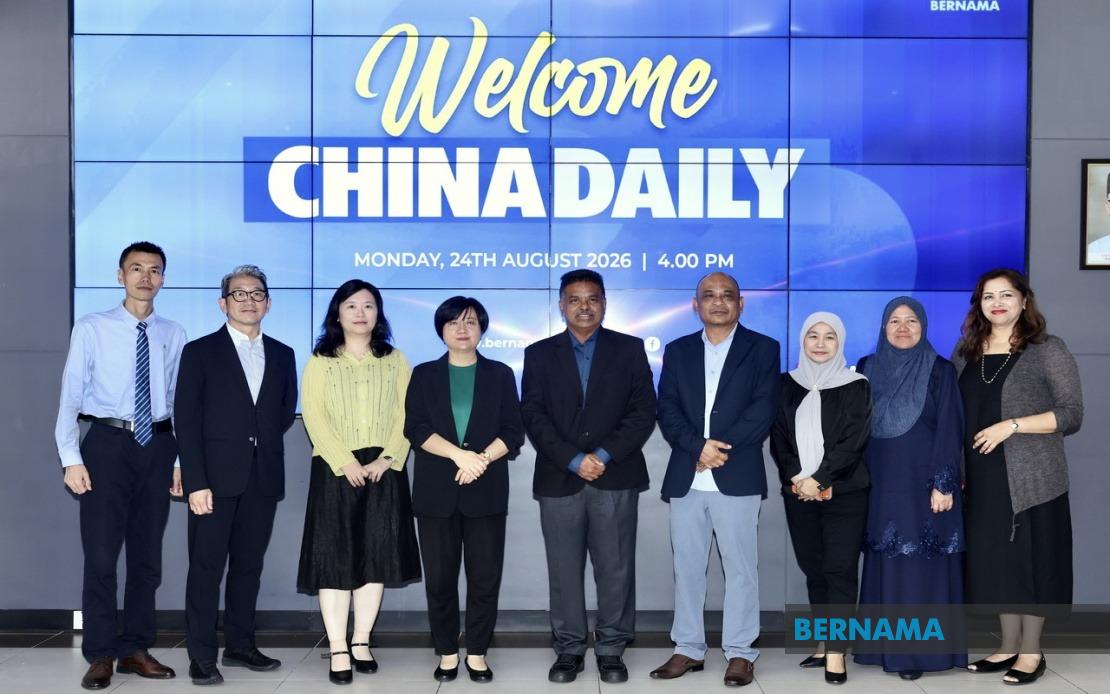
Malaysia's national news agency Bernama and the Asia-Pacific bureau of China Daily have initiated discussions aimed at establishing a more comprehensive media partnership that extends beyond traditional news sharing arrangements. The two organisations met to chart a collaborative course that could reshape how both entities engage across the region, signalling a broadening of engagement between Malaysian and Chinese media institutions at a time when regional news cooperation remains strategically important.
During a courtesy visit to Bernama's headquarters in Kuala Lumpur, Lu Haoting, Editor-in-Chief of China Daily Asia-Pacific, led a delegation that included Sheila Shi, the bureau's Assistant Editor-in-Chief, Kenrick Lee as Business Development Director, and Peng Chao, the Kuala Lumpur Bureau Chief. The visitors were received by Bernama's senior leadership team, headed by Editor-in-Chief Arul Rajoo Durar Raj, signalling the formal and high-level nature of the engagement. This ministerial-style exchange underscores both organisations' commitment to exploring substantive cooperation opportunities.
The discussions revealed several potential avenues for deepening collaboration. Beyond the conventional exchange of news content and journalistic resources, both parties identified opportunities in professional development and capacity building. Lu emphasised that structured training programmes could significantly enhance the skills of media professionals on both sides, creating pathways for journalists to deepen their understanding of regional reporting practices and editorial standards. Such initiatives would benefit individual journalists while potentially improving the quality and sophistication of coverage across participating newsrooms.
The scope of proposed cooperation extends well beyond newsrooms into adjacent domains. Business forums represent one promising area, offering platforms where economic news specialists from both organisations could collaborate on covering regional commercial developments, trade patterns, and investment flows. Cultural activities and joint documentary productions emerged as additional possibilities, reflecting recognition that contemporary media partnerships thrive when built on multifaceted engagement rather than narrow news-sharing protocols. This comprehensive approach mirrors evolving global practices where media organisations function as cultural bridges.
Bernama's existing track record with Chinese media organisations provides a foundation for these newer initiatives. Arul Rajoo referenced the agency's prior experience in content exchanges and documentary collaboration with various Chinese media counterparts, demonstrating institutional capacity and willingness to navigate the complexities of cross-border media production. This history suggests both parties enter negotiations with realistic expectations and pragmatic understanding of what such partnerships entail operationally.
The Asia-Pacific footprint of China Daily's operations positions this partnership strategically for Malaysia. As China Daily Asia-Pacific Bureau functions as a central node in the publication's international news network, covering political, economic, social, and cultural developments throughout the region, collaboration with Bernama could enhance both organisations' capacity to cover regional stories with greater depth and local insight. Malaysian journalists working with China Daily correspondents could offer perspectives rooted in local knowledge, while Chinese reporters gain access to Bernama's established networks and institutional relationships.
For Malaysian readers and policymakers, this development carries several implications. Bernama serves as the primary conduit through which international news organisations understand Malaysia, and partnership arrangements with major Chinese publications influence how Malaysian developments reach audiences in China and Chinese-speaking communities. Closer ties with China Daily reflect Malaysia's recognition that Chinese media organisations play increasingly important roles in shaping regional narratives and global perceptions. The emphasis on journalist exchanges means Malaysian reporters will gain opportunities to observe Chinese news practices firsthand, potentially enriching domestic journalism.
The timing of this initiative reflects broader regional dynamics. Southeast Asia has become increasingly important in China's strategic communications efforts, and media cooperation serves as a soft power instrument complementing diplomatic engagement. For Malaysia, which maintains complex relationships requiring careful diplomatic navigation, media partnerships offer low-risk mechanisms for demonstrating commitment to regional cooperation and Chinese engagement without the political sensitivities that accompany government-to-government agreements. Joint media projects create people-to-people connections that politicians and diplomats often prioritise.
These cooperation frameworks also respond to the evolving media landscape in Southeast Asia. Traditional wire service dominance has declined as regional media organisations have gained capacity and resources. Malaysian and Chinese news operations recognise that strategic partnerships enable them to punch above their individual weights when competing for attention and credibility. Personnel exchanges and joint training initiatives build professional networks that transcend organisational boundaries, creating communities of practice that strengthen regional media ecosystems generally.
The specific reference to personnel exchanges deserves emphasis, as it represents a meaningful commitment rather than mere rhetoric. Journalists embedded in foreign newsrooms for extended periods develop professional relationships and deeper understanding of editorial cultures that surface knowledge cannot replicate. When Malaysian journalists spend time at China Daily's Asia-Pacific bureau, they absorb not merely factual information about Chinese news practices but internalise values, editorial judgment patterns, and interpretive frameworks that shape how they subsequently approach their work. These professional influences ripple through organisations over years.
Implementing these ambitious proposals will require attention to practical logistics. Scheduling journalist exchanges demands coordinating with existing commitments and securing organisational approval for staff mobility. Training programmes necessitate curriculum development and identification of relevant topics that engage both parties' interests and capabilities. Joint documentary projects require navigating different production standards, editorial review processes, and cultural sensitivities. That both organisations' leadership teams have publicly endorsed these aspirations suggests institutional commitment to surmounting such obstacles.
The partnership also reflects confidence in media's capacity to contribute to mutual understanding during periods of geopolitical uncertainty. Quality journalism that authentically represents different perspectives can reduce misperceptions and build familiarity across borders. By investing in cooperative structures, Bernama and China Daily express faith that professional engagement between journalists strengthens the informational ecosystem that democratic and pluralistic societies depend upon. This stands in contrast to increasingly fractious global media environments where organisations retreat into ideological silos.

