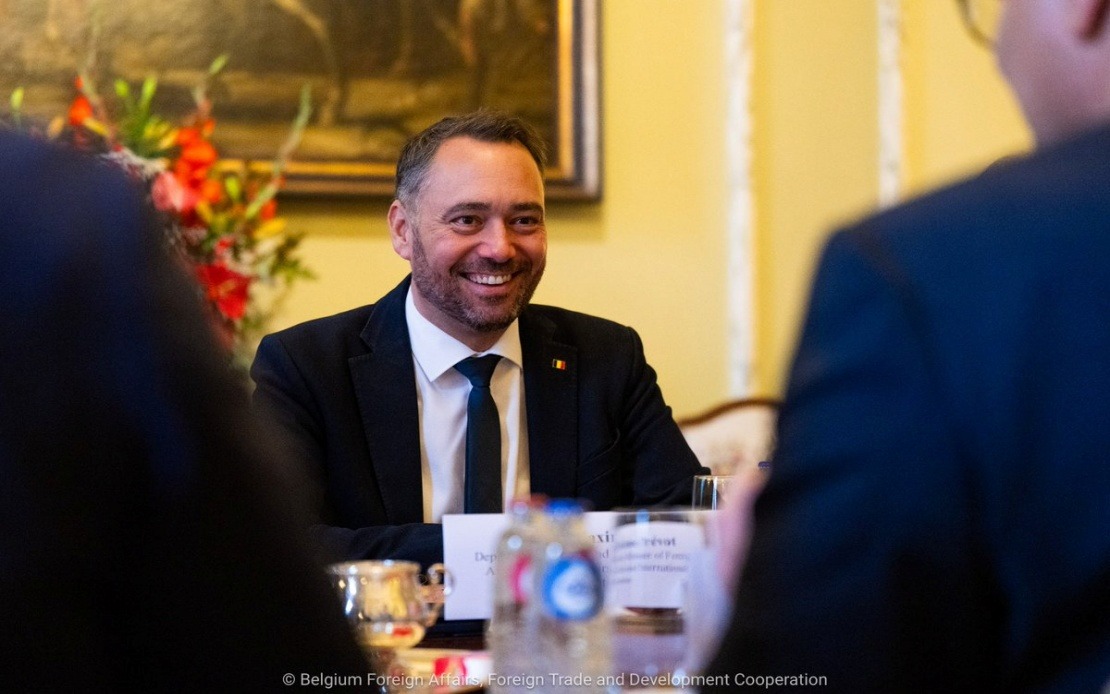
Belgium's Deputy Prime Minister and Foreign Minister Maxime Prévot will travel to Malaysia this week in what represents his inaugural visit to the country since stepping into his European Union role early this year. The two-day engagement, beginning Thursday, signals growing strategic interest from Brussels in deepening bilateral relations with Southeast Asia's third-largest economy, with negotiations expected to centre on advancing cooperation across clean energy transition, critical mineral supply chains, and the rapidly expanding halal economy.
According to the Malaysian Foreign Ministry, Prévot's itinerary places particular emphasis on substantive discussions with Deputy Prime Minister Datuk Seri Fadillah Yusof, who oversees both energy transition and water transformation portfolios. This pairing reflects Malaysia's prioritisation of renewable energy development and Brussels' concurrent push to diversify its supply chains and meet aggressive European Green Deal targets. The meeting scheduled for July 2 will examine the current health of Malaysia-Belgium relations while charting new collaborative pathways across multiple economic sectors critical to both nations' medium-term development strategies.
Renewable energy cooperation represents the centrepiece of these discussions, positioning the visit within the broader context of Malaysia's commitment to achieving 40 per cent renewable energy capacity by 2035. Belgium, struggling with its own intermittent wind and solar generation, views Malaysia's abundant natural resources and manufacturing capabilities as potential anchors for regional clean technology development. Additionally, discussions around rare earth elements address a pressing European vulnerability: Belgium's reliance on unstable global supply chains for materials essential to wind turbines, electric vehicles, and renewable infrastructure. Malaysia's substantial rare earth reserves and established processing expertise make it an attractive partner for securing European industrial continuity.
The halal sector component underscores an often-overlooked dimension of Malaysia-Europe trade dynamics. As the globe's leading halal certifier and a hub for Islamic finance and commerce, Malaysia occupies a strategic position that extends far beyond traditional Southeast Asian markets. Belgium, hosting a substantial Muslim population and serving as a gateway to broader European markets, increasingly recognises halal-certified products and services as both an ethical necessity and a commercial opportunity. Cooperation in this arena could facilitate Malaysian exporters' deeper penetration into EU markets whilst allowing Belgian businesses access to Malaysia's sophisticated halal ecosystem.
Prévot's visit encompasses broader engagement with Malaysia's policy establishment beyond bilateral ministerial meetings. He will address the 39th Asia-Pacific Roundtable, an annual gathering organised by the Institute of Strategic and International Studies (ISIS) Malaysia that attracts senior policymakers and strategic thinkers from across the Indo-Pacific. This forum provides the Belgian minister an important platform to articulate European perspectives on regional security, trade architecture, and climate cooperation to influential Malaysian and regional audiences. Such visibility matters considerably in shaping how European interests are perceived and prioritised within Malaysian foreign policy deliberations.
The diplomatic schedule also includes an audience with the Sultan of Perak, Sultan Nazrin Muizzuddin Shah, a protocol gesture that reflects the significance Brussels attaches to this engagement. Royal audiences, whilst ceremonial in nature, carry symbolic weight in Malaysian political culture and underscore respect for the nation's constitutional monarchy and traditional institutions. This component reveals how even technical trade discussions operate within Malaysia's unique institutional framework.
Bilateral trade flows reveal deepening economic interdependence between the two nations. In 2025, bilateral commerce reached RM9.74 billion, with Malaysian exports totalling RM6.85 billion against imports of RM2.89 billion. This RM6.95 billion surplus demonstrates Malaysia's manufacturing and resource competitiveness on European markets, particularly in chemicals, electronics, and refined petroleum products. Belgium's counter-imports, though smaller in volume, comprise high-value machinery, pharmaceuticals, and specialised manufacturing inputs essential to Malaysia's industrial ecosystem.
Investment figures underline Belgium's long-standing commercial commitment to Malaysia. As of 2025, 67 projects involving Belgian participation received approval, representing RM5.1 billion in committed capital and generating expectations of 4,605 employment opportunities. These ventures span diverse sectors including chemicals, renewable energy infrastructure, and logistics—sectors increasingly aligned with Malaysia's ambitions to position itself as a regional hub for sustainable industrial development. Belgian investment, whilst not dominating Malaysia's foreign direct investment landscape, concentrates in high-technology and capital-intensive activities that amplify economic value creation beyond simple job creation metrics.
The timing of Prévot's visit carries significance within Europe's broader strategic recalibration. The European Union continues reassessing its global engagement patterns, particularly in Asia, amid geopolitical tensions and supply chain fragilities exposed by recent international developments. Malaysia, as an ASEAN member straddling multiple power blocs and maintaining pragmatic non-alignment, represents precisely the type of partner Brussels seeks to cultivate for advancing European interests across renewable energy transitions, critical mineral security, and regional stability. This visit therefore extends beyond routine diplomatic exchange, functioning instead as a calibration mechanism for European-Malaysian strategic alignment.
For Malaysian policymakers, Prévot's mission opens opportunities to leverage Belgium's EU position for advancing national interests within European forums. Malaysia's participation in international climate architecture and sustainable development initiatives gains credibility through partnerships with committed European actors. Furthermore, strengthening renewable energy cooperation with Belgian technical expertise and potential EU funding mechanisms could accelerate Malaysia's energy transition timeline, whilst rare earth element partnerships could position Malaysia as Europe's preferred supplier, insulating the country from competitive pressures emanating from other major producers. The halal cooperation dimension offers particularly distinctive advantages, allowing Malaysia to monetise its comparative advantage in this rapidly growing global commerce segment.
The visit ultimately reflects evolving Malaysia-Europe relations within a reordering international environment. Rather than viewing Belgium and Europe through traditional post-colonial lenses, contemporary engagement emphasises mutual benefit across climate transition, supply chain resilience, and commercial opportunity. This reframing enables Malaysia to negotiate from relative strength, leveraging its resources and positioning rather than deferring to European preferences. As renewable energy deployment accelerates globally and critical mineral demand surges, partnerships like those being discussed this week will determine which nations capture value from the clean energy economy's expansion.

