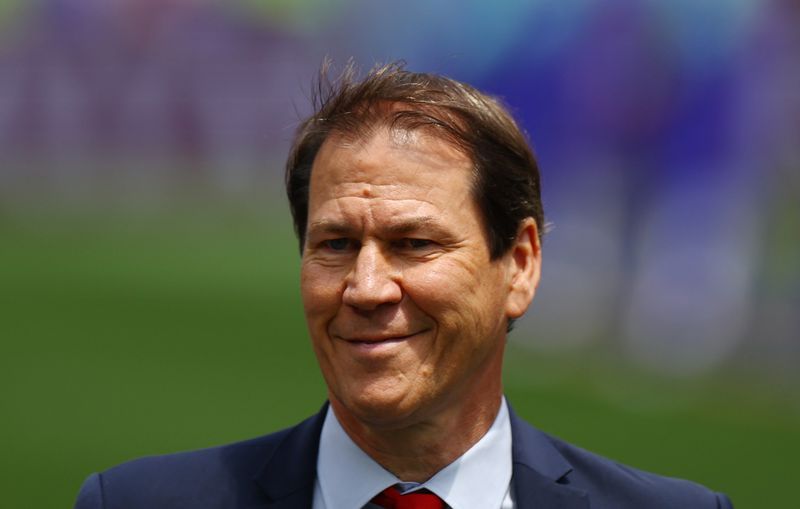
Belgium's football association announced on Monday that coach Rudi Garcia will step down from his position at the end of July, concluding a tenure marked by significant scrutiny from both media and supporters. The mutual decision to part ways ends an 18-month partnership that encompassed one of European football's most volatile recent campaigns at the international level, delivering mixed results that ultimately failed to satisfy stakeholders in Belgian football.
Garcia's appointment came during challenging circumstances for the Belgian federation, both sporting and financial. In his statement, federation sports director Vincent Mannaert acknowledged this context, crediting the French coach with restoring team cohesion during a period of significant transition. Despite the difficulties faced during the recent World Cup tournament, Mannaert emphasised that Garcia had successfully guided the Belgian Red Devils through a generational overhaul that was deemed necessary for the national team's long-term prospects.
The World Cup journey itself proved contentious and inconsistent, testing Garcia's resolve throughout the campaign. Belgium's group stage performance sent mixed signals to observers. While they drew with Egypt and Iran in their opening matches, raising questions about tactical approach and player deployment, they subsequently demonstrated their potential with a commanding 5-1 victory over New Zealand that topped the group and suggested they could progress confidently.
Belgium's knockout stage run provided further examples of the tension surrounding Garcia's management. Against Senegal in the last 32, Belgium required extraordinary fortune to advance, recovering from a two-goal deficit during the closing minutes thanks to a goalkeeping error from their opponents. A subsequent VAR penalty decision awarded in extra time—one that remained controversial—secured a 3-2 victory that felt less than convincing despite the positive outcome.
The subsequent performance against the United States offered redemption and vindication for Garcia's selections. Belgium produced a commanding 4-1 victory that showcased tactical awareness and superior execution, earning the coach rare praise from critics who had previously questioned his decision-making and match management. This victory appeared to ease pressure and suggested the team had found their rhythm at a crucial moment.
However, the quarter-final encounter with Spain proved decisive for Garcia's future. Spain's eventual triumph over Belgium eliminated the tournament favourites, and Garcia's tactical decisions came under intense scrutiny once again. Notably, his substitution of goalkeeper Thibaut Courtois attracted particular criticism, with many observers questioning the wisdom of the change at such a critical juncture. This decision crystallised frustrations that had accumulated throughout the tournament.
The Belgian media had intensified their criticism of Garcia from the tournament's outset, particularly following the uninspiring group stage performances against Egypt and Iran. The pressure became so acute that Garcia felt compelled to arrange a media conference specifically to defend his tactical philosophy and explain the strategic reasoning behind his selections. This public defence illustrated the intense scrutiny facing international coaches in the modern media environment.
Garcia's departure forms part of a broader pattern affecting World Cup coaches globally. The post-tournament period has witnessed unprecedented turnover among national team managers, with representatives from Croatia, Czech Republic, France, Germany, Ghana, Haiti, Jordan, Mexico, Netherlands, Portugal, Scotland, Senegal, Tunisia, and Uruguay also departing their positions either during or immediately after the competition. This pattern reflects the immense pressure inherent in international football at the tournament's highest level, where narrow margins and tactical nuance often determine outcomes.
In his departure statement, Garcia expressed gratitude toward the Belgian squad and backroom staff, reflecting warmly on his involvement in initiating the generational transition process that the federation had deemed necessary. His acknowledgment of this transition suggests he viewed his appointment not as a shortterm fix but as part of a longer restructuring that would extend beyond his tenure.
The federation now faces the task of identifying Garcia's successor, with Vincent Mannaert overseeing the recruitment process. Belgium's next competitive engagement comes through the UEFA Nations League in late September, when they travel to Rome to face Italy, followed immediately by a home fixture against France. These fixtures present an early test for any incoming coaching staff and will establish immediate expectations for the next phase of Belgian football.
Garcia's departure reflects the contemporary reality of international football management, where a single tournament—regardless of context or progress made—can determine a coach's viability. While Belgium's quarter-final appearance represented a respectable achievement and an advance from some nations' performances, the inconsistency displayed throughout the campaign and the mounting criticism proved insurmountable. For Malaysia and Southeast Asian observers, Garcia's situation underscores how competitive pressures at elite international level create cyclical change among coaching personnel, a dynamic increasingly relevant as regional nations strengthen their football development programmes.

