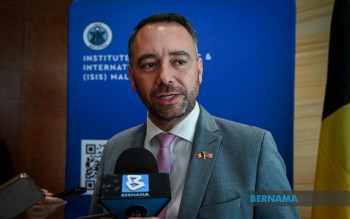
Belgium is positioning itself as a strategic partner for Malaysia in the renewable energy sector, with Deputy Prime Minister Maxime Prévot outlining ambitious plans for offshore wind collaboration during his inaugural visit to the country. Speaking in Kuala Lumpur, Prévot identified offshore energy as a cornerstone of potential bilateral cooperation, recognising that both nations share a commitment to accelerating their green energy transition amid global pressures to decarbonise. The Belgian minister's visit marks his first to Malaysia since taking office in February 2025 and underscores growing European interest in deepening ties with Southeast Asian economies on sustainability matters.
Belgium's credibility in offshore wind technology stems from what appears to be a disproportionate achievement given its geographical constraints. Despite possessing only 60 kilometres of coastline, the European nation has constructed and operates offshore wind farms capable of generating two gigawatts of electricity—a testament to sophisticated engineering and long-term strategic planning. This capacity, while modest by global standards, has become increasingly significant as Belgium seeks to reduce its dependence on fossil fuels and nuclear energy. The government's roadmap calls for expanding this infrastructure substantially, with plans to increase generation capacity to between six and seven gigawatts over the coming years, equivalent to the output of multiple nuclear power plants.
For Malaysia, such technological expertise carries particular relevance. The country's extensive coastline and abundant marine resources present natural advantages for offshore wind development, yet the sector remains relatively underdeveloped compared to solar and conventional energy sources. Belgian experience in navigating the engineering complexities of installing and maintaining offshore infrastructure in marine environments could provide valuable lessons. The transfer of knowledge regarding cost-effective construction methods, maintenance protocols, and grid integration would be especially valuable as Malaysia seeks to diversify its renewable energy portfolio and meet increasingly stringent environmental standards.
Preview also highlighted that offshore energy represents only one dimension of a broader partnership framework. Belgium is proposing collaborative ventures spanning semiconductors, logistics, clinical trials, biotechnology research and development, and pharmaceuticals. This diversified approach suggests that Europe sees Malaysia not merely as a renewable energy market but as a multifaceted economic partner with capabilities across high-value manufacturing and life sciences sectors. The breadth of proposed cooperation indicates mutual recognition of complementary strengths, with Belgium's industrial specialisation and innovation capacity matching Malaysia's position as a Southeast Asian manufacturing and logistics hub.
The European Union's commitment to regional development carries substantial financial weight and strategic implications for Malaysia and ASEAN as a whole. The bloc intends to mobilise €10 billion (approximately RM46.5 billion) under its Global Gateway Strategy specifically to support the ASEAN Power Grid and facilitate the region's energy transition. This unprecedented capital commitment reflects Europe's recognition that Southeast Asia's energy security is increasingly bound to global climate goals and economic stability. For Malaysia, which serves as a de facto energy hub for the region and hosts critical energy infrastructure, such investment offers opportunities to modernise transmission systems, integrate renewable sources more effectively, and strengthen cross-border electricity trading arrangements.
The ASEAN Power Grid initiative represents a significant undertaking designed to interconnect national electricity systems across member states, enabling more efficient distribution of energy resources and reducing dependency on fossil fuels. By funding this infrastructure, the EU is essentially investing in regional resilience while advancing its own climate objectives. Malaysia's participation in coordinating these efforts, given its strategic geographic location and existing energy sector development, positions the country as a potential regional leader in renewable energy integration. The initiative also creates opportunities for Malaysian companies to develop expertise in grid management, energy storage, and demand-side management technologies.
Preview's emphasis on decarbonisation reflects broader European policy frameworks increasingly adopted by major trading blocs. Belgium's own energy transition strategy, which has moved away from nuclear energy while simultaneously expanding renewable capacity, offers a practical model of how advanced economies manage the complexity of phasing out carbon-intensive sources. For Malaysia, which still relies substantially on natural gas and coal for electricity generation, understanding how a developed economy manages such transitions provides valuable benchmarking data for policymakers. The technical and regulatory lessons from Belgium's experience could accelerate Malaysia's own decarbonisation pathway while maintaining energy affordability and security.
Bilateral economic ties already demonstrate substantial momentum independent of new energy partnerships. Malaysia-Belgium trade reached RM9.74 billion in 2025, with Malaysian exports comprising RM6.85 billion and imports standing at RM2.89 billion. This trade pattern indicates that Malaysia maintains a significant surplus with Belgium, reflecting the competitiveness of Malaysian manufacturing and agricultural products in European markets. Meanwhile, Belgian investment in Malaysia has grown steadily, with 67 approved projects involving RM5.1 billion in cumulative investment generating approximately 4,605 jobs. These figures suggest that Belgian companies view Malaysia as an attractive destination for manufacturing and operations, potentially attracted by competitive labour costs, established industrial clusters, and reliable infrastructure.
The proposed energy collaboration emerges within this context of deepening economic interdependence. Belgian industrial companies, particularly those in engineering and renewable energy sectors, could find significant opportunities in developing offshore wind infrastructure in Malaysia. Conversely, Malaysian contractors and suppliers could participate in European projects, creating reverse investment flows and technology exchange. Such cooperation patterns have historically benefited both economies, allowing Malaysian companies to upgrade capabilities while providing European partners with cost-effective execution and access to Asian supply chains.
Preview's visit also signals the EU's strategic pivot towards Asia, driven partly by concerns about geopolitical competition and partly by genuine recognition of Asia's economic significance. The Global Gateway Strategy explicitly aims to strengthen connectivity and resilience across partner regions, language that incorporates both economic and security dimensions. For ASEAN nations like Malaysia, this European engagement offers an alternative source of development finance and technological partnership to complement existing relationships with China, Japan, and other Asian partners. The €10 billion ASEAN Power Grid commitment, while substantial, represents Europe's willingness to invest in regional public goods that benefit all member states.
Going forward, Malaysia's response to Belgium's partnership proposals will likely depend on how effectively the proposed collaboration addresses local energy priorities and economic constraints. Offshore wind development requires significant upfront capital investment and carries technical risks that must be carefully managed. However, the technology's long-term potential for reducing energy costs and carbon emissions makes it strategically attractive. Malaysia's decision to engage substantively with Belgian expertise could accelerate its clean energy transition while opening opportunities for technology transfer and industrial collaboration. The broader European commitment to ASEAN energy development suggests that regional countries can leverage this geopolitical moment to secure preferential access to green technology and climate finance.

