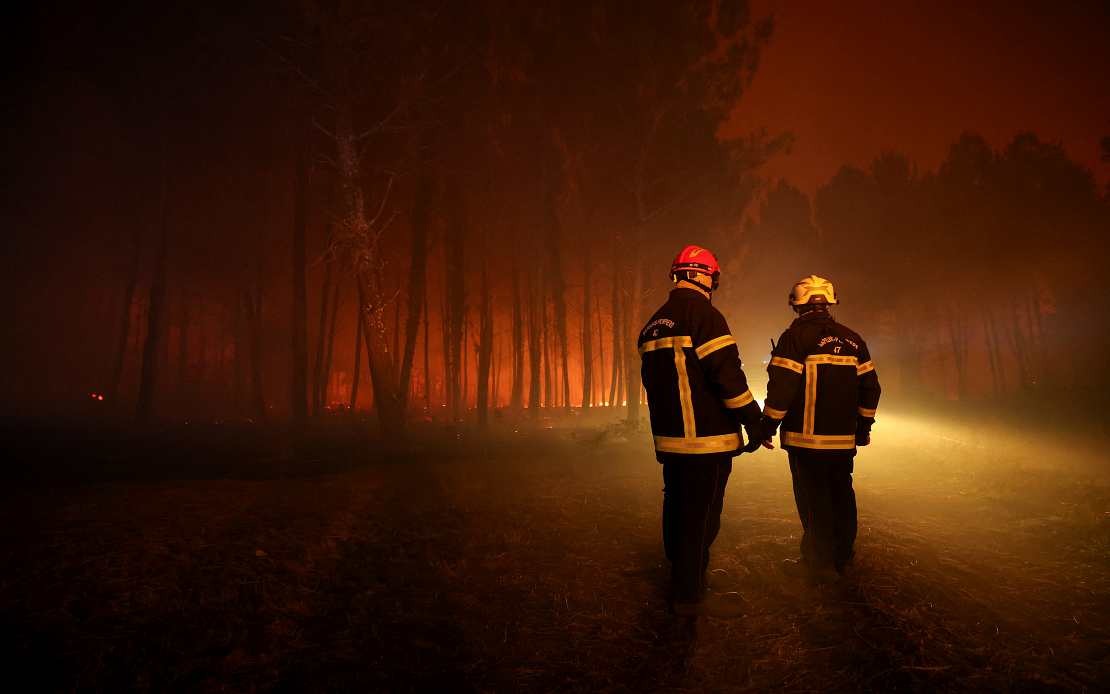
Eastern Belgium is contending with an unprecedented environmental crisis as a rapidly spreading wildfire in the High Fens area near the German border has become the largest on record for the country. By Saturday evening, the blaze had charred approximately 2,700 hectares of terrain, nearly double the burnt area recorded just hours earlier when authorities first reported comprehensive data. The scale of this disaster far exceeds Belgium's previous wildfire records; the European Forest Fire Information System documents show that a significant 2011 fire burned roughly 1,400 hectares, meaning this week's event has nearly doubled that historical benchmark and shattered longstanding records across the region.
The fire erupted around 2 pm on Friday within the High Fens nature reserve, one of Belgium's most ecologically significant landscapes, and rapidly intensified as firefighting teams struggled to gain ground against the advancing flames. The challenging topography of the reserve, characterised by dense vegetation and difficult-to-traverse terrain, has severely hampered emergency responders' ability to deploy conventional suppression tactics effectively. Rather than mounting controlled ground-based offensives, crews have found themselves largely constrained to perimeter defence and property protection strategies, watching helplessly as the fire advances across the protected natural area.
The human toll has been substantial, with approximately 600 residents evacuated from communities surrounding the blaze as a precautionary measure. Local authorities issued urgent advisories to tourists and holidaymakers in the vicinity, effectively shutting down recreational access to the region during the peak summer season. A children's summer camp operating in the area was hastily evacuated, disrupting family holidays and raising concerns about the broader impact on Belgium's tourism sector during August, traditionally a major holiday month for European families.
Meteorological conditions have intensified the crisis dramatically. Belgium experienced an intense heatwave earlier this week, with temperatures soaring to 37 degrees Celsius in certain areas on Friday, creating tinder-dry conditions across the landscape. The combination of extreme heat and natural drought stress has transformed vegetation into highly combustible fuel, whilst unpredictable wind patterns have repeatedly shifted the fire's direction, thwarting containment efforts and threatening to engulf additional communities with alarming speed and intensity.
Recognising that the situation exceeded domestic capacity, Belgian authorities invoked the European Union Civil Protection Mechanism on Saturday, triggering international solidarity protocols. This activation opened pathways for cross-border assistance from neighbouring nations and EU member states. The European Commissioner for Preparedness and Crisis Management announced that firefighting aircraft had been dispatched from the Czech Republic, Sweden, and the Netherlands, representing a coordinated multinational response that underscores the severity of the unfolding emergency and the limitations of Belgium's own firefighting resources.
The ground response has similarly expanded beyond national borders. Firefighters from across Belgium's provincial network have converged on the High Fens, whilst colleagues from Germany and Luxembourg have also mobilised personnel to assist in suppression operations. This tri-national coordination reflects geographical proximity and longstanding mutual aid agreements, but also the scale of the challenge facing responders. The Belgian military has supplemented civilian firefighting teams, deploying trained personnel and equipment, whilst local farmers have contributed their own resources and knowledge of the landscape to support emergency crews.
The High Fens area holds particular ecological and cultural significance for Belgium and the broader European Union. This nature reserve represents a distinct and irreplaceable ecosystem, home to rare plant and animal species adapted to the region's unique climatic conditions. The rapid destruction of thousands of hectares carries profound implications for biodiversity conservation and ecosystem restoration that will persist for decades. Beyond environmental concerns, the fire threatens to disrupt the region's economy, with tourism, agriculture, and rural livelihoods all facing short-term disruption and potentially lasting damage.
For Malaysian and Southeast Asian observers, this crisis offers sobering lessons about climate vulnerability and the inadequacy of purely national emergency response frameworks. Southeast Asia's own experiences with transboundary haze and forest fires have demonstrated how environmental disasters easily transcend political boundaries, requiring robust regional cooperation mechanisms. Belgium's rapid activation of EU Civil Protection Mechanism exemplifies the kind of institutionalised cross-border collaboration that Southeast Asian nations might consider strengthening through ASEAN frameworks, particularly as climate change intensifies extreme weather events across the tropics.
The wildfire also underscores how heat stress and drought conditions—increasingly common consequences of global warming—can overwhelm even well-resourced developed nations. Belgium's emergency services, whilst professional and coordinated, found themselves initially overwhelmed by a conflagration of unprecedented scale. This reality should prompt reflection within Malaysia and the region about investment in preparedness infrastructure, early warning systems, and regional mutual aid mechanisms. Southeast Asian nations frequently experience similar conditions during dry seasons, yet often lack the international support architecture that enabled Belgium's rapid response.
Authorities are now focused on containing the immediate threat whilst preparing for extended suppression and recovery operations. Meteorologists continue monitoring weather patterns, hoping that wind shifts and temperature fluctuations might provide windows for tactical advances. However, officials acknowledge that extinguishing the remaining active fire zones may require sustained operations spanning days or potentially weeks, depending on resource availability and environmental conditions. The broader challenge of preventing reignition and managing smouldering ground fires in the peat-rich High Fens environment presents additional technical obstacles.
As the situation develops, the Belgian government faces mounting pressure to explain how such an unprecedented fire occurred in a developed European nation with modern firefighting capabilities. Questions about prevention, early detection systems, and land management practices will inevitably emerge during the post-crisis analysis phase. For now, however, priority remains firmly on protecting remaining communities, preserving lives, and preventing further territorial losses to the advancing flames.

