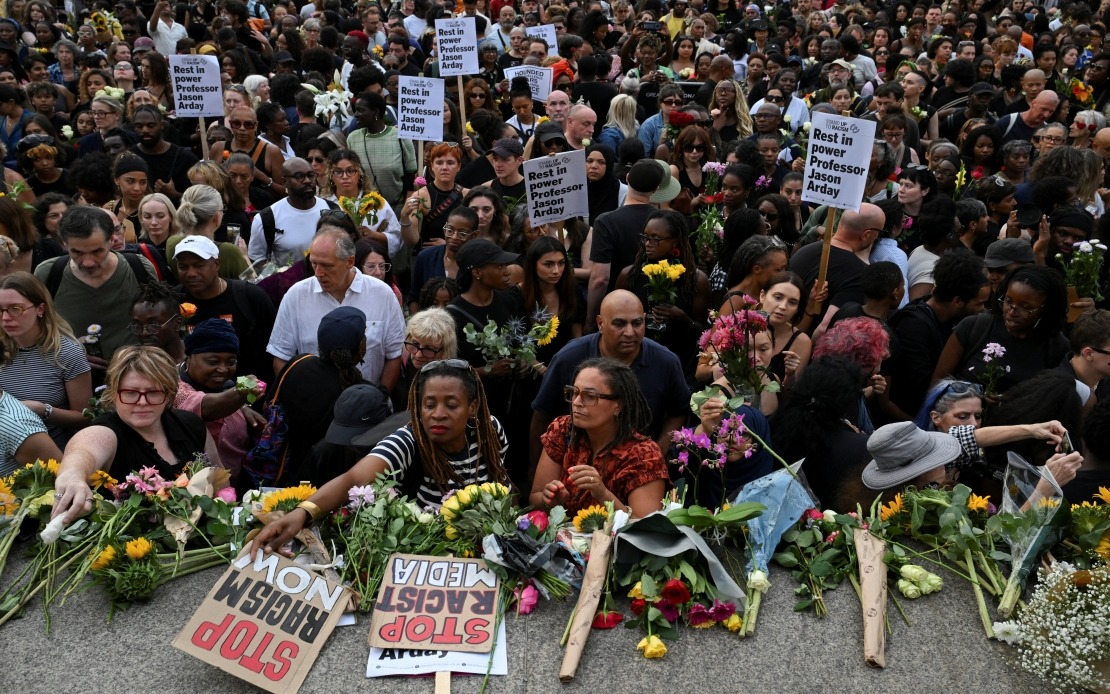
The dismissal of a researcher by Ghent University in Belgium marks a dramatic escalation in an academic controversy that ended in tragedy when the subject of the allegations, Cambridge professor Jason Arday, died unexpectedly earlier this month. Nathan Cofnas, a postdoctoral fellow at the institution's philosophy and moral sciences department, faced suspension after levelling plagiarism charges against Arday, 41, who had recently become the University of Cambridge's youngest Black professor.
Arday's meteoric rise in academia came to an abrupt halt in July when allegations of academic misconduct emerged alongside questions regarding aspects of his scholarly record and personal narrative. The Cambridge academic had achieved prominence in 2023 following his appointment as professor of sociology of education, a position that made him a notable figure in British higher education. His background added to the inspirational dimension of his ascent—the son of Ghanaian immigrants, Arday grew up in a south London working-class household and has been transparent about his autism diagnosis and learning difficulties, having not acquired verbal speech until age 11 and literacy skills only by 18.
In response to mounting scrutiny, Arday tendered his resignation from Cambridge on August 5, though he pointedly rejected suggestions that his departure constituted acceptance of allegations circulating about him. He released a statement emphasising that his decision should not be misconstrued as validation of the narratives surrounding the controversy. However, within days of his resignation, the University of Cambridge announced plans to launch an investigation into the circumstances of his appointment and the veracity of claims made in his academic profile. The situation took a devastating turn when Arday was discovered deceased at his south London residence on August 14, just nine days after stepping down from his position. Police investigations determined his death was unexpected but found no indicators of foul play.
Cofnas, who held a research fellowship at Emmanuel College before his current appointment, has become a polarising figure in this affair due to positions he has articulated on social and scientific matters. In 2024, he lost a research associate role following publication of a blog post containing assertions about racial differences in intelligence and suggesting that elite universities like Harvard would employ virtually no Black professors in a purely merit-based system. These contentious claims placed him in direct conflict with institutional commitments to equality and diversity, and his dismissal from that position reflected institutional opposition to such arguments.
The researcher responded to his suspension by Ghent University with public statements on social media platform X, asserting that he faced investigation for alleged discrimination against Arday. In subsequent posts, he suggested that permanent dismissal appeared likely, framing his situation as a consequence of institutional pressure rather than merit-based evaluation. Ghent University's leadership, including rector Petra De Sutter and vice-rector Herwig Reynaert, issued a joint statement acknowledging Arday's death as a moment warranting institutional reflection and reassessment of processes.
The university's response navigated carefully between competing institutional values. While the institution reaffirmed its commitment to academic freedom and open scholarly debate—even when perspectives prove contentious—the statement emphasised that such freedom operates within constraints and carries corresponding obligations. University officials stressed that academic liberty extends only as far as necessary to protect the rights and dignity of other individuals, establishing boundaries around expression that could facilitate discrimination or harassment. This framing reflected growing tension within academic communities regarding the proper balance between protecting intellectual inquiry and preventing harm through dehumanising rhetoric.
Ghent University indicated it was treating Cofnas's public statements "very seriously" and had implemented responses within its established institutional frameworks and legal authorities. However, the university declined to elaborate on specific measures undertaken, stating it preferred not to prejudge outcomes of potential further proceedings. This measured approach suggested the institution retained flexibility in determining whether Cofnas's suspension would become permanent termination or whether other disciplinary outcomes might materialise pending investigation outcomes.
The tragic conclusion to Arday's story has reframed the entire controversy in the eyes of many observers. His unexpected death transformed what might have been a standard academic misconduct proceeding into something more sobering, prompting broader reflection on institutional culture, the pressures facing academics, and the consequences of public allegations. The timing—his passing occurring mere days after his public departure from Cambridge—intensified focus on the emotional and professional toll exerted by such controversies, particularly on individuals from historically underrepresented backgrounds in elite academic settings.
For Malaysian and Southeast Asian readers, this incident illuminates ongoing tensions within global academia regarding meritocracy, representation, and the intersection of scholarly freedom with institutional responsibility. Universities across the region increasingly grapple with similar questions about balancing open discourse with protections against discriminatory speech. The Ghent and Cambridge cases underscore how contemporary academic communities worldwide navigate competing commitments to intellectual inquiry and inclusive environments, considerations that extend beyond Europe to shape policies and cultures at institutions throughout Asia.

