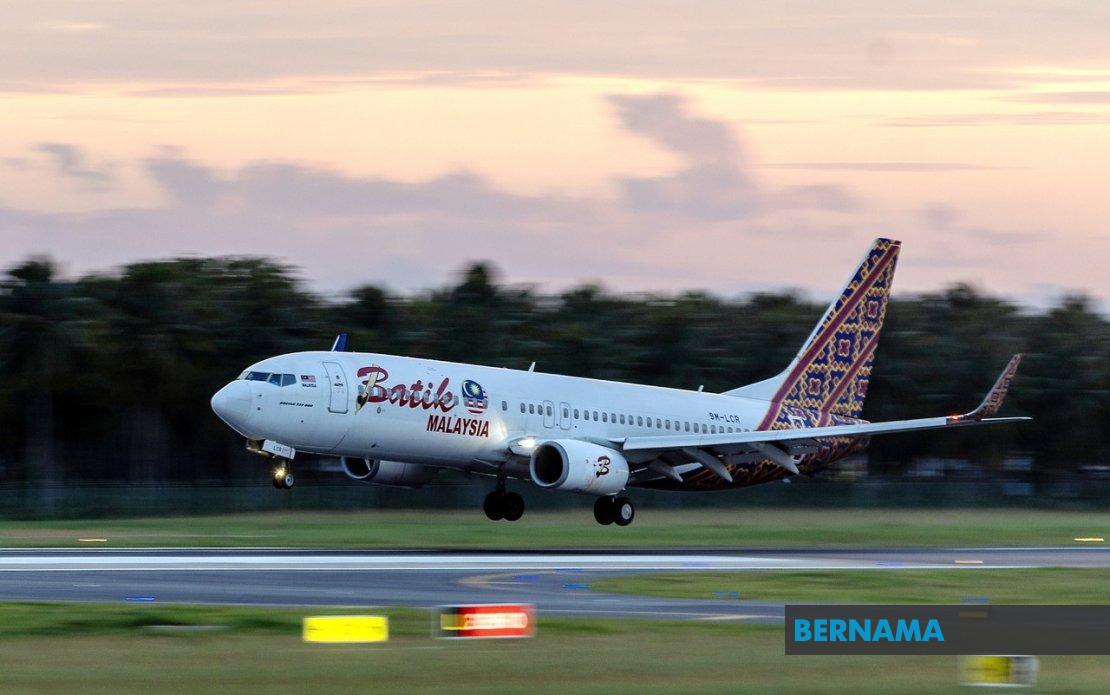
Batik Air is set to launch a twice-daily flight service connecting Bintulu and Kuala Lumpur beginning July 20, marking a significant expansion of the carrier's presence on this key domestic route. Tourism, Arts and Culture Minister Datuk Seri Tiong King Sing announced the development on Friday, characterizing the move as a direct response to mounting public pressure over inadequate flight capacity and escalating ticket prices on the route.
The decision comes after sustained engagement between Tiong's office and Batik Air management to resolve growing grievances from Bintulu's travelling public. Previously, the airline had reduced its service frequency, a contraction that sparked widespread complaints about limited options and inflated fares. Tiong revealed that while he had initially advocated for three daily flights, Batik Air ultimately settled on a phased approach, committing first to one additional daily service with provisions for further expansion if demand warrants it.
Under the new schedule, departures from Kuala Lumpur to Bintulu will occur at 10:00 am and 2:30 pm, while the return flights from Bintulu will leave at 1:10 pm and 5:40 pm. This timetabling reflects efforts to provide travellers with flexible departure windows that accommodate different travel patterns, whether for business meetings, educational pursuits, medical appointments, or leisure activities. The staggered timing throughout the day should also distribute passenger loads more evenly across flights rather than concentrating demand into a single daily service.
Bintulu's economic trajectory has been a key driver of aviation demand in the region. The Sarawak coastal town has experienced steady development in recent years, translating into increased business travel, particularly among professionals engaged in the oil and gas sector, manufacturing, and related industries. Beyond commercial traffic, the city continues to attract visitors for education and healthcare services, while its tourism potential remains largely untapped. These diverse demand drivers have created a confluence of pressure on air transport capacity that previous service levels simply could not accommodate.
Tiong emphasized throughout negotiations that affordability remains as critical as availability. He pressed Batik Air to maintain reasonable pricing even as it expanded capacity, framing this as mutually beneficial. The minister's argument rests on a straightforward economic principle: as fares become more competitive and predictable, demand should increase, ultimately benefiting the airline through higher passenger volumes and the travelling public through genuine choice and cost relief. This approach contrasts with scenarios where reduced competition leads to price spikes and restricted capacity.
The minister also stressed the importance of operational reliability alongside frequency increases. Public frustration over the previous period stemmed not only from limited flights but also from frequent cancellations and last-minute schedule adjustments that disrupted travel plans and undermined confidence in the service. Tiong made clear that simply adding flights without ensuring consistent, dependable operations would fall short of addressing community concerns. This dual emphasis on both capacity and reliability reflects lessons learned from past service disruptions on regional routes.
The expansion carries broader implications for Sarawak's connectivity and economic positioning. Bintulu serves as a nodal point for the east coast of Peninsular Sarawak, and improved air links to the federal capital enhance the town's accessibility to markets, services, and opportunities across the country. For residents requiring specialist medical treatment available only in Kuala Lumpur, more frequent and affordable flights represent tangible quality-of-life improvements. For businesses based in Bintulu, enhanced connectivity reduces transaction costs and makes the town more competitive as a location for investment and operations.
The announcement also signals an evolving approach to aviation policy in Malaysia, where government officials increasingly engage directly with carriers on route economics and passenger affordability. Rather than relying purely on market forces or regulatory mandates, Tiong's engagement model emphasizes dialogue, data-sharing, and collaborative problem-solving. This softer approach may be more sustainable than heavy-handed intervention, as it preserves airline profitability while addressing genuine public grievances.
Looking forward, the door remains open for further expansion. Tiong indicated that if passenger demand grows robustly following the launch of twice-daily service, the viability of a third daily flight would be reassessed. This contingent approach provides Batik Air with a pathway to scale capacity based on demonstrated demand rather than speculative projections, reducing the airline's downside risk while preserving optionality for the travelling public. Success on this route could also serve as a proof-of-concept for similar arrangements on other underserved domestic corridors across Malaysia and the region.
The July 20 launch date provides a window for the airline and relevant authorities to finalize operational arrangements, including crew scheduling, aircraft maintenance planning, and ground infrastructure adjustments at both Bintulu Airport and Kuala Lumpur International Airport. The extended lead time also allows the market to adjust expectations and for promotional activities to alert potential passengers to the new service pattern, potentially smoothing the ramp-up in passenger volumes.
Successful execution of this expanded service would demonstrate that government-airline cooperation, when approached pragmatically, can deliver tangible improvements in regional connectivity without imposing unsustainable burdens on carriers. For Bintulu and surrounding communities, twice-daily flights represent a material upgrade in travel convenience and economic accessibility that could catalyze broader development benefits in coming years.

