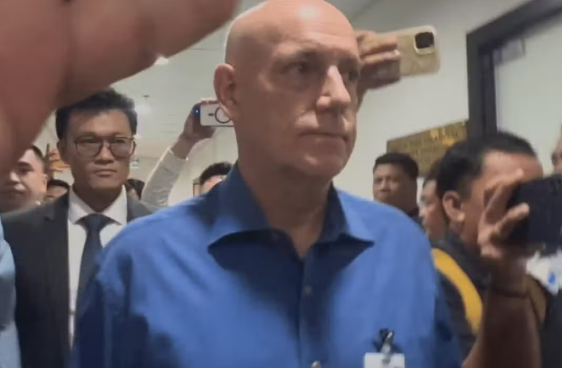
Former head coach of Ateneo de Manila University's men's basketball team Tab Baldwin presented himself before the National Bureau of Investigation on Tuesday afternoon following his absence from two prior scheduled inquiries. The appearance comes as investigators seek clarity into the circumstances surrounding the deaths of student-athletes Rene Baterbonia and Divine Adili, who lost their lives during a team outing in Dipaculao, Aurora, earlier this month. Baldwin arrived at the NBI Homicide Division around 1:45 pm accompanied by his legal representative Karl David, where he remained at the bureau for questioning.
The investigation has been marked by scheduling complications that have prolonged the probe into what authorities are treating as a significant incident involving student deaths. Baldwin's initial scheduled appearance on June 16 did not materialise, with his legal team submitting notice that the coach was "not in good condition" at that time. A second scheduled session on June 19 was also missed, though Baldwin's attention that day was diverted to a separate appearance before the Philippine National Police-Criminal Investigation and Detection Group, where he provided an earlier statement regarding the incident.
The dual investigation by both the NBI and the Philippine National Police reflects the seriousness with which authorities are approaching the case. Two young athletes from one of the nation's premier universities died during what should have been a routine team-building activity, raising critical questions about safety protocols, supervision, and the circumstances that led to the drowning incident. The involvement of multiple investigative agencies indicates the case has touched on broader concerns about institutional accountability and the welfare of student-athletes under coaching supervision.
NBI Director Melvin Matibag indicated that investigators would undertake a detailed comparison between Baldwin's account provided directly to the NBI and his earlier testimony delivered to the CIDG the previous Friday. This comparative analysis is standard investigative procedure when a subject has given statements to multiple agencies, as discrepancies or inconsistencies can prove material to establishing what transpired. The methodical approach suggests investigators are focused on establishing a clear factual record of events leading up to and during the fatal incident.
The case has highlighted broader institutional questions within Philippine basketball and university athletics programmes. Ateneo de Manila University, one of the country's most prestigious institutions and historically a powerhouse in collegiate basketball, now faces intense public scrutiny regarding the safety measures implemented during its athletic programmes. The deaths of two young athletes has inevitably prompted discussions about whether universities have adequate safeguards, emergency protocols, and oversight when conducting team activities, particularly those involving water or high-risk environments.
Tab Baldwin brings significant profile to this investigation. His tenure as Ateneo's basketball programme director made him a prominent figure in Philippine collegiate sports, and his involvement in the incident has garnered substantial media attention. The investigation's focus on Baldwin's account is crucial given his position as the authority figure responsible for the team's activities and the welfare of the student-athletes under his supervision.
The NBI's stated intention to conclude its investigation into the drowning deaths this week suggests the bureau believes it has gathered sufficient information to formulate preliminary findings. However, the complexity of the case, involving fatalities during a supervised team activity, likely means that the investigation's conclusion would represent an initial phase rather than a final determination. Additional proceedings, including possible administrative reviews and potential legal actions, may follow depending on the investigative findings.
For Malaysian readers and the broader Southeast Asian context, this case underscores recurring challenges that educational institutions across the region face in balancing athletic programming with comprehensive student safety provisions. Universities throughout ASEAN have increasingly come under scrutiny regarding their duty of care toward student-athletes, particularly during off-campus activities or high-risk training regimes. The Philippine investigation will likely inform broader discussions about institutional liability, coach accountability, and the regulatory frameworks governing university sports in the region.
The Ateneo case also reflects wider conversations about power dynamics within athletics programmes. Head coaches typically exercise substantial discretion over team activities and athlete participation, yet institutional oversight and independent safety reviews may not always match this operational authority. As the investigation progresses, questions will likely emerge about whether existing protocols were followed, whether they were adequate, and what systemic changes might be necessary to prevent similar tragedies in university athletic programmes across the Philippines and Southeast Asia more broadly.