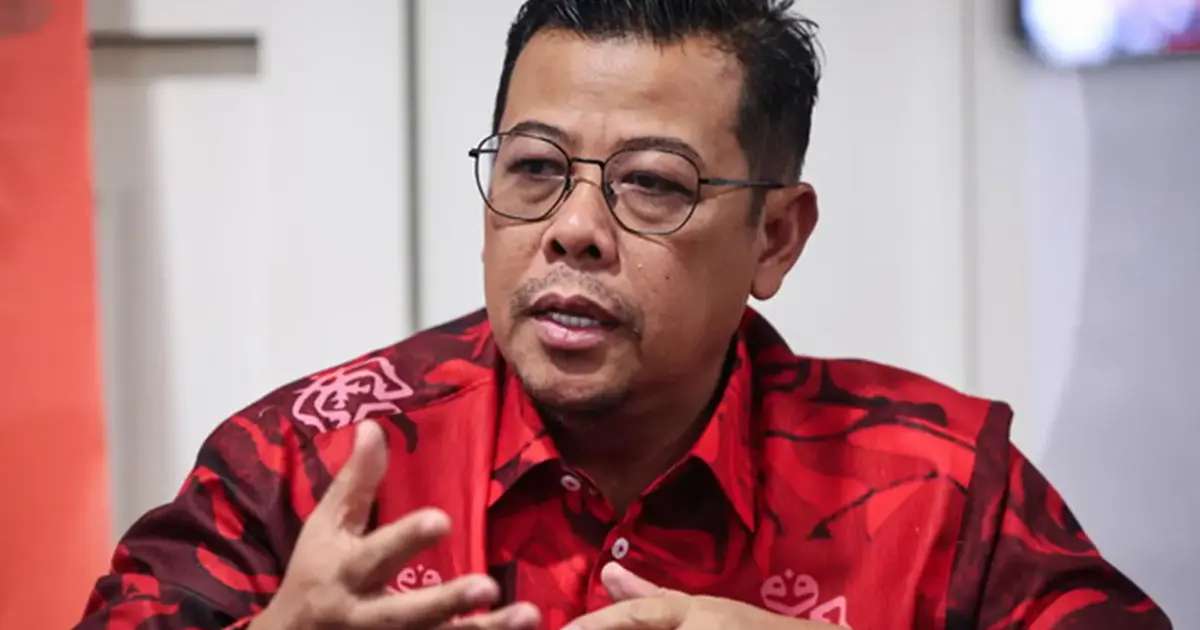
Barisan Nasional will maintain its loose working arrangement with Perikatan Nasional rather than formalize their political partnership, according to Umno Supreme Council member Razlan Rafii, who pointed to historical lessons as the rationale behind this cautious approach to coalition building.
The preference for an unofficial pact reflects deepening skepticism within Umno's top leadership regarding structured alliances that carry binding obligations. Razlan Rafii's comments underscore the delicate equilibrium that has emerged in Malaysian politics following the 2022 general election, when both coalitions found themselves competing for legislative dominance and, eventually, forced into practical cooperation to ensure stable government formation.
Past coalitions have left difficult memories for Barisan Nasional, particularly the turbulent Pakatan Harapan period when the bloc faced internal contradictions and shifting agendas among component parties. The failure of formal structures to accommodate divergent political interests has created institutional wariness that continues shaping decision-making within the coalition today. Senior leadership views formal agreements as constraining flexibility during moments when political circumstances shift rapidly, a recurring pattern in Malaysian electoral politics over the past decade.
The informal nature of the current understanding between Barisan Nasional and Perikatan Nasional allows both coalitions to maintain strategic independence while cooperating on specific parliamentary matters. This arrangement has proven functional for government stability, as demonstrated during recent legislative sessions where both blocs have coordinated on confidence votes without surrendering autonomy in policy formulation or internal party operations. The absence of formal documentation means neither coalition carries contractual obligations that could trigger mass defections or party reorganization.
Umno's historical experiences with formal coalitions extend beyond recent years. The party has witnessed how written agreements can become political weapons when component parties exploit contractual language during leadership disputes or when negotiating ministerial appointments and resource allocation. By opting for informal coordination, party strategists calculate they reduce vulnerabilities to legal challenges or accusations of contractual breaches that often accompany formal arrangements in Malaysian coalition politics.
The distinction between formal and informal pacts holds significant implications for component parties within both coalitions. Smaller parties in Barisan Nasional face different leverage calculations under informal versus formal structures. Without explicit contractual frameworks, smaller coalition members must continually prove their value through parliamentary support and electoral contributions, incentivizing loyalty while preventing the kind of complacency that formal membership might encourage. Conversely, informal arrangements create uncertainty about each party's entitlements regarding ministerial positions, budget allocation, and policy influence.
Perikatan Nasional similarly benefits from informality, particularly given the coalition's relative newness and the varied ideological orientations of its component parties. The Islamist Pas, the Malay-focused Bersatu, and the regionally-grounded Gerakan operate under fundamentally different party philosophies and electoral bases. An informal understanding permits these parties to maintain distinct identities and separate policy positions without appearing to violate coalition discipline, reducing internal friction that formal structures might intensify through explicit compliance mechanisms.
For the government, informal coalition arrangements create unexpected governance advantages. Prime Minister and cabinet ministers can exercise greater policy discretion without constantly negotiating coalition consent, provided key legislative votes remain secure. This flexibility has proven valuable during economic crises or pandemic responses when rapid executive decision-making became necessary. However, informality also introduces vulnerability, as either coalition can withdraw cooperation on specific issues without technically breaching alliance terms, creating unpredictability in parliamentary outcomes.
The Malaysian parliament's current composition reflects these tensions between formal and informal coalition structures. With neither Barisan Nasional nor Perikatan Nasional commanding an overwhelming legislative majority independently, cooperation remains practical necessity rather than ideological preference. Razlan Rafii's remarks suggest that both coalitions understand this mutual dependence, with informal arrangements serving as the mechanism through which they manage interdependence while preserving room for competitive differentiation during electoral campaigns and policy debates.
Regional observers view Malaysia's informal coalition model as uniquely adaptive to the country's fractious party system. Southeast Asian democracies with stronger institutional frameworks tend toward formal coalition agreements, yet Malaysia's pattern of rapid party realignments and frequent leadership transitions has made flexibility increasingly valuable than contractual certainty. The success of informal arrangements in stabilizing government without formalizing obligations provides a case study for other regional democracies experiencing coalition politics without robust institutional guardrails.
Looking forward, Razlan Rafii's position signals that Umno intends maintaining strategic distance from Perikatan Nasional even while cooperating on parliamentary votes. This approach permits Barisan Nasional to position itself as a credible alternative government should electoral circumstances shift, while ensuring current administrative stability. The informal pact thus represents a pragmatic accommodation to Malaysia's contemporary political realities, where coalition building remains essential to governance yet formal structures increasingly appear as liabilities rather than assets in maintaining political viability and organizational autonomy.

