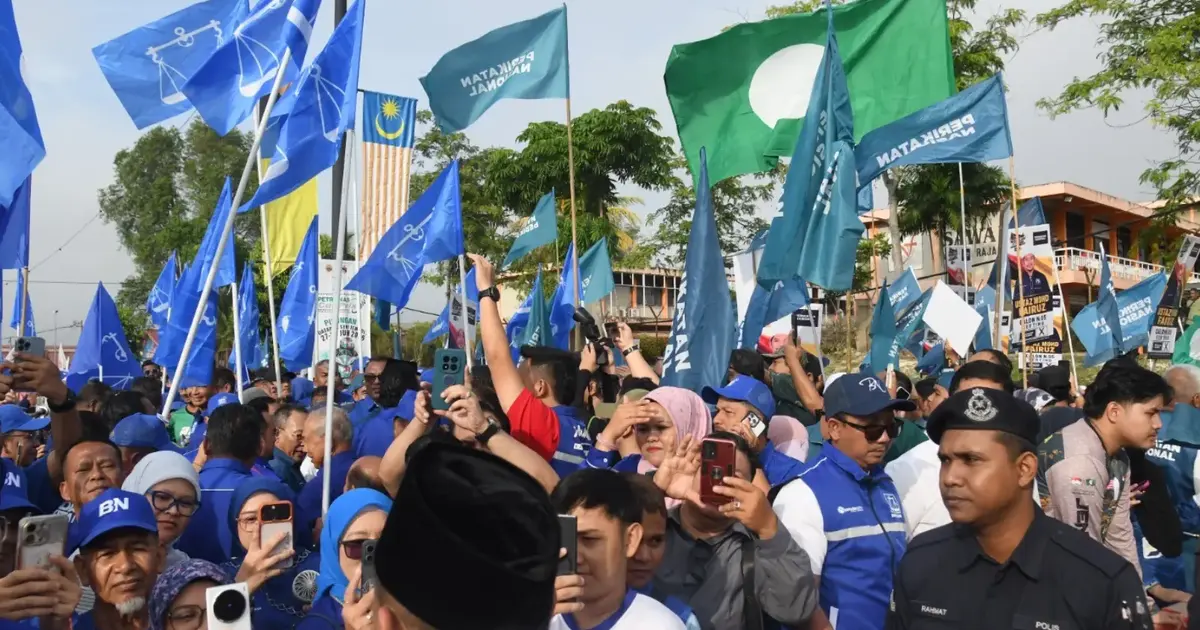
Political analyst Azmi Hassan has dismissed suggestions that Barisan Nasional can substitute for Bersatu's pivotal contribution to Perikatan Nasional's electoral performance in Selangor, pointing to fundamental limitations in BN's current standing and capacity to replicate the smaller party's earlier mobilisation efforts. Hassan's assessment reflects growing questions about the viability of opposition strategies in Malaysia's most economically significant state, where demographic and political shifts continue to reshape the electoral landscape.
Bersatu played a critical role in enabling Perikatan Nasional to make substantial electoral gains during the previous state election cycle, leveraging particular voter constituencies and mobilisation networks that proved instrumental in challenging Pakatan Harapan's traditional dominance in Selangor. The party's presence provided both organisational infrastructure and a distinct political brand that appealed to specific demographic segments, particularly among Malay-Muslim voters who form a significant portion of the state's electorate. Beyond mere numbers, Bersatu's contribution encompassed ground-level coordination and community engagement strategies that proved difficult for larger, more bureaucratised parties to replicate with equivalent effectiveness.
Barisan Nasional, despite its historical prominence and extensive organisational machinery, operates from a fundamentally different position than Bersatu occupied during the previous election cycle. The coalition has faced considerable challenges to its cohesion and electoral appeal in recent years, particularly in Selangor where urban and semi-urban voters have increasingly gravitated towards Pakatan Harapan parties. BN's core component parties—UMNO, MIC, and MCA—carry their own legacies and electoral handicaps that complicate efforts to rebuild support among demographic groups they once dominated. Hassan's analysis suggests that structural weaknesses within BN's current configuration cannot be overcome through nominal coalition arrangements or campaign intensity alone.
The absence of Bersatu from any potential opposition alliance in Selangor represents more than a simple loss of seats or campaign volunteers. Bersatu functioned as a vehicle for political realignment, attracting voters who might otherwise have remained within UMNO or avoided voting altogether. The party's positioning as neither the traditional establishment nor a purely anti-establishment force gave it distinctive appeal, particularly among younger and less ideologically committed voters. Barisan Nasional's continued association with longstanding institutional structures means it cannot occupy that same political space or attract those particular voter segments with comparable credibility.
Selangor's electoral dynamics have undergone profound transformation over the past decade, with suburban constituencies becoming increasingly competitive and formerly safe opposition seats experiencing tighter contests. The state's diverse voter base now encompasses urban professionals, semi-rural communities, and immigrant populations that respond to different political messaging and mobilisation strategies. PAS has attempted to build inroads through Islamic messaging and grassroots organising, but these efforts have faced headwinds in predominantly non-Muslim constituencies and among younger urbanised voters. Bersatu's earlier success in bridging certain demographic divides proved valuable precisely because it operated outside conventional party strictures and could project flexibility that both UMNO and PAS individually struggled to achieve.
The potential alliance between PAS and other opposition components faces additional complications beyond BN's perceived electoral limitations. Ideological differences and competing claims over policy priorities create coordination challenges that no amount of organisational efficiency can fully resolve. PAS's Islamist orientation clashes with BN component parties' more moderate positioning on certain social and constitutional matters, potentially creating campaign vulnerabilities rather than synergies. Hassan's analysis implies that forcing institutional cooperation cannot manufacture the organic political alignment that Bersatu previously represented, where voter attraction to the party's positioning naturally reinforced electoral coalitions.
Geographic and demographic realities further constrain BN's utility in Selangor opposition efforts. The coalition historically drew support from particular constituencies and voter demographics that no longer form reliable electoral bases in the state's current configuration. Rural Selangor districts that once represented BN strongholds have undergone significant demographic shifts, while urban constituencies where BN might theoretically compete have entrenched Pakatan Harapan support. Any BN participation in opposition efforts would likely require surrendering certain constituencies to PAS or other coalition partners, creating internal tensions and potentially alienating BN's residual support base without generating compensatory gains elsewhere.
From a Malaysian political economy perspective, Selangor's importance extends beyond state-level significance. As the nation's industrial and commercial heartland, state governance decisions ripple across the broader economy and influence federal policy environments. The opposition's capacity to challenge Pakatan Harapan's control matters not merely for electoral scorecards but for substantive policy direction on infrastructure, development regulation, and business-environment questions. Hassan's implicit argument suggests that opposition efforts built on misaligned institutional combinations lack the political coherence necessary to present compelling alternative visions on these critical issues, thereby disadvantaging opposition messaging regardless of raw electoral mathematics.
The analyst's assessment carries implications for broader opposition coalition-building across Malaysia, not merely in Selangor. Political parties increasingly recognise that institutional size and formal membership matter less than demonstrable capacity to mobilise particular voter constituencies and project credible alternatives to incumbent governments. Bersatu's earlier effectiveness rested on this principle—it offered something different that voters perceived as worth supporting, independent of its component positions within larger coalitions. Barisan Nasional's structural position prevents it from offering equivalent differentiation, suggesting that opposition competitiveness depends less on which parties formally participate than on whether those parties can collectively generate authentic political alternatives rather than repackaged versions of failed previous arrangements.

