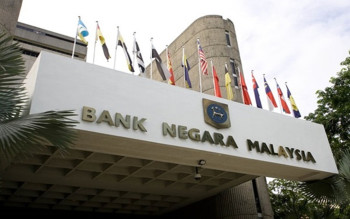
Bank Negara Malaysia has defended its advisory relationship with Tabung Haji, framing the central bank's involvement as a core responsibility stemming from its statutory mandate to protect the nation's overall financial stability. The clarification comes amid ongoing scrutiny from the Royal Commission of Inquiry into the pilgrimage fund, as the central bank seeks to explain the rationale behind its repeated interventions in the affairs of one of Malaysia's largest non-bank financial institutions.
The central bank's authority to offer counsel to Tabung Haji derives explicitly from provisions in the Central Bank of Malaysia Act 2009, which grants Bank Negara broad powers to identify and monitor emerging risks that could jeopardise the integrity of the financial system. This statutory framework empowers the institution to look beyond its traditional regulatory remit, extending surveillance across the broader financial ecosystem to detect vulnerabilities that might cascade through interconnected markets and institutions.
A key structural mechanism enabling this expanded supervisory reach is the Financial Stability Executive Committee, established under the same legislative framework. This committee functions as Bank Negara's early-warning system, tasked with conducting comprehensive surveillance of financial markets and institutions to spot potential destabilisers before they crystallise into systemic crises. When such surveillance identifies risks at significant non-bank financial institutions, the FSEC has the authority to issue advisory guidance designed to prompt corrective action.
Tabung Haji's classification as a significant non-bank financial institution makes it a natural focus for this oversight mechanism. The fund manages billions of ringgit in pilgrim savings and operates at a meaningful scale within Malaysia's financial landscape. Its interconnections with the conventional banking system and broader capital markets mean that deterioration in its financial health could create ripple effects across multiple sectors, justifying Bank Negara's preventive intervention.
Crucially, the central bank emphasised that this advisory capacity exists irrespective of whether an institution falls under its direct supervisory jurisdiction. Bank Negara does not regulate Tabung Haji in the conventional sense—that responsibility lies with other authorities and the fund's own governance structures. Yet the financial stability mandate operates on a different plane, permitting the central bank to provide counsel to an institution's board of directors and to relevant government ministers whenever systemic concerns warrant preventive action.
The track record of Bank Negara's warnings to Tabung Haji illustrates the gravity with which the central bank viewed the fund's financial trajectory. Over the preceding years, Bank Negara had issued five separate warning letters to Tabung Haji's chairman and the Minister of Religious Affairs, consistently flagging the widening chasm between the fund's assets and liabilities. This gap represented a critical vulnerability that threatened the institution's solvency and ability to meet obligations to millions of Malaysian pilgrims who had entrusted their savings to the fund.
These central bank warnings were reinforced by an official rebuke from Malaysia's Auditor-General, who documented the asset-liability imbalance in the 2017 Financial Statements Report. The convergence of scrutiny from both the central bank and the Auditor-General underscored the severity of Tabung Haji's deteriorating position and the multi-institutional concern about the fund's viability. The accumulation of these warnings created a paper trail demonstrating that Bank Negara had fulfilled its obligation to alert relevant stakeholders to systemic risks.
The government's decision to establish the Royal Commission of Inquiry in 2021 reflected broader political will to investigate how Tabung Haji's financial position had become so precarious. The RCI commenced formal operations following the appointment of its members on January 20, 2022, tasked with conducting a thorough examination of the fund's management, governance, and the circumstances that had created such substantial liabilities. The inquiry ultimately presented its findings to the Yang di-Pertuan Agong on August 30, 2022.
Bank Negara's clarification about its advisory mandate carries important implications for how Malaysia regulates systemic financial risk. The central bank is essentially asserting that financial stability supervision extends beyond the boundaries of formal regulatory authority, encompassing a prophylactic advisory function that permits the institution to address emerging threats even when not the primary regulator of the entity in question. This interpretation positions Bank Negara as a guardian of financial system integrity rather than merely a supervisor of banks.
For Malaysian readers and policymakers, this explanation suggests that the central bank views financial stability as an interconnected challenge requiring coordination across multiple institutions and authorities. Bank Negara cannot simply monitor banks and payment systems; it must also maintain vigilance over major non-bank players whose failures could generate systemic consequences. This broader conception of the central bank's role reflects contemporary global best practices in macroprudential regulation.
The Tabung Haji situation itself demonstrates why such expansive oversight capabilities matter. A massive fund serving the hajj aspirations of millions of Malaysians cannot be permitted to deteriorate unchecked, regardless of which authority bears formal regulatory responsibility. Bank Negara's willingness to sound repeated alarms—even without direct supervisory power—contributed to ultimately bringing the fund's troubles into public view and triggering official inquiry. In this sense, the central bank's financial stability mandate functioned as an additional safeguard protecting ordinary Malaysians' interests.
Looking forward, Bank Negara's clarification underscores the necessity for coordinated governance frameworks that connect the central bank, sectoral regulators, and institutional management in addressing financial vulnerabilities. No single authority can monitor every risk; the financial system's complexity demands that institutions with different perspectives and mandates communicate findings and recommendations across traditional boundaries. Bank Negara's intervention in Tabung Haji, viewed through this lens, represents not overreach but rather appropriate exercise of a stabilising function integral to contemporary central banking.

