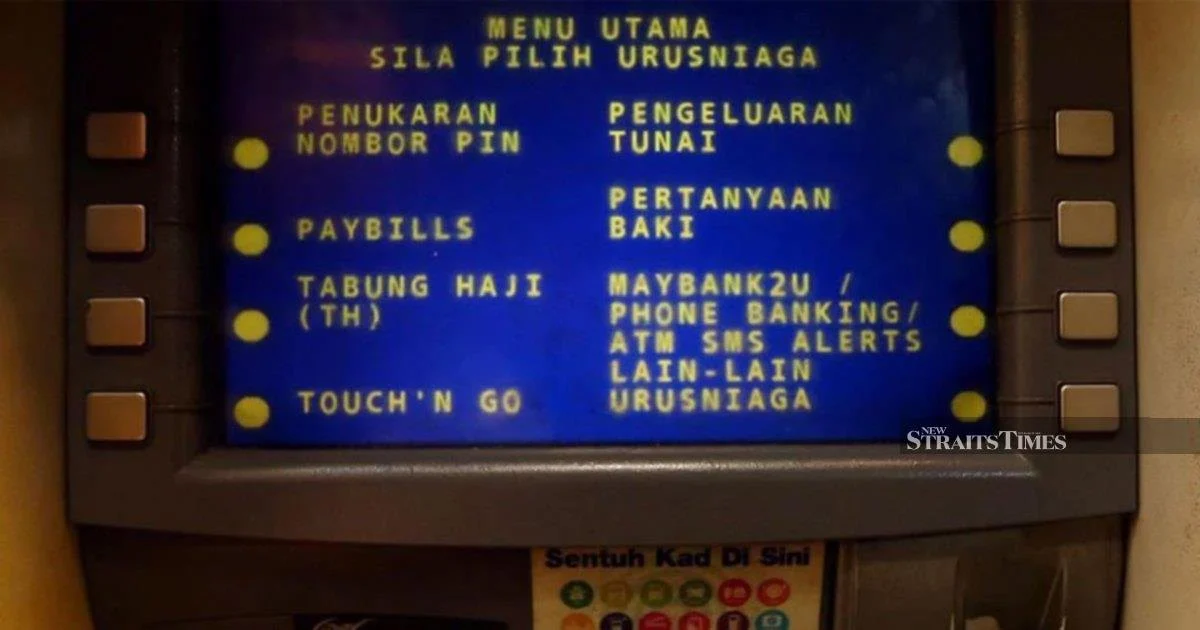
Bank Negara Malaysia has called on customers to lodge formal complaints if they continue to face the RM1 interbank withdrawal charge while accessing ATM machines operated by their own financial institutions. The directive, announced by Communications Minister Datuk Fahmi Fadzil, signals the central bank's commitment to investigating improper fee enforcement and protecting consumers from unwarranted charges.
The RM1 interbank withdrawal fee has been a contentious issue within Malaysia's banking landscape, as it applies when customers withdraw cash from ATM machines belonging to banks other than their own. However, the central concern highlighted by Bank Negara is that some customers are being incorrectly charged this fee even when using ATMs branded by their own banking institution, which should enable free or reduced-cost transactions.
This anomaly suggests potential system failures or procedural lapses within certain banking networks. When customers use their own bank's ATM infrastructure, they typically expect either zero charges or significantly lower fees than the standard interbank withdrawal rate. The occurrence of such erroneous charges indicates that either the banking systems are misclassifying transactions or that some financial institutions are not properly implementing Bank Negara's fee framework.
The timing of this advisory carries particular significance for Malaysian consumers who have become increasingly cost-conscious about banking charges. ATM usage remains a fundamental banking service, especially for individuals who prefer cash transactions or live in areas with limited digital payment infrastructure. Even a RM1 charge per transaction can accumulate substantially for frequent users, making the proper enforcement of fee structures a matter of consumer welfare.
Bank Negara's approach of encouraging customer reporting represents a shift towards greater transparency and accountability in the banking system. By collecting data on these improper charges, the central bank can identify systemic issues, determine whether certain institutions are consistently violating the fee guidelines, and take appropriate regulatory action. This feedback mechanism also demonstrates responsiveness to consumer grievances and a willingness to investigate complaints thoroughly.
For Malaysian readers, understanding the distinction between own-bank and interbank ATM charges is crucial for managing personal finances effectively. The RM1 charge applies specifically when withdrawing from another bank's ATM, while transactions at one's own bank's machines should be exempt or subject to lower fees as stipulated in banking regulations. Customers who inadvertently pay the interbank fee while using their own bank's ATM have legitimate grounds to dispute these charges and seek refunds.
The broader implications of this advisory extend to consumer confidence in Malaysia's banking sector. If customers cannot trust that basic ATM transactions will be correctly charged, it undermines faith in banking systems and may push some users towards alternative financial services or cash-based transactions exclusively. Bank Negara's proactive stance aims to prevent such erosion of confidence by ensuring that fee structures are implemented consistently and fairly across all financial institutions.
From a Southeast Asian perspective, Malaysia's approach to regulating banking charges and encouraging consumer reporting aligns with regional trends towards stronger consumer protection frameworks. Countries across ASEAN are increasingly scrutinizing banking fees and working to simplify fee structures, recognizing that transparent and fair charges are essential for financial inclusion and economic development.
Customers wishing to report such incidents should document relevant details including the date and time of the transaction, the specific ATM location, the amount withdrawn, and the fee charged. Bank Negara emphasizes the importance of providing comprehensive information to facilitate thorough investigations. Financial institutions found to be implementing charges incorrectly may face regulatory penalties, further incentivizing compliance with established guidelines.
The advisory also underscores the need for customers to regularly review their ATM transaction statements and scrutinize charges. Many banking apps and online platforms now display transaction fees clearly, allowing customers to identify discrepancies promptly. Proactive monitoring by consumers, combined with Bank Negara's willingness to investigate, creates a more robust system of accountability.
Looking forward, this initiative may prompt Bank Negara to examine whether current ATM charging systems require technological upgrades or clearer regulatory directives. The central bank may also consider whether financial institutions need stricter compliance monitoring or whether consumer education campaigns could reduce confusion about which charges apply in different withdrawal scenarios.
Ultimately, the protection of consumers from erroneous banking charges reflects Bank Negara's broader mandate to maintain a stable, fair, and efficient financial system. By empowering customers to report problematic charges and committing to investigate their complaints, the central bank reinforces the principle that Malaysian consumers deserve transparent, honest treatment from their financial institutions.

