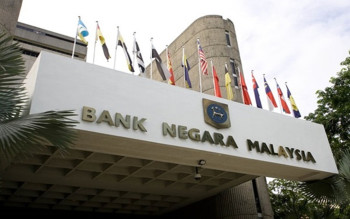
The central bank issued five separate warning letters to Tabung Haji's leadership and the Religious Affairs Ministry regarding the mounting disparity between the pilgrim fund's assets and liabilities, Minister in the Prime Minister's Department (Religious Affairs) Dr Zulkifli Hasan revealed during parliamentary proceedings on August 11. These communications from Bank Negara Malaysia signalled serious concerns about TH's financial trajectory and the immediate need for corrective action, yet the warnings went unheeded by the institution's management team during the critical period when intervention could have arrested the deterioration.
Zulkifli underscored the gravity of the situation that BNM had flagged, explaining that TH's precarious financial position represented a potential systemic threat to Malaysia's broader financial architecture. The concern extended beyond TH itself to implications for the country's monetary stability and depositor confidence in financial institutions. Despite these explicit cautions from the nation's prudential regulator, the TH board proceeded without implementing the structural reforms that BNM had essentially demanded, a disregard that would later prove catastrophic as the fund's troubles deepened considerably.
The minister's parliamentary statement came during a special briefing on the Royal Commission of Inquiry's comprehensive examination of TH's operations and governance failures. The RCI, established in 2021 with members appointed in January 2022, had completed a 211-page investigation into weaknesses spanning the 2014 to 2020 period. By explicitly referencing BNM's unheeded warnings, Zulkifli positioned the regulatory failures and institutional defiance as pivotal moments where intervention could have altered the fund's trajectory, laying crucial groundwork for accountability discussions.
Following the central bank's admonitions, Malaysia's Auditor-General added institutional pressure through a formal reprimand embedded within the 2017 Financial Statements Report. The Auditor-General specifically highlighted an Emphasis of Matter regarding modifications to TH's impairment policy, which underwent two separate revisions during that single year. These successive policy shifts raised red flags about potential accounting manoeuvres designed to artificially inflate reported profitability for 2017, suggesting that TH's published financial statements were not reflecting genuine economic reality but rather presenting a deliberately inflated picture to stakeholders and regulators.
The pattern of concerns from multiple regulatory authorities appears to have finally catalysed action in 2018, when TH's reconstituted board appointed PricewaterhouseCoopers, the multinational accounting and professional services firm, to conduct an independent forensic reassessment of the fund's true financial condition. This decisive step represented a fundamental departure from the previous approach, signalling newfound willingness to subject TH to rigorous, external professional scrutiny. The engagement of an internationally respected auditor suggested the board recognised that conventional internal accounting processes had become unreliable and that credible external validation was essential for restoring any semblance of stakeholder confidence.
PwC's investigation substantiated the darkest interpretations of the earlier warnings, confirming that financial manipulation had indeed occurred within TH's accounting systems. The audit firm's findings revealed a startling disparity in asset valuation practices: of the RM4.6 billion in total assets that TH had declared on its balance sheet, only RM556 million—roughly 12 per cent—had been subjected to professional valuation by qualified valuers. This meant approximately RM4 billion in assets existed on paper without independent verification of their actual worth, raising profound questions about whether these assets were genuinely recoverable or whether they represented inflated or phantom values that had no basis in market reality.
The RCI's public release on July 29 furnished Malaysians with their first comprehensive official accounting of how TH had deteriorated into crisis. The 211-page report documented systemic governance failures, inadequate internal controls, and structural weaknesses spanning roughly seven years of operations. Beyond diagnosis, the RCI formulated 25 specific recommendations targeting improvements across TH's management framework, compliance protocols, and operational procedures. By July 30, just one day after public disclosure, TH management reported that 75 per cent of these recommendations had already been enacted, suggesting either that many improvements were straightforward remedies or that the fund had been implementing corrections in anticipation of the RCI's findings.
The timeline of TH's crisis and the regulatory response reveals a troubling pattern where warnings from Malaysia's premier financial supervisor went unheeded for an extended period. Bank Negara's five warning letters represented explicit signals that TH required fundamental restructuring, yet the institution's leadership apparently chose to persist with existing practices rather than embrace the radical changes that the regulator deemed necessary. This delay between warning and meaningful action meant that financial deterioration continued unabated, losses compounded, and the eventual remediation burden became substantially heavier than would have been required if initial warnings had prompted immediate comprehensive reform.
For Malaysian pilgrims and TH's millions of contributors, this sequence of events carried profound implications. Tabung Haji functions as a quasi-government vehicle through which Malaysian Muslims save for the Hajj pilgrimage while contributing to a broader development fund. The institution's financial collapse threatened not only pilgrims' accumulated savings but also the administrative capacity to organise the annual Hajj journey. The RCI's investigation and the subsequent revelation of regulatory warnings served to establish official documentation of how institutional negligence and management failure had imperilled one of Malaysia's most symbolically important financial institutions.
The broader context for Malaysian readers involves understanding how governance lapses in large financial institutions can escape notice or correction despite clear warning signals from professional regulators. BNM's repeated warnings to TH demonstrate that regulatory oversight exists and that central banks do attempt to enforce compliance with prudential standards. However, the ignored warnings equally illustrate that regulatory authority means little without corresponding institutional willingness to implement directives and the political will to enforce compliance through mechanisms such as management replacement or operational seizure.
Zulkifli's detailed parliamentary exposition of BNM's warnings served multiple political functions simultaneously: it documented that authorities had attempted intervention, demonstrated that warnings existed on the record, and positioned the government as acting responsibly once the scope of TH's problems became undeniable. By explicitly acknowledging that TH leadership had disregarded central bank guidance, the minister created a narrative in which TH's difficulties stemmed from management failure rather than systemic inadequacy in regulatory architecture or government oversight. This framing became important context as government entities moved toward implementing the RCI's 75 per cent of recommendations and considering remaining reforms.

