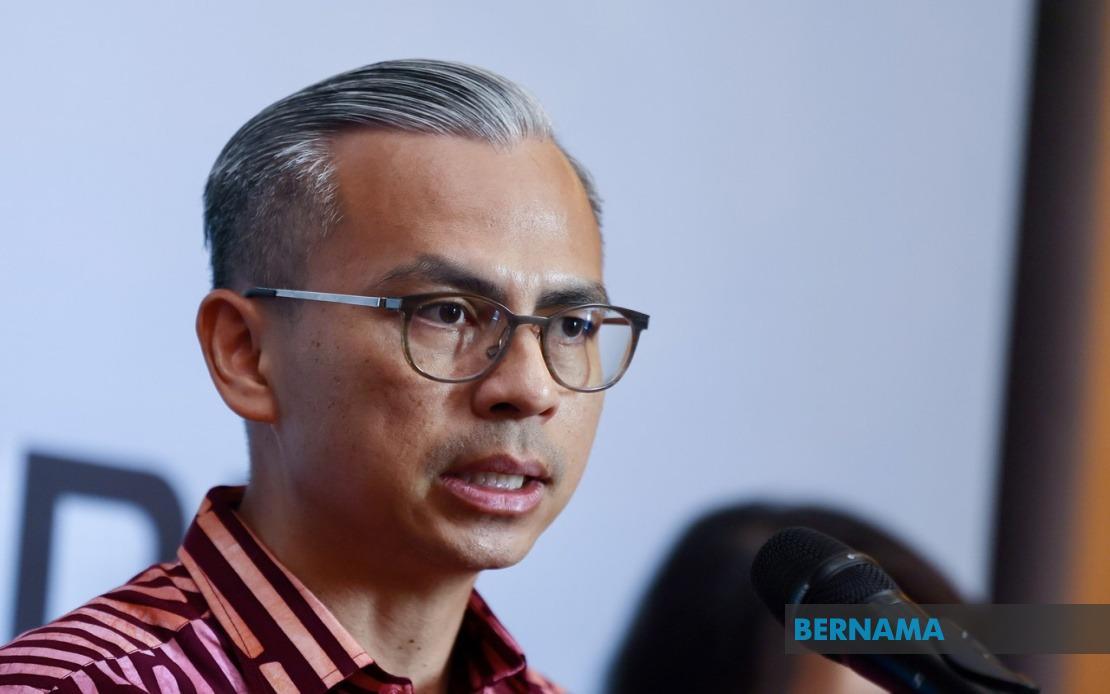
Customers of Malaysian banks who continue to face RM1 charges when withdrawing cash from automated teller machines should escalate their grievances to Bank Negara Malaysia, according to Communications Minister Datuk Fahmi Fadzil. Speaking at the ministry's weekly press conference in Kuala Lumpur on July 2, Fahmi underlined that the central bank retains enforcement powers against any banking institution that refuses to honour the recently implemented waiver on this fee, which took effect on July 1.
The RM1 interbank ATM withdrawal charge has long been a contentious issue among Malaysian consumers, who regard it as an additional financial burden on routine banking transactions. Fahmi's directive essentially establishes a formal complaints mechanism through BNM, empowering the regulator to investigate and sanction persistent violators. This move reflects the government's commitment to ensuring that announced financial concessions actually reach ordinary Malaysians, not merely symbolic gestures that fail to translate into practical benefit.
One critical clarification emerged from Fahmi's statement: the fee waiver applies exclusively to automated teller machines that are both owned and operated by banks participating in Malaysia's shared ATM network. This distinction proves essential for consumers navigating the financial system. Approximately 16,000 bank-owned ATMs—roughly 84 per cent of the nationwide total—now fall under the fee waiver framework, permitting cardholders to access cash without the RM1 surcharge regardless of which participating bank's network they tap into.
The remaining 16 per cent of ATMs present a more complicated landscape. These machines are managed by private non-bank companies operating under distinct commercial arrangements, and they retain authority to impose the RM1 withdrawal fee. This arrangement reflects the complex ownership structure underlying Malaysia's ATM infrastructure, where not all cash-dispensing machines belong to banking institutions. The distinction between bank-operated and independently-operated machines has proven confusing for consumers accustomed to viewing ATMs as a uniform banking service.
Fahmi recommended that customers identify bank-owned machines by locating the relevant bank's official logo displayed prominently on the equipment itself. By visually confirming the bank's branding, users can confidently access fee-free withdrawals. Conversely, machines bearing third-party operator insignia should be avoided if customers wish to escape charges. This practical guidance addresses the information gap that generated substantial social media enquiries following the waiver announcement.
The Association of Banks in Malaysia and the Malaysian Islamic Banking and Financial Institutions Association are preparing a joint statement to furnish more granular implementation details regarding the fee waiver programme. This coordinated communication from banking sector bodies should provide further clarity as the policy settles into regular practice. Such industry-level guidance complements regulatory direction from BNM and ministerial statements, creating multiple information channels through which Malaysian consumers can access reliable guidance.
The fee waiver initiative itself forms part of broader efforts to reduce everyday financial friction for Malaysian households. ATM charges, though individually modest, accumulate significantly over time for regular banking customers. Eliminating these fees across the majority of the national ATM estate represents a tangible cost-of-living improvement, particularly for lower-income Malaysians who rely heavily on cash transactions and multiple interbank withdrawals. The policy aligns with the MADANI Government's stated focus on improving household purchasing power and financial accessibility.
Beyond ATM fees, Fahmi highlighted separate developments regarding Malaysia's positioning as a technology and financial innovation hub. An international fintech company has established its inaugural Global Development Centre at Tun Razak Exchange, focusing particularly on Agentic AI development. This investment signals renewed foreign investor interest in Malaysia's digital economy capabilities and regulatory environment.
According to Fahmi, this establishment marks the first instance of such a global centre by this particular international fintech firm operating in Malaysian territory. The investment decision reflects investor confidence in Malaysia's political stability and the economic policy direction established under the MADANI administration. In an era of heightened geopolitical uncertainty and intensifying competition for technology sector investment, securing fintech company commitments carries significance beyond immediate employment creation, signalling international validation of Malaysia's institutional reliability and innovation potential.
The convergence of these developments—ATM fee reforms and fintech sector expansion—illustrates how government policy operates simultaneously across consumer protection and economic competitiveness dimensions. While the ATM initiative directly affects millions of ordinary Malaysians conducting daily banking transactions, the fintech centre investment shapes the nation's long-term economic trajectory and job creation capacity. Both initiatives reflect calculations about domestic living standards and international economic positioning.
For Malaysian consumers, the practical implication remains straightforward: report persistent RM1 charges to BNM and identify bank-owned machines by their branding. Yet the broader policy context reveals government intent to recalibrate banking industry practices toward greater customer benefit while simultaneously attracting high-value technology investment. These parallel efforts suggest a strategic approach recognising that sustainable economic development requires both immediate household relief and long-term competitiveness enhancement. Southeast Asian observers watching Malaysia's regulatory evolution should note this pattern of consumer-oriented banking reform coupled with fintech sector nurturing.

