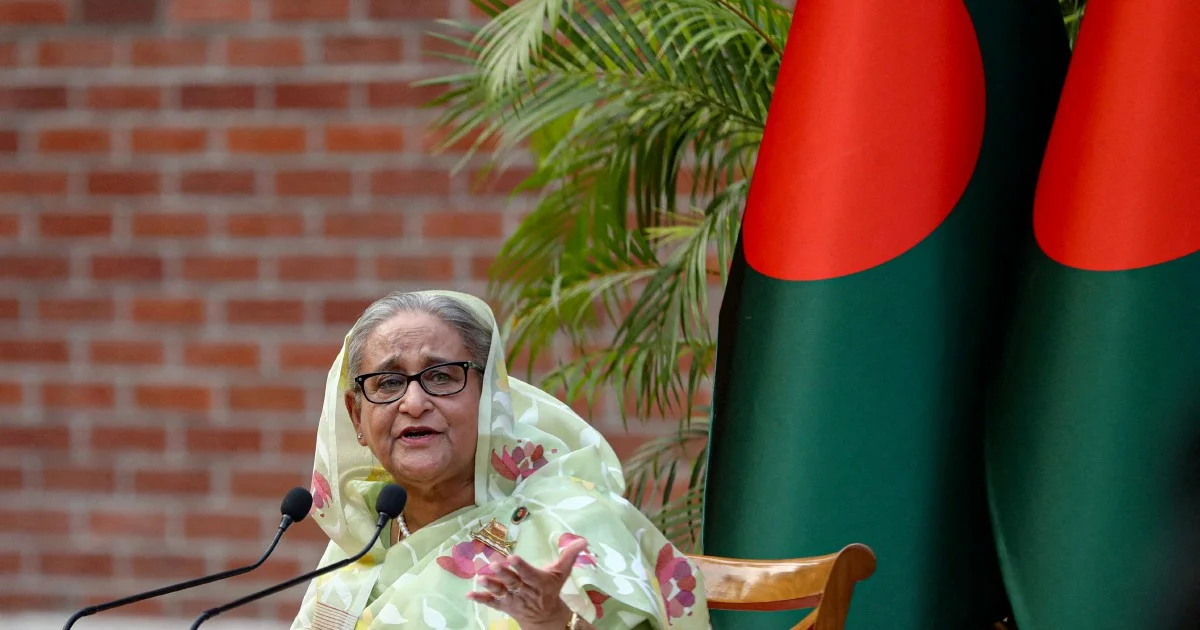
The political standoff engulfing Bangladesh has taken a sharper turn with a senior government minister explicitly warning that ousted Prime Minister Sheikh Hasina will face incarceration if she follows through on stated plans to return from self-imposed exile in India. The minister's stark declaration on Monday directly contradicts recent statements from Hasina herself, who told Reuters in recent days that she intended to come back to Bangladesh in December and voluntarily appear before a court to answer charges against her.
This escalating war of words reflects the deepening polarization within Bangladesh's political establishment following Hasina's dramatic departure from the country. Her exit, which was precipitated by widespread civil unrest and mounting pressure from rival political factions, has created a power vacuum and left fundamental questions unresolved about the country's constitutional order and the fate of its former leader. The prospect of Hasina's return has become a flashpoint for competing visions of Bangladesh's political future.
Hasina's declarations to Reuters underscore her confidence—or perhaps her calculation—that returning voluntarily and facing the judicial process could rehabilitate her political standing and eventually allow her to resume a role in national politics. By expressing willingness to surrender to court authority, she appears to be betting that demonstrating civic responsibility might mitigate public anger and reduce the likelihood of harsh sentences. This strategy reflects lessons learned from other ousted leaders in the region who have faced variable outcomes depending on how they have managed their legal challenges.
The minister's counter-warning that prison awaits Hasina signals a hardening stance within the current administration and suggests that the interim government or its political allies have little intention of allowing a smooth legal process that could culminate in Hasina's eventual political rehabilitation. The statement effectively transforms her potential return from a legal matter into a political contest, where the outcome may depend more on factional power dynamics than on judicial proceedings. This raises troubling questions about the independence of Bangladesh's courts and the rule of law more broadly.
For Malaysian observers and Southeast Asian regional analysts, the Bangladesh situation carries cautionary implications about political transitions and the treatment of ousted leaders. The region has witnessed multiple instances of former prime ministers and presidents facing legal jeopardy after losing power, from Thailand to the Philippines to Indonesia, yet the mechanisms and outcomes have varied substantially. Bangladesh's handling of Hasina will set a precedent for how the country manages post-election accountability and whether it can establish norms that protect both legitimate governance transitions and the rights of fallen leaders.
The timing of Hasina's intended return in December is significant, as it would occur during a period when Bangladesh is meant to be preparing for national elections following the interim administration's commitment to democratic renewal. Her reappearance could destabilize this electoral timeline, reignite street protests, and deepen factionalism within her own Awami League party. Conversely, allowing her to languish in Indian exile indefinitely creates a shadow over Bangladeshi politics that could complicate dialogue and reconciliation efforts.
India's role as Hasina's sanctuary introduces a regional dimension to this internal Bangladeshi crisis. New Delhi granted her refuge during a politically sensitive moment for India itself, and maintaining a controversial figure in exile while her home country explicitly threatens imprisonment creates diplomatic complications. This situation parallels other instances in South Asian history where neighboring countries have hosted exiled leaders, often with unintended consequences for bilateral relations.
The charges Hasina faces relate to alleged extrajudicial killings and other serious human rights violations during her tenure as prime minister. These are not trivial legal matters, and any credible accountability process must address substantive evidence and due process. However, the ministerial warning about automatic imprisonment appears to prejudge the outcome, suggesting the legal system may be subordinated to political objectives rather than operating as an independent arbiter of justice.
For Bangladeshi civil society and international observers, the proper resolution of Hasina's legal situation depends on establishing transparent judicial mechanisms that can withstand political pressure. The current trajectory, marked by ministerial declarations of predetermined outcomes, does not inspire confidence in that direction. Instead, it suggests that whoever controls the interim government has decided that Hasina's political neutralization through imprisonment serves their interests better than a genuine legal process.
The international community, including ASEAN and major powers with interests in South Asia, will likely be monitoring how Bangladesh handles this situation as a barometer of the country's commitment to democratic governance and rule of law. The spectacle of competing threats and counter-threats between an exiled former prime minister and current officials undermines Bangladesh's credibility as a functioning democracy and may deter foreign investment and diplomatic engagement during a critical period of transition.
Ultimately, whether Hasina returns in December as she has suggested or remains in India awaiting developments will depend on her assessment of personal safety and the political calculus of the interim government. The minister's prison warning suggests the current authorities see her return as a threat rather than a manageable legal process, making her actual repatriation increasingly unlikely unless circumstances shift dramatically. This stalemate leaves Bangladesh without clear closure on a crucial political chapter.

