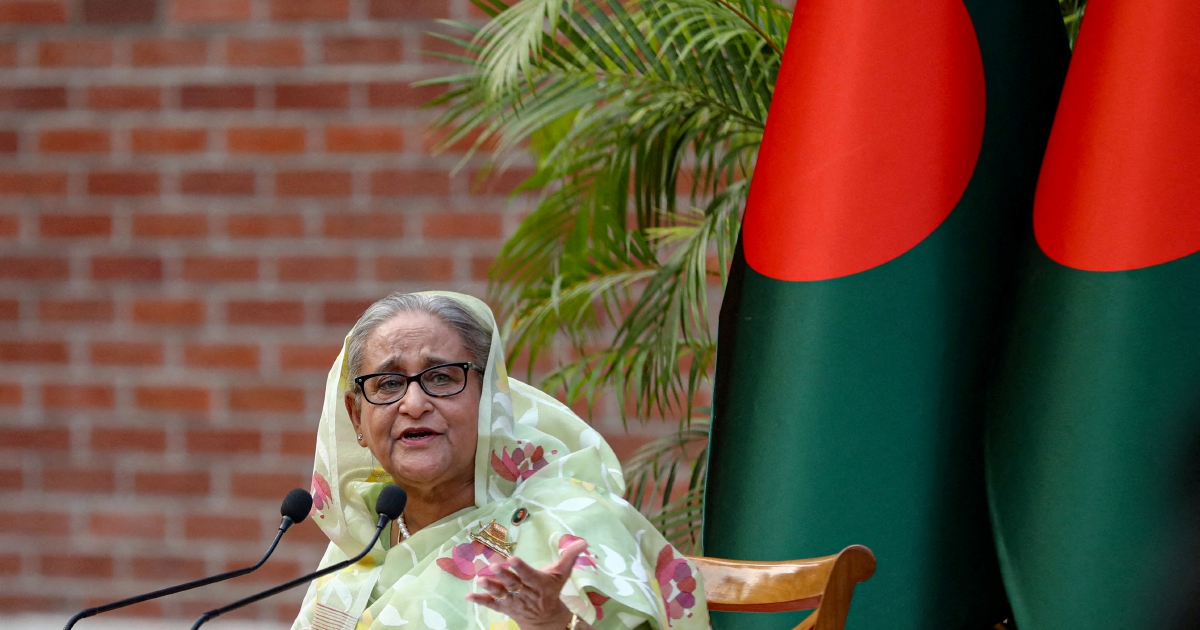
Bangladesh has taken control of assets valued at 760 billion taka, equivalent to roughly US$6.2 billion, belonging to former Prime Minister Sheikh Hasina, members of her immediate family circle, and a network of ten prominent business conglomerates. The seizure represents the most significant asset recovery action undertaken by authorities since Hasina's departure from her position leading the government, and underscores the new administration's commitment to investigating alleged financial irregularities during her tenure.
The confiscation order, announced by government officials on Wednesday, encompasses property, investments, and commercial holdings across multiple sectors of Bangladesh's economy. Authorities have begun cataloguing the seized assets as part of a broader inquiry into accumulated wealth that investigators allege was built through improper channels while Hasina held executive power. The scale of the seizure signals intensified scrutiny of business dealings connected to the former premier's family network and her circle of favoured entrepreneurs.
Sheikh Hasina's premiership, which concluded with her recent exit from office, had been marked by allegations of dynastic control over state institutions and preferential treatment accorded to politically connected business interests. The newly formed administration has prioritised accountability measures, positioning asset recovery as a central component of its governance agenda. These enforcement actions reflect broader public pressure within Bangladesh for transparency and fairness in how economic opportunities are distributed.
The ten business groups implicated in the seizure appear to have benefited substantially from government contracts, regulatory approvals, and other state resources during Hasina's period in office. Investigators are examining whether these enterprises received unfair competitive advantages or engaged in corrupt dealings with public officials. The interconnected nature of the seized holdings suggests a coordinated network through which wealth and influence were allegedly consolidated across sectors including telecommunications, construction, energy, and finance.
For Malaysian observers and regional business communities, this development carries implications regarding governance standards and business conduct across South Asia. Bangladesh's approach to asset recovery may influence how other regional governments address corruption allegations and prioritise accountability mechanisms. The seizure demonstrates that even high-ranking officials face potential legal consequences in jurisdictions moving toward stricter enforcement, though concerns remain about whether such actions remain politically neutral and lawfully justified.
The confiscation process involves substantial administrative complexity, requiring authorities to verify ownership claims, assess asset valuations, and establish evidentiary connections between holdings and the former premier's family. Bangladesh's banking and regulatory agencies are collaborating to freeze accounts and prevent asset transfers while investigations proceed. The technical challenge of recovering dispersed assets—some potentially held through shell companies or international holdings—will likely extend the enforcement timeline considerably.
International observers have noted that asset recovery operations of this magnitude often raise questions about due process, the availability of legal appeals, and whether prosecutorial authorities maintain investigative independence. Bangladesh's courts will ultimately determine the legality and enforceability of these seizures, though the current political environment has generated concern among some human rights organisations regarding the administration's latitude in pursuing cases against opposition figures and their associates.
The ramifications extend to Bangladesh's foreign investment climate, as international business entities assess risks associated with changing political circumstances and shifting enforcement priorities. Prospective investors will likely demand greater clarity regarding government accountability standards and the predictability of regulatory treatment. The episode highlights tensions between pursuing accountability and maintaining a business-friendly environment—a balance that affects Bangladesh's competitiveness within regional markets.
Family members of Sheikh Hasina and managers of the implicated business groups have not yet issued comprehensive public responses to the seizure announcements. Legal representatives may challenge the confiscation orders, arguing procedural irregularities or disputing the evidentiary basis for asset recovery. Protracted litigation could delay final resolution while international monitors observe whether the process adheres to Bangladesh's legal framework and international standards regarding property rights and governmental authority.
The timing of these enforcement actions coincides with broader efforts by Bangladesh's interim administration to investigate alleged abuses and reassert institutional credibility following recent political turbulence. Government officials have framed asset recovery as essential to rebuilding public confidence and ensuring equitable distribution of national resources. However, critics caution that selective enforcement targeting opposition figures' networks risks undermining rule-of-law principles if applied inconsistently across political boundaries.
Within Southeast Asia, Bangladesh's enforcement action has generated discussion among business communities and policy analysts regarding corporate governance standards and the relationship between political power and economic accumulation. Regional observers note that several nations within ASEAN face comparable governance challenges and may face pressure to implement stronger accountability mechanisms. Bangladesh's experience offers cautionary lessons about the costs of institutional capture by political actors and the difficulties of recovering misappropriated assets once they become institutionally embedded.
The investigation remains ongoing, and authorities have indicated that additional enforcement actions may follow as inquiries expand. Financial regulators continue examining transaction records and asset ownership documentation to identify further holdings requiring scrutiny. The ultimate impact of these seizures on Bangladesh's economic landscape and governance architecture will become clearer as legal proceedings unfold and the administration demonstrates whether enforcement priorities reflect principled commitment to accountability or shifting political calculations.

