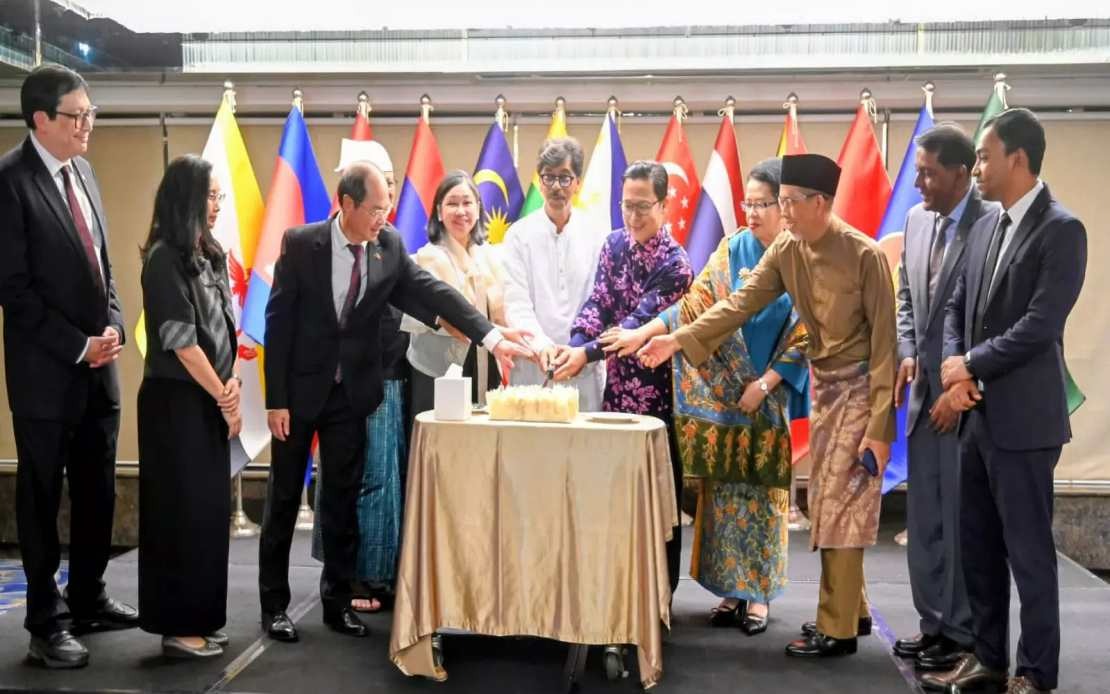
Bangladesh is moving to cement its position within Southeast Asia's regional architecture by formally pursuing Sectoral Dialogue Partner status with ASEAN, marking a significant diplomatic shift under the government led by Prime Minister Tarique Rahman. Minister of Fisheries, Livestock and Agriculture Mohammed Aminur Rashid laid out this strategic pivot while addressing the 59th ASEAN Day celebrations at Renaissance Dhaka Gulshan Hotel on Monday, emphasising that Bangladesh views deeper institutional engagement with the bloc as essential to its regional ambitions.
The pursuit of SDP status represents Bangladesh's recognition that informal cooperation, while valuable, must be formalised to unlock sustained political and economic benefits. By seeking this designation—which allows countries to collaborate with ASEAN on specific sectors without full membership—Dhaka is adopting a pragmatic approach that acknowledges both the bloc's significance and the complexities of wider integration. This move signals that Bangladesh intends to transition from being a peripheral interlocutor to an integrated partner within ASEAN's decision-making architecture, particularly as regional geopolitics shift and new regional groupings reshape connectivity and trade patterns.
Minister Aminur stressed that Bangladesh's relationship with ASEAN rests on foundations of historical continuity, shared cultural values, and mutual strategic interests. The government's prioritisation of relations across all eleven ASEAN member states—demonstrated through Prime Minister Rahman's selection of Malaysia for his first official foreign visit—reflects recognition that regional stability and prosperity are inextricably linked to Bangladesh's own development trajectory. For Malaysian readers, this signals Dhaka's seriousness in elevating bilateral ties beyond traditional frameworks and positioning itself as a genuine economic and strategic partner in Southeast Asia.
The agricultural cooperation pillar exemplifies how Bangladesh seeks to leverage its competitive advantages within ASEAN frameworks. The ongoing US$1 million Bangladesh-ASEAN Cooperation Project on Fisheries and Aquaculture, administered by Aminur's ministry, demonstrates concrete commitment beyond rhetorical positioning. Bangladesh's aquaculture sector, particularly shrimp and fish farming, has emerged as a significant economic driver, and formalising technical cooperation with ASEAN members could facilitate technology transfer, market access, and standardisation efforts that benefit producers across the region.
Beyond fisheries, Bangladesh is orchestrating broader sectoral initiatives spanning tourism, information and communications technology, and cultural exchange. These diverse engagement points reflect a multidimensional strategy rather than narrow economic calculus. Tourism cooperation capitalises on Bangladesh's untapped potential as a destination—from Cox's Bazar's natural attractions to Dhaka's historical significance—while ICT collaboration positions the country within Southeast Asia's growing technology ecosystem. For regional observers, this holistic approach suggests Bangladesh is consciously working to embed itself across multiple economic and social dimensions of ASEAN's architecture.
The symbolic dimension of the ASEAN Day reception, particularly the serving of dishes highlighting Bangladesh's indigenous agricultural products—Kalijira rice biryani and Black Bengal Goat preparations—underscored a deliberate cultural diplomacy message. The emphasis on geographical indication status for Black Bengal Goat products revealed Bangladeshi intent to elevate its agricultural heritage within regional consciousness and create premium market positioning. Such cultural and gastronomic diplomacy, while subtle, shapes perceptions among diplomatic audiences and contributes to broader soft power narratives about national identity and capability.
Minister Aminur's public appeal to ASEAN envoys for support in securing SDP status demonstrated that Bangladesh recognises the necessity of securing active backing from existing ASEAN diplomatic missions. The attendance of Malaysian High Commissioner Mohammad Shuhada Othman, Philippine Ambassador Neena Padilla Cinglet, and other heads of mission represented both a diplomatic audience and potential advocates within their respective capitals' decision-making structures. This lobbying dimension is crucial because SDP status requires consensus among ASEAN members, meaning Bangladesh must cultivate support bilaterally while making its case collectively.
From a regional strategic perspective, Bangladesh's ASEAN overtures occur within a broader context of shifting Indo-Pacific alignments. As China's economic and military influence expands and great power competition intensifies, ASEAN members increasingly value partnerships that provide strategic diversification. Bangladesh, positioned at the intersection of South Asia and Southeast Asia, offers ASEAN member states an additional avenue for engagement with the subcontinent while providing Bangladesh itself with access to Southeast Asia's more institutionalised economic networks and political dialogue mechanisms.
The emphasis on the Rahman government's commitment to ASEAN partnership also reflects domestic political calculations. For the new administration, establishing credibility through constructive regional engagement serves multiple purposes: it provides legitimacy through international institutional validation, diversifies Bangladesh's diplomatic portfolio beyond traditional South Asian and Western alignments, and demonstrates responsive governance through deliverable outcomes on regional integration. Malaysian observers should note that Bangladesh's ASEAN push represents not merely foreign policy positioning but also internal political messaging about a government committed to pragmatic, outward-focused development.
Looking forward, Bangladesh's sectoral engagement pathway offers opportunities for targeted, high-impact cooperation that could generate tangible benefits across sectors. Rather than seeking immediate full ASEAN membership—which faces structural and political obstacles—the SDP framework allows Bangladesh to deepen integration progressively while building institutional relationships and demonstrating compatibility with ASEAN's norms and decision-making processes. Successful implementation of current fisheries, tourism, and ICT initiatives will strengthen Bangladesh's case while creating constituencies within ASEAN member states invested in expanded partnerships.
The broader implication for Southeast Asia is that Bangladesh's repositioning reflects recognition among major South Asian actors that engagement with ASEAN is not optional but strategically essential. As Bangladesh pursues deeper institutional ties, other South Asian nations, particularly India, are likely to pursue their own ASEAN partnership frameworks more assertively. This dynamic contributes to ASEAN's enhanced centrality within regional architecture while potentially fragmenting some traditional South Asian bloc cohesion as individual nations prioritise ASEAN engagement.

