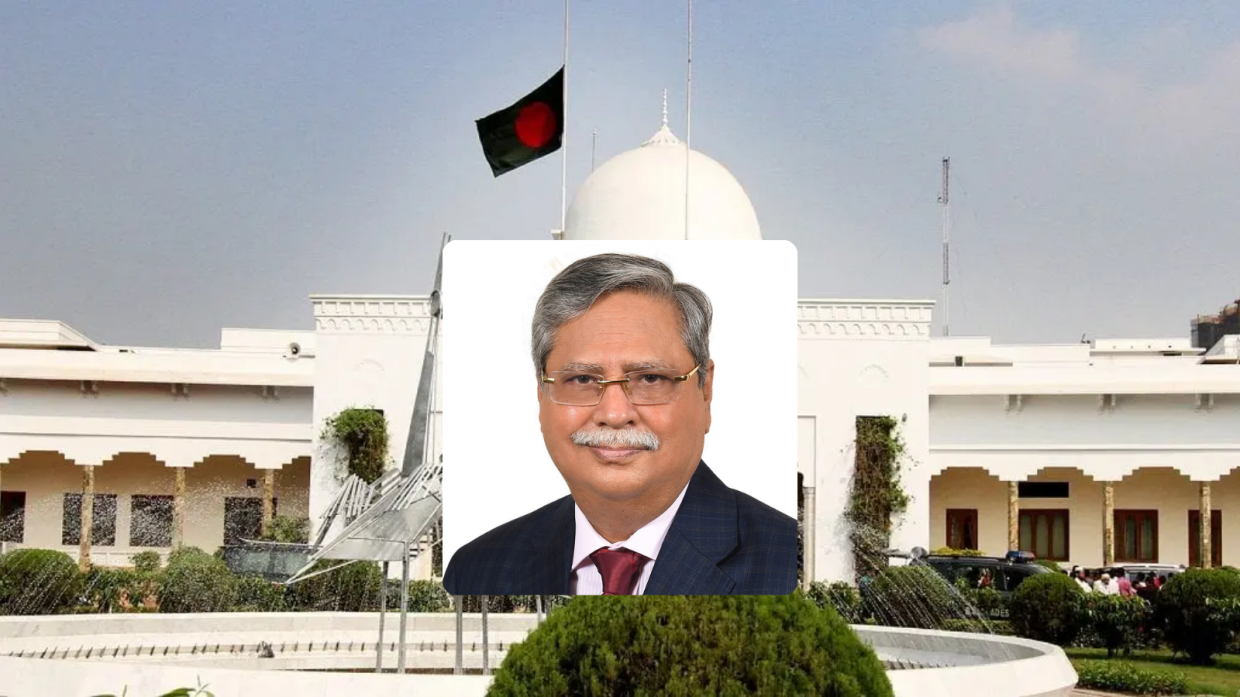
President Mohammed Shahabuddin of Bangladesh faces imminent resignation as political pressures mount in the country's post-uprising landscape. Multiple sources indicate the 22nd president, who assumed office on April 24, 2023, is expected to step down within days, potentially within the coming week. His departure would eliminate the final constitutional office-holder from the pre-July 2024 period, signalling a complete institutional reset following the mass uprising that fundamentally reshaped Bangladesh's political order.
The resignation momentum has intensified in recent weeks, driven by several interconnected factors that extend beyond surface-level political posturing. In May, Shahabuddin travelled to London for medical treatment, where intelligence agencies later discovered he had held a telephone conversation with exiled former Prime Minister Sheikh Hasina. Though government sources initially suggested this communication triggered a subtle message encouraging his resignation, senior Bangladesh Nationalist Party leaders characterize the situation as substantially more intricate. The affair represents not merely a personal indiscretion but rather a symptom of deeper institutional anxieties gripping the current administration.
Sheikh Hasina has resided in India since fleeing Bangladesh during last year's uprising, facing a death sentence in absentia while her Awami League party remains banned from operating domestically. The political landscape has grown considerably more fraught following her recent announcement that she intends to return to Bangladesh around December, accompanied by other senior party leadership, with plans to surrender to authorities. This prospective homecoming has triggered substantial anxiety within government circles, particularly among BNP leadership concerned about potential destabilisation efforts and the resurrection of organisational capacity by Awami League operatives still present within Bangladesh.
Government officials have grown increasingly vigilant regarding attempts by remaining Awami League members to secretly reorganise their party infrastructure. This surveillance has revealed concerning patterns of coordination among exiled and domestic elements seeking to rebuild the political movement. On July 17, Prime Minister Tarique Rahman explicitly directed relevant authorities during a Cabinet meeting to intensify ongoing enforcement operations against the Awami League alongside affiliated youth organisations including the Bangladesh Chhatra League and Jubo League. The government's hardening stance reflects determination to prevent any organised challenge to its authority before democratic processes resume.
Shahabuddin's position has become untenable within this volatile environment, particularly given his pre-uprising origins. Senior government sources articulate frank reasoning: retaining a constitutional figurehead from the ancien régime runs counter to the revolutionary sentiment that still permeates Bangladesh's political culture. One high-level government source characterised his continued tenure as increasingly imprudent, noting that Shahabuddin's attempts to re-establish old institutional contacts have generated official displeasure. The sentiment reflects deeper anxieties that allowing pre-uprising figures to occupy symbolic positions of authority might inadvertently legitimize the political networks and patronage systems that preceded the popular upheaval.
Shahabuddin's own positioning has evolved throughout this turbulent period, demonstrating political flexibility in response to changing circumstances. During the interim government led by Muhammad Yunus, Shahabuddin indicated his intention to step down midway through his five-year term following February's parliamentary elections, explicitly stating he felt humiliated by his treatment under that administration. However, following the BNP-led government's assumption of power, his rhetoric shifted considerably. In a February newspaper interview, he suggested willingness to remain in office if the government preferred, while equally prepared to resign if officials desired his departure. This calculated ambiguity now appears unsustainable as government expectations crystallise around his exit.
The constitutional implications of Shahabuddin's resignation have been formally clarified within government circles. Under Bangladesh's constitutional framework, the Speaker of Parliament automatically assumes the role of acting president if the sitting president resigns, serving until a new president can be formally elected through proper procedures. This succession mechanism ensures continuity of constitutional governance while allowing for an orderly transition to a replacement figure more aligned with post-uprising political realities. Government sources have indicated no final decision regarding timing or Shahabuddin's successor, though insiders suggest an announcement could materialise within days.
The broader regional implications of Bangladesh's institutional recalibration warrant careful attention from neighbouring Southeast Asian governments and observers. The complete turnover of constitutional leadership represents an extraordinary response to the July 2024 uprising, signalling the depth of institutional fracture and the extent to which popular movements have reshaped governance structures. Malaysia and other ASEAN members maintain significant diplomatic and economic stakes in Bangladesh's stability, making the trajectory of constitutional consolidation a matter of considerable interest. The process by which Bangladesh addresses the lingering presence of pre-uprising figures will substantially influence international confidence in the new order's durability and democratic credentials.
Shahabuddin's imminent departure also reflects intensifying factional dynamics within Bangladesh's BNP-led administration itself. The focus on eliminating remaining symbols of the previous era suggests consolidation efforts within the ruling party structure, with particular emphasis on preventing any potential rival power centres from emerging. The government's simultaneous crackdown on Awami League reorganisation efforts and pressure for Shahabuddin's resignation demonstrates coordinated strategy to eliminate potential sources of institutional challenge to BNP dominance. This dual approach reveals the current administration's determination to reshape Bangladesh's entire constitutional architecture in alignment with post-uprising preferences.
The strategic question of Shahabuddin's replacement remains deliberately ambiguous within government communications, likely reflecting ongoing deliberations among senior BNP leadership and military-aligned institutional actors. Sources close to Bangabhaban, the presidential residence, indicate a decision could emerge within one to two days, though formal announcements might be withheld pending completion of diplomatic courtesies. Significantly, Shahabuddin maintains a scheduled meeting with non-resident ambassadors representing four countries on July 29, suggesting the government may be timing any resignation announcement to avoid immediate diplomatic complications while still demonstrating decisive action to domestic constituencies.
Bangladesh's institutional trajectory since the July 2024 uprising has been characterised by systematic dismantling of pre-uprising structures rather than mere incremental reform. Shahabuddin's expected resignation represents another milestone in this comprehensive restructuring process. The removal of the final constitutional figure from before the popular upheaval will complete what amounts to institutional renewal from the presidency downward, fundamentally signalling that Bangladesh's new political order tolerates no remnants of the ancien régime in positions of constitutional authority. Whether this aggressive institutional turnover produces durable democratic governance or simply shifts power concentrations among ruling party factions remains a critical question for Bangladesh and its regional neighbours.

