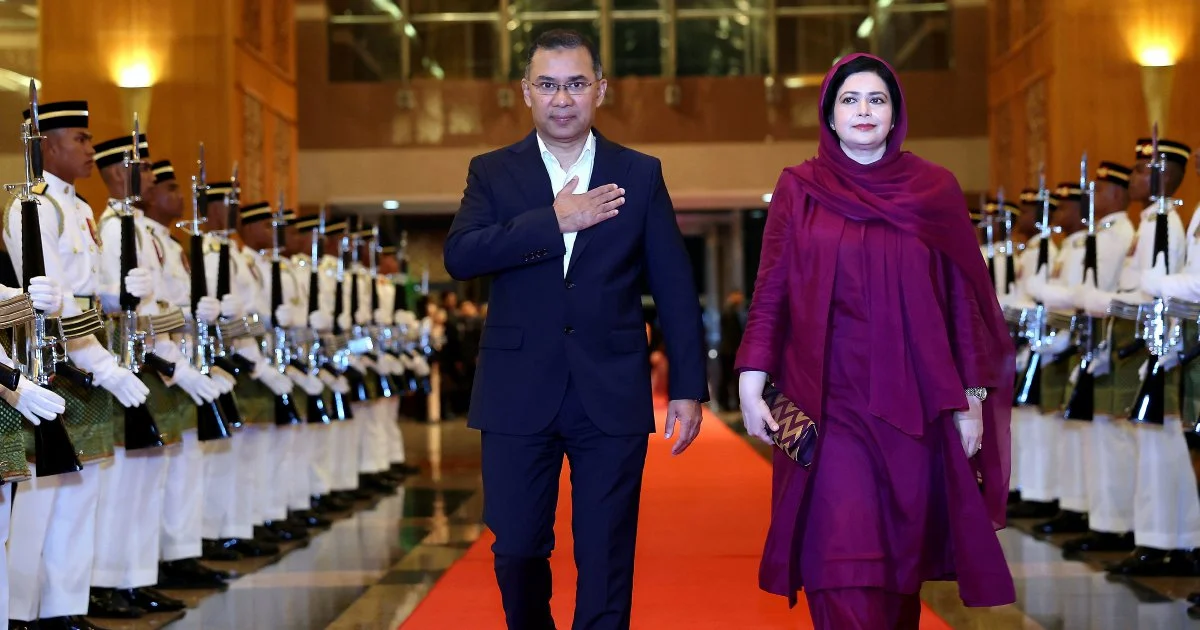
Bangladesh Prime Minister Tarique Rahman has extended a direct invitation to Malaysian business leaders, encouraging them to view his nation as an increasingly attractive destination for investment and entrepreneurship. The overture underscores the diplomatic and economic ties between the two South Asian neighbours, as Dhaka seeks to broaden its investor base beyond traditional sources and establish deeper regional partnerships.
Rahman's appeal carries particular weight at a moment when Bangladesh is repositioning itself as a competitive investment hub. The country has been rolling out reforms aimed at simplifying business registration, improving port infrastructure, and streamlining customs procedures—measures that directly address long-standing friction points cited by foreign investors. For Malaysian firms accustomed to navigating competitive Southeast Asian markets, Bangladesh presents a labour-cost advantage and access to a population exceeding 170 million, making it strategically significant for firms seeking to diversify their operational footprint.
The timing of this outreach reflects Bangladesh's broader strategic interests in broadening foreign direct investment sources. While the nation has historically attracted substantial capital from China and India, diversifying the investor base reduces economic dependency and strengthens political relationships with major regional partners. Malaysian investors, in turn, benefit from established cultural and religious commonalities that can facilitate smoother business integration and stakeholder relationships compared to some Western competitors.
Malaysian companies have already made inroads into Bangladesh across several sectors, particularly garment manufacturing, telecommunications, and financial services. However, the scale of Malaysian investment remains modest relative to other foreign players, suggesting considerable untapped potential. Rahman's invitation implicitly acknowledges this gap and signals government commitment to removing barriers that may have deterred larger-scale Malaysian participation.
Bangladesh's transformation over the past two decades demonstrates genuine macroeconomic progress. The nation's textile and apparel industry remains globally competitive, while growing pharmaceutical and information technology sectors are attracting increasingly sophisticated investors. Per capita income has climbed steadily, creating emerging middle-class consumer markets that appeal to Malaysian retailers and consumer goods manufacturers seeking expansion beyond saturation in home markets.
However, Malaysian investors undertaking due diligence in Bangladesh cannot ignore persistent infrastructure challenges. While urban centres like Dhaka and Chittagong have modernised substantially, logistics networks outside major cities remain underdeveloped. Power generation capacity, though expanding, still cannot fully meet peak demand during monsoon seasons. These realities demand careful project planning and realistic timeline expectations, particularly for operations requiring continuous electricity supply.
The regulatory environment in Bangladesh has improved, though bureaucratic processes occasionally move at a pace that tests foreign investors' patience. Labour costs remain attractive—manufacturing wages are typically 30-40 percent lower than in Malaysia—yet workforce skills in technical sectors sometimes require supplementary training investments. Companies considering Bangladesh operations should factor in human resource development expenditure when calculating total project costs.
Sector selection represents a crucial consideration for Malaysian investors evaluating Bangladesh opportunities. Labour-intensive manufacturing, where Bangladesh maintains clear advantages, remains viable, but technology-driven sectors and service industries may offer more sustainable competitive positioning. Malaysian firms with expertise in fintech, renewable energy, or advanced logistics could potentially establish Bangladesh operations as regional hubs serving South Asian markets.
Geopolitical dimensions also merit attention. Bangladesh's proximity to India, integration into BIMSTEC (Bay of Bengal Initiative for Multi-Sectoral Technical and Economic Cooperation), and developing relationships with ASEAN create networking opportunities for Malaysian investors. A Malaysian manufacturing presence in Bangladesh could serve as a springboard for accessing broader South Asian supply chains and consumer markets.
Rahman's invitation represents more than ceremonial diplomacy; it reflects calculated economic strategy aimed at attracting quality foreign investors capable of transferring technology and management expertise. For Malaysian businesses, particularly small and medium enterprises seeking international expansion pathways with manageable risk profiles, Bangladesh warrants serious strategic consideration. Success requires matching company capabilities to market realities and maintaining patience through initial establishment phases.
The business case for Malaysian investment in Bangladesh ultimately depends on individual company circumstances, sector dynamics, and risk tolerance. Nevertheless, the combination of governmental incentives, demographic advantages, and improving infrastructure creates a compelling investment proposition that deserves exploration by Malaysian firms undertaking regional growth strategies.