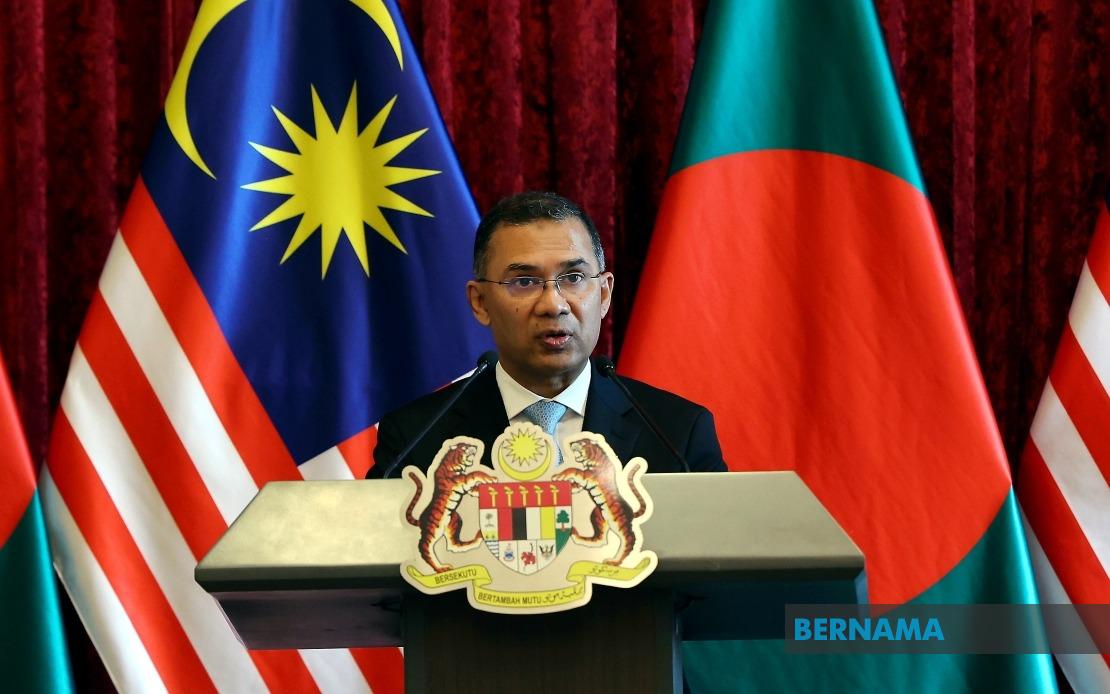
Bangladesh Prime Minister Tarique Rahman has reaffirmed his country's commitment to broadening strategic cooperation with Malaysia, signalling renewed momentum in a relationship that carries considerable weight for regional stability and economic integration across South Asia and Southeast Asia. Speaking alongside Prime Minister Datuk Seri Anwar Ibrahim at a joint press conference in Putrajaya on Monday, Rahman emphasised that both nations would intensify collaboration through established diplomatic channels and explore fresh avenues for engagement on pressing global matters.
The bilateral meeting, which took place during Rahman's two-day official visit to Malaysia, resulted in the formal execution of three substantive agreements that underscore the breadth of the countries' partnership. These included a Memorandum of Understanding focused on cultural cooperation, alongside two Exchanges of Notes addressing counter-terrorism research initiatives and frameworks for promoting and facilitating investment flows between the two economies. The signing of these instruments reflects a strategic desire to anchor bilateral ties across multiple dimensions rather than relying solely on traditional trade relationships.
Rahman's visit to Malaysia carries particular significance as his first bilateral official journey since assuming office in February 2026, a choice that underscores Malaysia's importance within Bangladesh's foreign policy calculus. The timing and composition of his inaugural international visits often signal diplomatic priorities, and selecting Malaysia as a destination demonstrates the neighbouring region's centrality to Dhaka's strategic thinking. For Malaysia, the visit provides an opportunity to consolidate influence among South Asian nations and position itself as a bridge between South and Southeast Asian economies.
The two leaders discussed a range of international and regional developments, with West Asian geopolitics featuring prominently in their conversations. This reflects broader concerns shared by both nations regarding Middle Eastern stability and its implications for regional security and maritime commerce. Rahman also expressed gratitude for Malaysia's backing of Bangladesh's candidature for the presidency of the 81st session of the United Nations General Assembly, a gesture that carries diplomatic weight and signals mutual support within multilateral forums where both nations compete for influence and leadership roles.
Trade data reveals the substantial economic foundation underlying this diplomatic relationship. In 2025, bilateral commerce between Malaysia and Bangladesh totalled RM12.18 billion, equivalent to approximately US$2.84 billion, making Bangladesh Malaysia's 28th largest trading partner globally. However, within the South Asian context, Bangladesh ranks as Malaysia's second most significant economic partner after India, indicating the relative importance of the relationship to Malaysia's broader South Asian engagement strategy. Malaysia's dominant position in the trade equation is evident in export figures of RM10.08 billion, principally comprised of petroleum products that supply Bangladesh's energy requirements and industrial base.
Bangladesh's export profile to Malaysia, valued at RM2.10 billion in 2025, reflects the complementary nature of the two economies. The shipments consist predominantly of textiles, apparel and footwear—sectors where Bangladesh has developed considerable competitive advantages through lower labour costs and established manufacturing infrastructure. This trade composition demonstrates how economic ties between the nations serve distinct but mutually beneficial purposes: Malaysia provides raw materials and energy resources crucial for industrial development, whilst Bangladesh supplies processed goods that feed into global supply chains anchored partly in Malaysia.
The emphasis on enhancing engagement through existing institutional mechanisms—specifically the joint commission meeting and bilateral consultations between foreign ministers—suggests a preference for structured, predictable diplomacy. Rather than creating ad-hoc arrangements, both governments appear committed to strengthening frameworks that have already proven their utility. This approach reduces transaction costs in bilateral relations and provides regular opportunities for addressing emerging issues before they escalate into disputes.
The investment promotion and facilitation agreement carries particular relevance for Malaysian and Bangladeshi businesses operating across borders. A streamlined framework for navigating regulatory requirements and dispute resolution can encourage greater cross-border capital flows. For Malaysian investors, Bangladesh's large population, growing middle class and nascent manufacturing capabilities present expansion opportunities, whilst Bangladeshi investors may see Malaysia as a gateway to Southeast Asian markets and a destination for advanced technology and management expertise.
Rahman's assertion that both nations would continue working together within the United Nations and other international organisations reflects an understanding that bilateral relationships increasingly find expression through multilateral institutions. Climate change, maritime security, trade governance and humanitarian crises demand collaborative responses that transcend bilateral frameworks. Malaysia and Bangladesh, as maritime nations with significant maritime interests and vulnerabilities to climate impacts, share several common concerns that can be advanced through coordinated positioning in global forums.
The visit occurs against a backdrop of broader South Asian geopolitical currents. Bangladesh's recent political transitions and evolving foreign policy orientation have prompted neighbouring countries to recalibrate their approach. Malaysia's receptiveness to deepening ties suggests strategic interest in maintaining influence within South Asian affairs whilst encouraging stability in a region whose challenges—migration, maritime boundary disputes, counter-terrorism coordination—directly affect Southeast Asia. The timing of Rahman's visit and the substance of agreements reached indicate mutual recognition that the bilateral relationship merits investment at the highest political levels.
Looking forward, the complementary nature of Malaysia and Bangladesh's economies and their shared interests in regional stability suggest considerable scope for further cooperation. Both nations face pressures from global economic uncertainty, climate-related challenges and security threats that respect no borders. The agreements reached during this visit provide a foundation for addressing these shared challenges through coordinated action, offering lessons in pragmatic bilateral engagement for other regional relationships navigating comparable complexities.