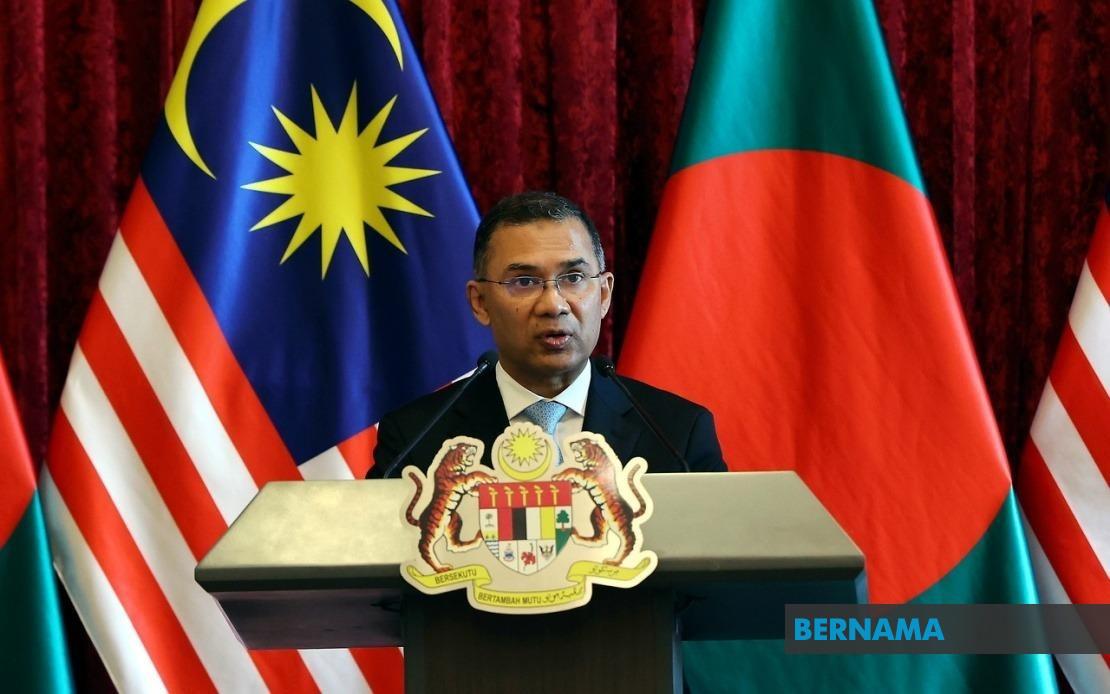
Bangladesh's government has expressed confidence that its strengthening partnership with Malaysia will deliver tangible benefits across trade and investment, following Prime Minister Tarique Rahman's visit to the country in June. At a forum organized by the Bangladesh-Malaysia Chamber of Commerce and Industry in Dhaka on Saturday, Health and Family Welfare Minister Sardar Mohammad Sakhawat Hossain underscored the depth of bilateral commitment between the two Southeast Asian neighbors, characterizing their relationship as built upon a foundation of genuine trust and shared interests.
The minister's remarks came during an event titled "Towards a Stronger Bangladesh-Malaysia Partnership," which brought together business leaders and government officials eager to explore fresh opportunities for collaboration. Sakhawat emphasized that the June diplomatic engagement had reinforced existing bonds and opened fresh avenues for cooperation across multiple sectors, moving beyond the ceremonial aspects of state visits to focus on concrete economic outcomes that both nations stand to gain.
Central to Dhaka's vision for deepening ties with Kuala Lumpur is the expansion of commercial relationships between business communities in both countries. The minister identified private sector engagement as a critical driver of bilateral advancement, noting that sustained dialogue between chambers of commerce and industry bodies helps translate political goodwill into sustainable economic partnerships. He stressed that Malaysia, as a developed Southeast Asian economy with significant purchasing power, represented a crucial market for Bangladeshi goods and services across multiple sectors.
A pressing concern for Bangladesh has been the structural imbalance in bilateral trade flows. Sakhawat made a direct appeal to Malaysia to increase its imports from Bangladesh, signaling that Dhaka views the current trade dynamic as insufficiently leveraging Bangladesh's export potential. This plea reflects broader frustration among Bangladeshi policymakers regarding market access challenges faced by domestic producers attempting to penetrate Malaysian consumer and industrial markets, where competition from established regional suppliers remains intense.
The bilateral relationship encompasses diverse areas of mutual interest, from healthcare cooperation to educational exchanges and infrastructure development. Bangladesh, with its young demographic profile and expanding manufacturing capacity, offers complementary advantages to Malaysia's services-oriented and capital-intensive economy. Conversely, Malaysia's technological sophistication and business management expertise present valuable learning opportunities for Bangladesh as it pursues industrial upgrading and economic diversification.
Malaysian High Commissioner to Bangladesh Mohd Shuhuda Othman attended the Dhaka gathering, signifying Malaysia's sustained commitment to strengthening people-to-people and institutional connections with its western neighbor. The presence of Federation of Bangladesh Chambers of Commerce and Industry (FBCCI) administrator Mohammad Fazlul Haque underscored the private sector's central role in translating high-level diplomatic engagement into measurable commercial progress.
Geographically and culturally, Bangladesh and Malaysia share considerable common ground as Muslim-majority nations in South and Southeast Asia with interconnected histories and complementary development trajectories. Bangladesh's growing middle class and expanding consumer base increasingly look to Malaysia as a source of premium goods and services, while Malaysian investors see Bangladesh as an attractive destination for manufacturing operations seeking cost advantages and access to South Asian markets.
The timing of renewed emphasis on Bangladesh-Malaysia cooperation reflects broader regional shifts in Southeast Asia. With traditional powers rebalancing their strategic portfolios, countries like Malaysia view strengthened ties with South Asian nations as strategically prudent, offering diversification of partnerships and reduced dependence on any single relationship. For Bangladesh, deepening engagement with established Southeast Asian economies provides alternative anchors for growth and development, particularly important given ongoing regional geopolitical complexities.
Prime Minister Tarique Rahman's June visit represented a significant diplomatic milestone, as high-level exchanges between the two nations' executives carry symbolic weight that often catalyzes bureaucratic momentum for implementing agreed frameworks. Trade delegations and sectoral working groups established following such visits frequently generate practical results spanning years, provided both governments maintain political commitment to implementation and both private sectors actively pursue identified opportunities.
The emphasis on mutual trust in bilateral rhetoric masks underlying competitive dynamics that characterize all regional relationships. Bangladesh seeks recognition as an emerging manufacturing hub capable of producing quality goods competitively, while Malaysia seeks to protect domestic industries and employment. Navigating these tensions requires sophisticated diplomacy, transparent regulatory frameworks, and recognition that sustainable partnerships balance national interests with mutual gain.
Moving forward, Bangladesh appears positioned to deepen its presence within Malaysia's services sector, particularly in healthcare, hospitality, and professional services, where cultural affinity and language familiarity provide competitive advantages. Malaysian investors, meanwhile, continue evaluating Bangladesh's improving infrastructure, regulatory environment, and labor availability as factors supporting expanded direct investment in manufacturing and agro-processing industries targeting both domestic and export markets.

