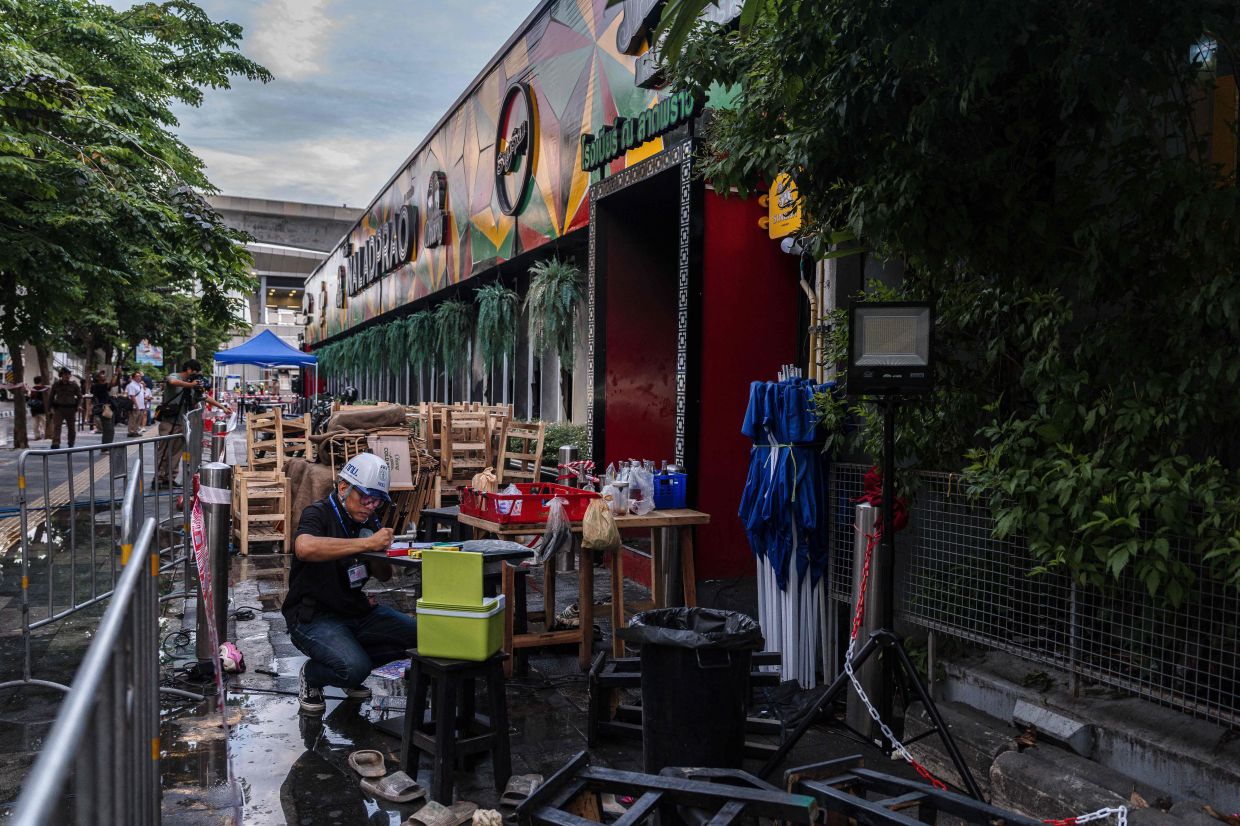
Tragedy struck the Thai capital early Monday morning when a fast-spreading blaze tore through a popular dining and entertainment establishment in Bangkok's Lat Phrao area, claiming 27 lives and leaving 18 others injured. The incident has prompted city authorities to launch an intensive investigation into fire safety standards and establishment protocols, with Bangkok Governor Chadchart Sittipunt personally overseeing emergency response efforts and ordering multiple departments to address systemic vulnerabilities that may have contributed to the loss of life.
Governor Chadchart arrived at the scene around 2.40am on Monday and immediately instructed the Chatuchak District Office to establish a coordination centre dedicated to assisting families of the deceased and injured. This facility represents the administration's first step toward supporting those affected by the disaster, with dedicated contact lines enabling relatives to obtain verified information through official channels rather than relying on unconfirmed reports circulating through social media and informal networks. The decision to centralise victim assistance reflects lessons learned from previous disasters in Thailand and elsewhere in Southeast Asia, where fragmented information systems have caused additional suffering to bereaved families.
Fire and rescue personnel responded swiftly to the emergency, arriving approximately five minutes after receiving the initial distress call. However, the window for effective evacuation had already closed by their arrival. According to Suriyachai Rawiwan, director of Bangkok's Fire and Rescue Department, flames had engulfed the entire venue by the time firefighters reached the building, with thick smoke creating near-zero visibility conditions that prevented rescue teams from locating and assisting trapped occupants. The structural design of the establishment, combined with the rapid fire progression, created conditions where rapid decision-making became the difference between survival and tragedy.
The distribution of casualties reveals troubling patterns regarding evacuation procedures and emergency egress routes. Many victims apparently attempted to flee toward toilet facilities at the building's rear, suggesting either unfamiliarity with alternative exits or inability to locate them through the heavy smoke. An initial assessment identified two emergency exits at the back of the venue, yet preliminary evidence indicates some fatalities occurred near an emergency exit on the building's left side where objects may have blocked the passageway. These spatial details, while grim, provide crucial insights into the sequence of events and architectural deficiencies that will inform future safety improvements across Bangkok's entertainment venues.
Investigators have developed a preliminary working hypothesis regarding the fire's lethality. Governor Chadchart observed that flames spread with unusual rapidity across the ceiling while plastic furniture in numerous areas sustained comparatively minimal damage. This observation led specialists to theorise that toxic smoke generated by burning interior decorative materials may have rendered occupants unconscious before the fire's heat reached dangerous levels. The theory underscores a critical gap in Thai building codes regarding flame-retardant standards for furnishings and décor materials used in commercial spaces—a concern that extends well beyond Bangkok to other Thai cities and regional entertainment districts throughout Southeast Asia.
The composition of casualties reflects the venue's typical clientele and staffing patterns. The Bangkok Fire and Rescue Department reported that of the 27 deceased, nine were men and 18 were women, with a further 18 people sustaining injuries of varying severity. Eight of the injured were classified as seriously hurt, seven experienced moderate injuries, and three sustained minor wounds. All injured individuals received immediate hospitalisation, though the immediate cause of death for most victims appears to be smoke inhalation rather than thermal burns. Forensic examination and official autopsy procedures remain ongoing, with authorities cautioning that definitive cause-of-death determinations cannot be issued until medical investigations conclude.
Governor Chadchart has directed the Bangkok Metropolitan Administration to prioritise three immediate objectives. First, the coordination centre must provide comprehensive assistance to affected families while verifying identities through formal procedures involving medical doctors and forensic specialists. Second, city officials must conduct urgent examinations of the venue's operating permits and licences to determine whether documentation was current and appropriate for the establishment's operations. Third, authorities must assess whether the fire-escape system complied with Thai safety standards, including the number of exits, their accessibility, the visibility of emergency signage, and whether evacuation routes were obstructed by furnishings or structural elements.
The inspection protocols ordered by Chadchart will examine whether the venue's layout and egress system configuration permitted safe evacuation in emergency situations. Investigators noted that one of the two identified escape routes passed through the kitchen area—a design that potentially endangered occupants during kitchen-related fires. Beyond this specific venue, the incident has raised systemic questions about how Bangkok's District Office and Fire Department coordinate inspections of entertainment establishments, whether surprise audits occur with sufficient frequency, and whether penalties for non-compliance create adequate incentives for venue operators to maintain current safety standards.
Governor Chadchart stressed that determining the actual cause of the fire remains a priority requiring specialist analysis and forensic investigation. Investigators have taken possession of the scene from emergency responders and are examining burn patterns, accelerant evidence, and structural elements to pinpoint where the fire originated and what ignition sources or chain of events initiated the blaze. The Bangkok Metropolitan Administration has pledged to accelerate investigative work and implement recommendations swiftly to reduce risks of similar incidents at other entertainment venues throughout the city.
The disaster carries profound implications for entertainment venue regulation across Thailand and has prompted renewed scrutiny of how Southeast Asian countries enforce building safety codes. Many popular bars, restaurants, and nightclubs in Bangkok and other regional cities operate in buildings that predate modern fire safety standards or lack adequate enforcement mechanisms ensuring compliance with current regulations. The incident underscores the potential consequences when cost-cutting measures affect emergency infrastructure, and when operators prioritise aesthetic considerations over functional safety features.
The Chatuchak District Office established multiple contact lines for families seeking information or assistance, with designated staff members available to provide verified updates on victims' identities and details regarding available support services. This coordination approach reflects Bangkok's acknowledgment that disaster response requires sustained engagement with affected communities rather than temporary crisis management. For Malaysian and regional readers, the incident serves as a sobering reminder that entertainment venue safety requires constant vigilance, and that modern building codes and inspection protocols must evolve faster than the creative methods venues employ to circumvent safety requirements.
The investigation's conclusions will likely influence how Thai authorities approach entertainment venue regulation moving forward, potentially establishing new minimum standards for fire-resistant materials, mandatory evacuation drills, and stricter enforcement protocols. Similar establishments throughout Bangkok and other Southeast Asian cities—including those in Malaysia, Singapore, and Indonesia—may face increased pressure from regulatory agencies to demonstrate compliance with fire safety standards, particularly regarding exit signage visibility, evacuation route accessibility, and interior materials specifications that limit smoke toxicity and fire spread rates.

