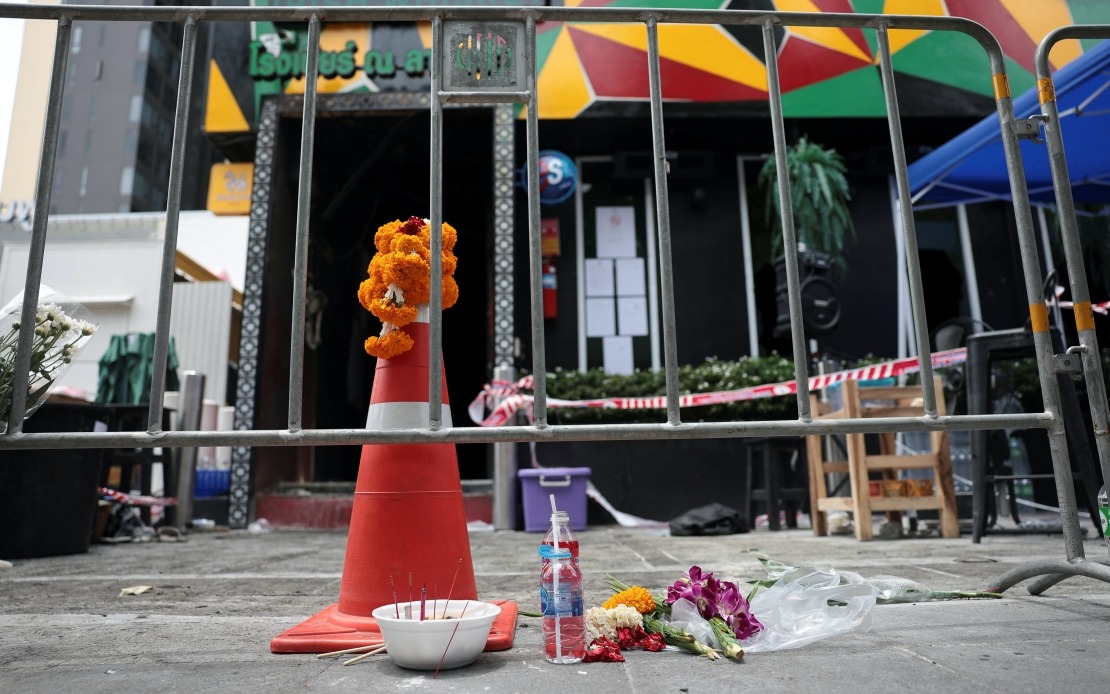
Thai law enforcement has concluded that the 33 people who perished in a Bangkok entertainment venue fire succumbed to toxic gas inhalation rather than direct flame injuries, marking a significant finding in the ongoing investigation into one of Thailand's deadliest recent disasters. Metropolitan Police Bureau Commissioner Police Lieutenant General Sayam Boonsom disclosed on Thursday that forensic analysis detected both carbon monoxide and cyanide in the bodies of deceased victims, confirming asphyxiation as the cause of death across all fatalities from the incident.
The mechanism of death underscores the particularly insidious nature of the tragedy. When carbon monoxide and cyanide enter the human body through inhalation, they prevent tissue cells from absorbing oxygen at a cellular level, effectively suffocating victims from within. This physiological process can prove fatal within minutes, offering little time for escape once gas concentrations become lethal. The finding explains why many victims were found in positions suggesting they had collapsed rapidly without opportunity to flee the premises.
The fire ignited shortly after midnight on Monday at the establishment located in Bangkok's Lat Phrao district, consuming the venue with unexpected speed and ferocity. The initial blaze claimed 33 lives immediately, with more than 70 others sustaining injuries of varying severity. By Thursday, medical facilities reported that 14 survivors remained in intensive care units, whilst 44 others had been discharged following treatment, indicating that many of the injured have progressed toward recovery.
Police investigations have now shifted into a systematic examination of potential causes and contributing factors to the disaster. Forensic officers completed their preliminary examination of the fire scene, allowing investigators to pursue multiple lines of inquiry. Metropolitan authorities are particularly focused on identifying whether electrical system failures triggered the initial ignition, a common culprit in venue fires across Southeast Asia where aging infrastructure and deferred maintenance create hazardous conditions.
Beyond electrical causes, police are investigating numerous safety violations that may have contributed to the death toll and injury count. Building modifications made without proper authorization appear to have compromised the venue's structural integrity and safety systems. Most critically, emergency exits appear to have been blocked or obstructed, preventing occupants from evacuating when fire alarms sounded. Such violations represent a catastrophic failure of basic fire safety protocols that exist precisely to prevent mass casualties.
The investigation has expanded to examine whether the entertainment venue operated beyond the parameters of its business license, a common practice in Thailand's competitive nightlife sector where establishments attempt to maximize capacity and revenue without regard for safety compliance. Regulatory oversight of entertainment venues across Southeast Asia remains inconsistent, with many jurisdictions relying on sporadic inspections rather than continuous monitoring of safety standards.
Police have not yet formally charged anyone in connection with the fire, but Sayam Boonsom indicated that prosecutions will likely follow once investigations conclude. Potential charges being prepared include causing death and injury through negligence, executing unauthorized structural alterations, negligently causing fire, and breaching regulations governing entertainment establishments. These charges could result in significant prison sentences for venue owners or managers found culpable.
The investigative process has been methodical and comprehensive. Officers have interviewed more than 106 witnesses, gathering accounts of events immediately preceding the fire, the evacuation process, and conditions within the venue at the time of the incident. Witness testimony has proven crucial in establishing the sequence of events and identifying safety lapses that accelerated the death toll.
For Malaysia and other Southeast Asian nations, the Bangkok tragedy carries sobering implications regarding fire safety enforcement in the hospitality sector. Many regional nightclubs, bars, and entertainment venues operate under similar conditions of regulatory ambiguity and cost-cutting measures. Malaysian authorities have historically acknowledged gaps in safety inspection regimes, particularly in urban areas where rapid growth outpaces regulatory capacity. The Bangkok incident demonstrates that inadequate emergency exits, blocked evacuation routes, and toxic material accumulation within confined spaces create death traps that can claim dozens of lives within minutes.
The toxic gas finding also raises questions about ventilation systems and fire suppression infrastructure in regional venues. Inferior or non-existent ventilation allows smoke and lethal gases to accumulate rapidly in enclosed entertainment spaces, whilst the absence of functioning sprinkler systems and fire suppression equipment means fires spread uncontrolled. Many Southeast Asian establishments operate legacy buildings with minimal retrofitting to accommodate modern safety standards, creating conditions identical to those that produced the Bangkok catastrophe.
This disaster will likely prompt Thai authorities to intensify safety audits across Bangkok's entertainment district and provincial venues. Regional governments may feel pressure to implement stricter licensing requirements and more frequent inspections. However, enforcement remains challenging where venue operators offer informal payments to inspectors and where commercial pressures encourage safety shortcuts. Ultimately, the Bangkok fire represents a cautionary reminder that without genuine commitment to enforcement and genuine consequences for violations, fire safety regulations remain theoretical rather than protective.

