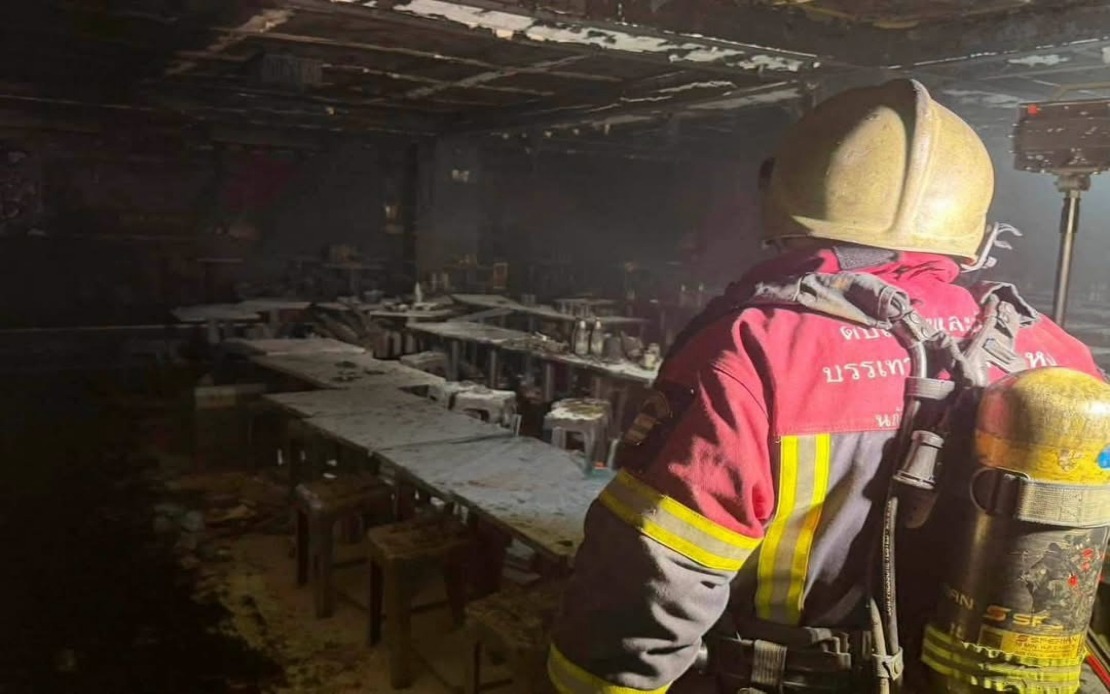
A deadly fire swept through a bar in Bangkok's Lat Phrao area in Chatuchak district early Monday morning, claiming at least 27 lives and leaving 18 others with injuries ranging from critical to minor. The incident, which erupted shortly after midnight, represents one of Thailand's deadliest recent disasters and has prompted immediate scrutiny of the establishment's safety protocols and emergency procedures.
Bangkok Governor Chadchart Sittipunt arrived at the scene around 2.40 am to oversee the initial response and assessment. Speaking to journalists after surveying the devastated premises, he indicated that determining the fire's origin would require comprehensive forensic investigation and cooperation between police and specialist officers. The Bangkok Metropolitan Administration has since assumed control of the site to facilitate a thorough examination aimed at establishing both the cause of the blaze and systematic recommendations to prevent recurrence of such tragedies.
According to the BMA's Department of Disaster Prevention and Mitigation, the fatalities comprised nine men and 18 women. Eight of the injured remain in critical condition, seven sustained moderate injuries, and three suffered minor harm. Medical personnel are continuing the victim identification process, a task that Governor Chadchart acknowledged would take time and urged families to rely on official channels for updates rather than unverified reports circulating through social media.
Early observations at the site have revealed critical clues about how the fire developed with such devastating speed. Flames appear to have propagated rapidly through the ceiling cavity, a structural feature that often facilitates fire spread by allowing heat and smoke to bypass normal barriers. Notably, many plastic furnishings inside the bar, including tables and chairs, remained relatively intact despite the intensity of the blaze, suggesting the fire's destructive power concentrated in upper areas rather than radiating from lower combustible materials.
While authorities have not confirmed the definitive cause, preliminary accounts from witnesses provide suggestive evidence. Prime Minister Anutin Charnvirakul, who visited the scene Monday morning, spoke with a musician who had been performing when the fire ignited. The witness described observing flames at the electrical switchboard, followed by explosions and a rapid escalation that forced patrons to flee through smoke and flames. This account points toward an electrical fault as a possible trigger, though investigators have cautioned against drawing firm conclusions until forensic analysis is complete.
A particularly troubling aspect of the tragedy involves the location where many victims were discovered. Several bodies were found near an emergency exit on the building's left side, where preliminary reports suggest obstructions may have prevented evacuation. Governor Chadchart underscored the preliminary nature of these findings but acknowledged they raise serious questions about whether the establishment maintained clear and accessible escape routes. The discovery fuels concern that the death toll might have been reduced had evacuation procedures been unimpeded.
The likely mechanism of death also warrants scrutiny. Medical authorities believe the majority of fatalities resulted from smoke inhalation rather than direct thermal burns, a finding consistent with fires that spread rapidly through upper portions of buildings, creating lethal smoke layers at ground level where people seek safety. Formal confirmation of individual causes of death awaits completion of forensic examinations.
Following the disaster, the Bangkok Metropolitan Administration has initiated a comprehensive compliance review of the establishment. Investigators will scrutinize the operating licence, verify adherence to safety standards, and assess the adequacy of emergency exits in both number and condition. The inspection will also examine whether exit signage was clearly visible and whether evacuation routes had been obstructed through negligence or deliberate intent.
This incident carries profound implications for regulatory oversight across Thailand's hospitality sector and throughout Southeast Asia more broadly. Similar bars and entertainment venues operate throughout the region, often in densely occupied spaces with inadequate safety measures. The Bangkok fire serves as a stark reminder that profiteering through corner-cutting on emergency infrastructure can transform a venue into a death trap within minutes. For Malaysian establishments operating similar operations, the incident underscores the critical importance of rigorous compliance with fire safety codes, regular drills, unobstructed evacuation routes, and adequate fire suppression systems.
The speed with which the fire overwhelmed patrons—moving from ignition to life-threatening conditions within seconds—emphasizes that building occupants cannot rely solely on their own responses to survive. Structural design, including ceiling construction that contains fires rather than spreading them, proves as important as active firefighting equipment. Authorities across the region should consider whether current regulations adequately address fire propagation through ceiling voids and other architectural features that may create hidden pathways for flames and smoke.
Thai officials have pledged to conduct a thorough investigation and implement preventive measures, but enforcement remains the persistent challenge. Many establishments across the region operate with minimal oversight, particularly those in older buildings or informal commercial areas. The Bangkok incident will likely generate short-term political pressure for inspections, yet sustaining rigorous compliance monitoring requires sustained commitment and adequate regulatory resources that frequently prove inadequate in practice.
As investigations continue and victim identification proceeds, the incident has already prompted soul-searching about entertainment venue safety throughout the region. Owners and operators face mounting pressure to demonstrate genuine commitment to occupant protection, while building inspectors confront renewed scrutiny of licensing and compliance procedures. For patrons across Southeast Asia, the Bangkok tragedy carries an uncomfortable message: establishing which venues maintain adequate safety standards remains difficult, making individual vigilance an essential but insufficient safeguard.

