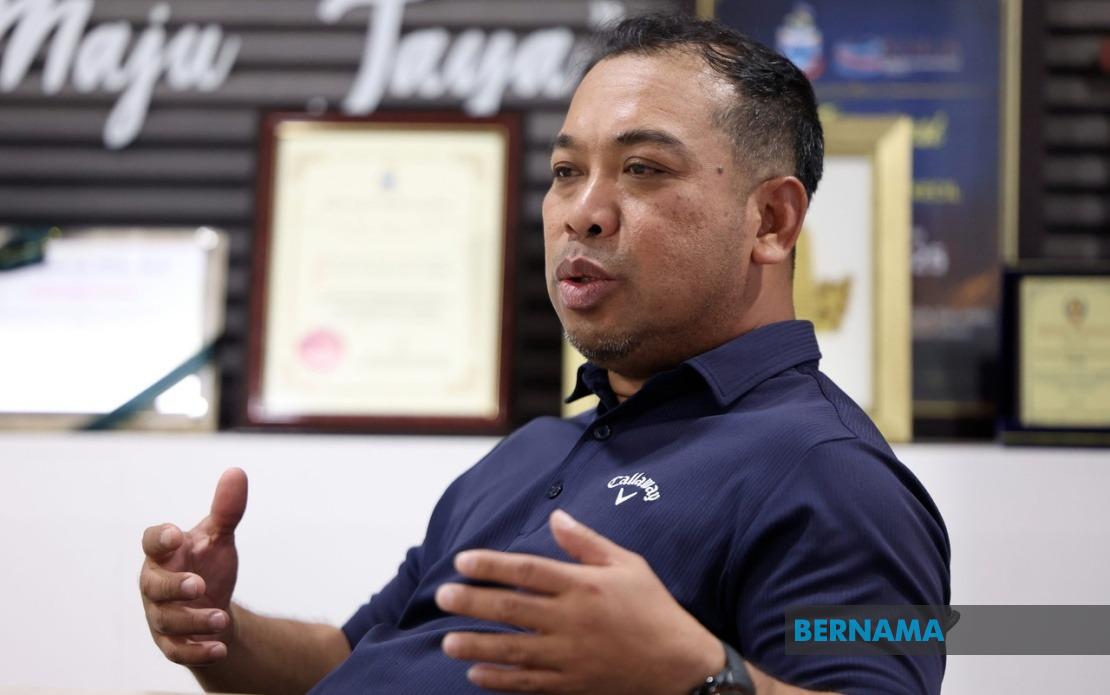
Datuk Mohamad Mohamarin, Member of Parliament for Banggi, has formally requested that the federal government allocate RM300 million to construct a comprehensive road network on Pulau Banggi in Kudat. The ambitious proposal, which he presented during parliamentary debates on the Supplementary Supply Bill 2026 at the Sabah State Legislative Assembly, targets the construction of approximately 37 kilometres of paved or concrete roadway connecting Kampung Meliu to Kampung Dogoton. This three-phase development scheme was originally tabled to Prime Minister Datuk Seri Anwar Ibrahim during an official visit to the island on May 9, underscoring the serious nature of infrastructure challenges facing the constituency.
The urgency of this infrastructure push stems from the island's severely deficient road network. Despite having approximately 81 kilometres of main roads, only 14 kilometres currently feature paved surfaces, and even these are deteriorating rapidly with widespread potholes and degraded conditions. Mohamad has raised particular concern about the safety implications of this neglect, noting that the existing paved stretches have become accident-prone hotspots. He has also questioned whether the Sabah Works Ministry has budgeted for immediate repairs to these critical 14-kilometre sections during the current financial year, indicating uncertainty about the state's ability to address even basic maintenance needs.
The road network deficiency extends beyond Pulau Banggi's main island. The Banggi constituency encompasses several other islands and coastal areas—including Pulau Balambangan, Tanjung Manawali, Pulau Sibogo, and Pulau Tigabu—which also lack adequate road infrastructure. These outlying areas fall outside the 81-kilometre calculation, suggesting that the total infrastructure deficit across the entire constituency is considerably more severe than headline figures suggest. This fragmented geography presents compounding challenges for connectivity and economic development across the region.
The proposed road development must be viewed within the context of broader infrastructure shortcomings that have persisted for decades. Although various development initiatives have been announced during high-profile visits by Chief Minister Datuk Seri Hajiji Noor and Prime Minister Anwar Ibrahim, implementation has lagged significantly. Mohamad's parliamentary intervention reflects frustration that despite political attention and announced projects, the island continues to grapple with fundamental infrastructure gaps that impede economic progress and quality of life for residents. The RM300 million commitment would represent a substantial intervention but remains uncertain as the MP seeks to catalyse action through legislative advocacy.
Beyond road construction, Mohamad has articulated a complementary vision for island development that extends to energy infrastructure. He has urged the state government to explore the development of a wind energy facility with capacity ranging between 15 and 50 megawatts. This proposal addresses another critical constraint on economic development—inadequate and unstable electricity supply. The island's remote location and sparse population have made conventional power infrastructure investment unattractive to private developers, creating a vicious cycle whereby limited electricity constrains business establishment and growth. A dedicated wind farm would potentially stabilise power supply while reducing long-term energy costs, creating conditions more conducive to private sector activity and attracting investment.
The combined road and renewable energy proposals reflect strategic thinking about addressing interconnected infrastructure deficits. Without reliable transport links, goods and services cannot move efficiently; without stable electricity, businesses cannot operate competitively. Rural and island constituencies across Malaysia face analogous challenges, making Banggi's situation emblematic of broader regional disparities in infrastructure investment. The RM300 million road project, if implemented, would establish a significant precedent for federal commitment to remote area development and could influence policy approaches toward other isolated communities.
The three-phase implementation structure suggested by Mohamad indicates recognition that such ambitious development must be sequenced to allow for technical planning, environmental assessment, and community engagement. Phased approaches also enable budget spreading across multiple financial years, potentially making the project more politically and fiscally feasible. However, the lack of confirmed funding or implementation timeline creates uncertainty for islanders who have waited decades for infrastructure improvements. The MP's parliamentary intervention, while necessary to maintain political pressure, does not guarantee that the proposal will advance beyond discussion.
For Malaysian policymakers, the Banggi case raises important questions about infrastructure equity and the cost of development in geographically challenging areas. Island constituencies require disproportionate investment per capita compared to mainland regions simply to achieve equivalent service standards. As Malaysia pursues economic transformation and competitiveness in global markets, peripheral regions like Banggi risk falling further behind unless deliberate investment decisions address infrastructure gaps. The political challenge lies in balancing development priorities across competing demands while ensuring that underserved communities receive adequate resource allocation.
The proposal also carries implications for Sabah's development trajectory more broadly. As a state seeking to diversify its economy beyond traditional sectors, investing in island infrastructure could unlock tourism potential, support fisheries development, and create conditions for value-added agricultural processing. Wind energy development, if viable, could position Sabah as a renewable energy producer and attract clean-energy-focused investment. These interconnected infrastructure investments represent opportunity for integrated regional development rather than isolated project implementation.
Moving forward, success depends on translating parliamentary advocacy into concrete federal and state government commitment. Mohamad's formal presentation during budget debates creates an official record that can anchor subsequent pressure for implementation. However, Malaysian experience suggests that announced projects often face delays, budget modifications, or deprioritisation when political attention shifts. Sustained engagement by local representatives, community organisations, and potentially media scrutiny will be necessary to ensure that Banggi's infrastructure challenges receive the priority and resources they warrant. For residents of this remote constituency, the outcome of this parliamentary initiative will determine whether decades-old infrastructure deficits finally receive systematic remediation.

