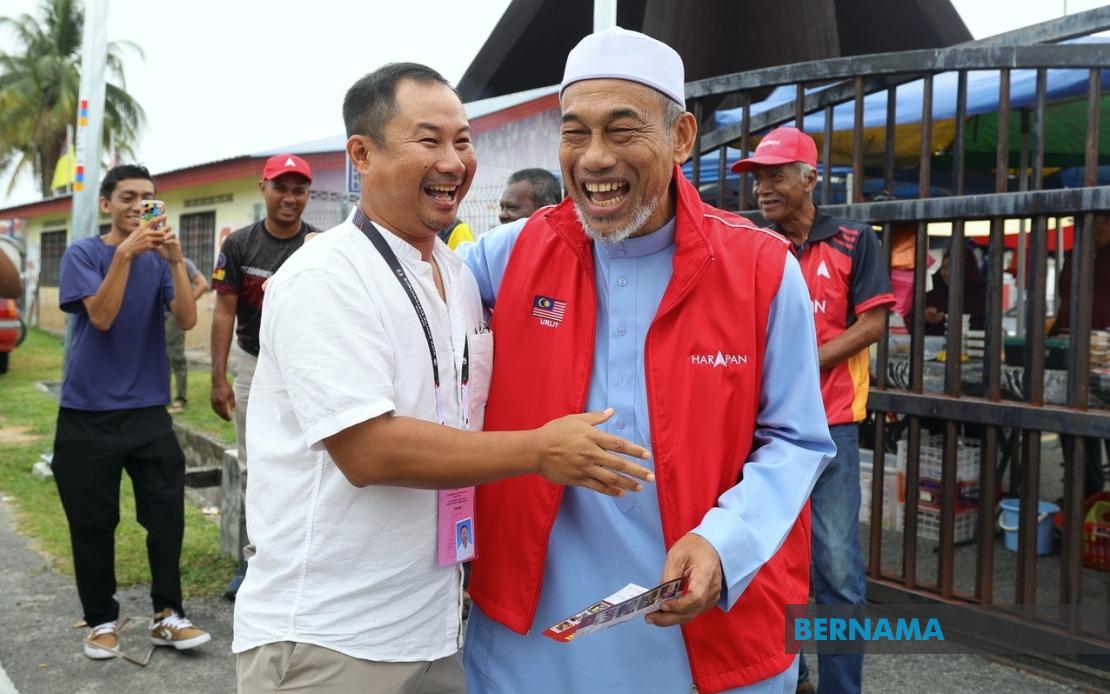
Datuk Bakri Sawir, the Pakatan Harapan candidate contesting the Klawang state seat, is pinning his electoral hopes on a solid track record spanning two consecutive terms in the Negeri Sembilan State Legislative Assembly. With the 16th state election scheduled for August 1, the 67-year-old assemblyman is emphasising the value of demonstrated service and sustained community engagement to convince voters to return him to the legislature for a third term.
At the heart of Bakri's campaign strategy lies a deliberate choice to remain embedded within his constituency. Since his initial election in 2018, he has made his residence within Klawang a defining feature of his political presence, positioning himself as perpetually accessible to constituents rather than operating from a distant office. This commitment to physical proximity forms a strategic advantage in an election where personal connection and demonstrated availability matter considerably to voters assessing their representative's dedication.
The assemblyman's approach to constituent service reflects a philosophy that diverges from conventional political practice. Rather than establishing a service centre where residents must come to seek assistance, Bakri has implemented a proactive system where he personally visits homes to deliver help directly. This door-to-door methodology, which he describes as his foundational approach since 2018, has enabled him to cultivate relationships across a relatively modest electoral base of fewer than 14,000 voters. Such a manageable constituency size has allowed for the kind of granular, personal interactions that characterise his campaign narrative.
During campaigning at the weekly market in Pekan Kuala Klawang, Bakri explicitly contrasted his consistent engagement with the periodic appearances of representatives who emerge only during election cycles. His implicit argument reflects broader voter frustrations with disconnected representation, suggesting that genuine service requires ongoing presence rather than episodic political theatre. For Malaysian voters increasingly sceptical of political promises, the notion of a representative who has maintained continuous residency and demonstrated accessibility carries particular resonance.
Beyond current operations, Bakri's vision encompasses ambitious long-term development initiatives tailored to Jelebu district's advancement. His most prominent unfulfilled proposal involves establishing a higher education institution within the district, specifically Universiti Malaysia Negeri Sembilan. Though he acknowledges current financial constraints impede this aspiration, he frames its continued pursuit as part of a broader commitment to human capital development. For a district seeking to retain young talent and create pathways for local advancement, the emphasis on educational infrastructure signals recognition of demographic pressures affecting rural constituencies throughout Malaysia.
Among more immediately achievable projects, Bakri is championing the development of a Rest and Recreation Area in Tembun, Hulu Klawang. The initiative reflects recognition that strategic infrastructure investments can catalyse economic opportunities, particularly in regions with limited commercial activity. By positioning improved facilities as tourist infrastructure, Bakri connects local infrastructure development to broader economic participation, suggesting that enhanced amenities attract visitors and generate employment for local residents. This framing resonates with rural constituencies seeking tangible economic benefits beyond symbolic political attention.
The transformation of Bukit Tajali into a recreational park featuring both leisure and adventure tourism activities represents another plank of his development platform. Complementing this vision is a strategy to leverage Jelebu's agrotourism potential by capitalising on historical sites such as the British Memorial Stone. These proposals collectively suggest an attempt to position the district within broader tourism circuits, recognising that rural constituencies increasingly depend on diversified economic activities rather than traditional agriculture or resource extraction alone.
The Klawang contest features a three-cornered race reflecting broader political fragmentation in Malaysian electoral competition. Bakri faces challenges from Danni Rais, a 38-year-old Perikatan Nasional candidate, and Muhammad Adib Musa, a 25-year-old Parti Pribumi Bersatu Malaysia contestant. The presence of a much younger challenger from Bersatu, a party that has cultivated particular appeal among younger voters dissatisfied with establishment politics, introduces an interesting generational dimension to the race. Meanwhile, the PN candidate represents an alternative conservative coalition that has gained traction in certain Malaysian constituencies.
Bakri's articulated political philosophy, which frames electoral engagement as worship and service as a pathway to spiritual fulfilment, reflects a religiously inflected understanding of political participation increasingly common among Malaysian politicians. His stated respect for voter autonomy and acknowledgement that not all will support him projects a measured tone, contrasting with more aggressive campaign messaging. This approach may appeal to voters fatigued by polarised political rhetoric, though it remains to be seen whether such measured reasonableness translates into electoral advantage in contemporary Malaysian politics where passionate mobilisation often prevails.
The Negeri Sembilan state election follows the dissolution of the assembly on June 5, with early voting scheduled for July 28 preceding the general polling day. Approximately 889,490 registered voters participate in the state election, including 867,151 ordinary voters alongside 21,339 military and police personnel voting early. This substantial electorate, distributed across multiple constituencies, represents a significant electoral exercise for a state that has experienced considerable political volatility in recent years.
For Klawang specifically, the election represents a potential consolidation of Pakatan Harapan representation or a break in continuity should opposition candidates gain ground. The result will indicate whether voters privilege demonstrated service and continuity embodied by an incumbent with established community relationships, or whether they opt for alternative visions represented by younger or differently-aligned candidates. Bakri's campaign fundamentally hinges on the proposition that sustained, visible engagement throughout a full term commands electoral reward, a thesis that will be tested when voters make their decision on August 1.

