Bahrain's leadership is projecting resilience amid economic headwinds that have battered the small Gulf kingdom, announcing that it has not accessed a $5.3 billion currency swap arrangement with the United Arab Emirates despite mounting financial pressures. The revelation came from Noor bint Ali Alkhulaif, Bahrain's Minister of Sustainable Development and Chief Executive of the Bahrain Economic Development Board, in conversations with international media this week. While the swap remains available as a backstop, Alkhulaif confirmed through discussions with central bank officials that the facility has not been activated, suggesting the government believes it can navigate current challenges without requiring emergency liquidity support from its neighbour.
The decision to preserve the currency swap reflects Bahrain's complicated position within the volatile Arabian Gulf. As a small island nation with limited oil reserves compared to wealthier peers, Bahrain has long struggled with elevated sovereign debt levels and structural fiscal imbalances. The eruption of the Iran conflict earlier this year compounded these existing vulnerabilities, striking at a moment when the kingdom was already attempting to consolidate its fiscal position and diversify its economy away from hydrocarbon dependence. The timing has proven particularly unfortunate for policymakers who had branded 2024 as a transformational year for economic renewal and institutional development.
The magnitude of the current disruption cannot be understated. International credit rating agencies have made stark assessments of the war's economic fallout on Bahrain's balance sheet. S&P Global estimates that the regional hostilities will trigger a contraction of approximately three percent in the kingdom's gross domestic product for the full year, coupled with a fiscal deficit approaching eight and a half percent of GDP. These figures reflect the genuine economic shock rippling through Bahrain's core sectors, from its manufacturing base to its crucial tourism industry and strategic shipping operations. Recent escalations in cross-border tensions, including Iranian attacks directed at Bahraini territory over consecutive days, have underscored the fragility of the security situation and the uncertainty clouding any economic forecast.
Yet government officials are signalling that recovery mechanisms are already functioning more effectively than these headline projections might suggest. Alkhulaif emphasised that major international logistics and manufacturing enterprises operating from Bahrain have successfully recalibrated their supply chain networks to circumvent disruptions in the Strait of Hormuz, maintaining operational continuity despite the regional turbulence. More encouragingly, the tourism segment, which has traditionally relied heavily on visitors from neighbouring Gulf states, is demonstrating surprising resilience. Regional tourist arrivals, which represented approximately ninety percent of the fifteen million total visitors recorded in the prior year, have rebounded to levels comparable with pre-war normalcy, indicating that travel patterns may stabilise faster than initially feared.
This recovery narrative, however, sits uneasily alongside alarming trends in Bahrain's foreign exchange reserves. The kingdom's liquid foreign currency holdings have descended to their lowest point since the acute COVID-19 pandemic, hovering around the three billion dollar mark. This deterioration has naturally sparked investor concern about the sustainability of the government's policy position and its capacity to weather extended regional instability. The existence of the unused currency swap with Abu Dhabi provides genuine strategic protection, yet declining reserves underscore why the government is simultaneously pursuing multiple policy levers to stabilise the economic situation.
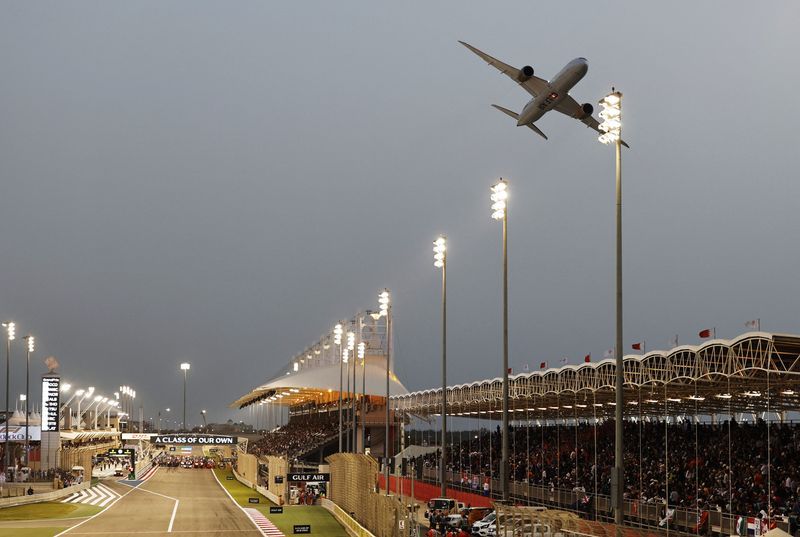
Beyond conventional financial measures, Bahrain is pursuing a high-profile initiative to restore the Bahrain Formula One Grand Prix to the international racing calendar, a race that was postponed in March alongside Saudi Arabia's event following the outbreak of major hostilities. Officials are engaged in active negotiations with international Formula One authorities to potentially reinstate the event later in 2024, with the weekend of October 3rd to 4th emerging as the most viable window. This proposed slot would position Bahrain between the Azerbaijan Grand Prix in Baku and the Singapore Grand Prix scheduled for October 11th, a logistically manageable arrangement within the international racing circuit's complex scheduling matrix.
The restoration of the Bahrain Grand Prix carries substantial economic significance beyond mere sporting prestige. The event typically draws approximately 105,000 spectators across the racing weekend, with international visitors spending at premium levels representing between ten and fifteen percent of the total crowd. This composition means that foreign race fans, though a minority in headcount, generate disproportionate economic stimulus through accommodation, dining, retail spending, and associated services. For a kingdom seeking to demonstrate continued normalcy and attractiveness as an international destination, the successful hosting of a global sporting event carries messaging value extending far beyond attendance figures.
However, the likelihood of the race's return remains contingent upon stabilisation of the broader security environment. Formula One authorities will require concrete assurances that the geopolitical situation has sufficiently de-escalated before committing to an event of this scale and international profile. The sport has demonstrated heightened sensitivity to security risks following multiple incidents at various global venues, making organisers cautious about exposure in volatile regions. Officials have acknowledged that progress toward renewed hostilities between American and Iranian forces would prove essential to unlocking the pathway for the race's restoration, creating an uncomfortable dependency between Bahrain's sporting aspirations and developments substantially beyond its control.
The timeline for a formal decision carries its own pressures. Formula One teams and support staff require adequate preparation periods to arrange logistics, transport, accommodation, and technical resources necessary for international competition. A race reinstated too late in the planning calendar risks operational complications and reduced quality of preparation that could undermine the event's prestige. Decision-makers at the Formula One governing authority are therefore expected to render a final determination relatively soon, creating urgency around both the security situation and Bahrain's diplomatic conversations with international racing bodies.
Looking beyond the current year, Bahrain has additional reasons for optimism regarding its Formula One hosting arrangements. The Islamic calendar's progression means that Ramadan will occur earlier during the 2026-27 sporting season compared to this year, potentially enabling the kingdom to reclaim its historical position as host of the Formula One season's opening Grand Prix. This honour carries considerable prestige and economic benefits, positioning Bahrain as the gateway to the international racing season. Additionally, Formula One's pre-season testing activities, which generate sustained spending and tourism activity, could be repatriated to Bahrain alongside the opening race, fundamentally enhancing the commercial case for the kingdom's involvement in international motorsport.
The broader picture emerging from Bahrain's current posture is one of cautious pragmatism balanced against measured optimism. The government is avoiding the deployment of emergency financial facilities despite severe economic stress, suggesting confidence in its capacity to manage near-term challenges through conventional revenues and operational adjustments. Simultaneously, officials are pursuing tangible recovery initiatives such as the Formula One Grand Prix that could generate meaningful economic stimulus and bolster investor confidence in Bahrain's stability. Whether this combination of financial restraint and strategic initiatives proves sufficient to navigate the extended regional uncertainty remains an open question, but it demonstrates that policymakers are consciously avoiding the perception of crisis while maintaining realistic contingency planning through available financial arrangements.

