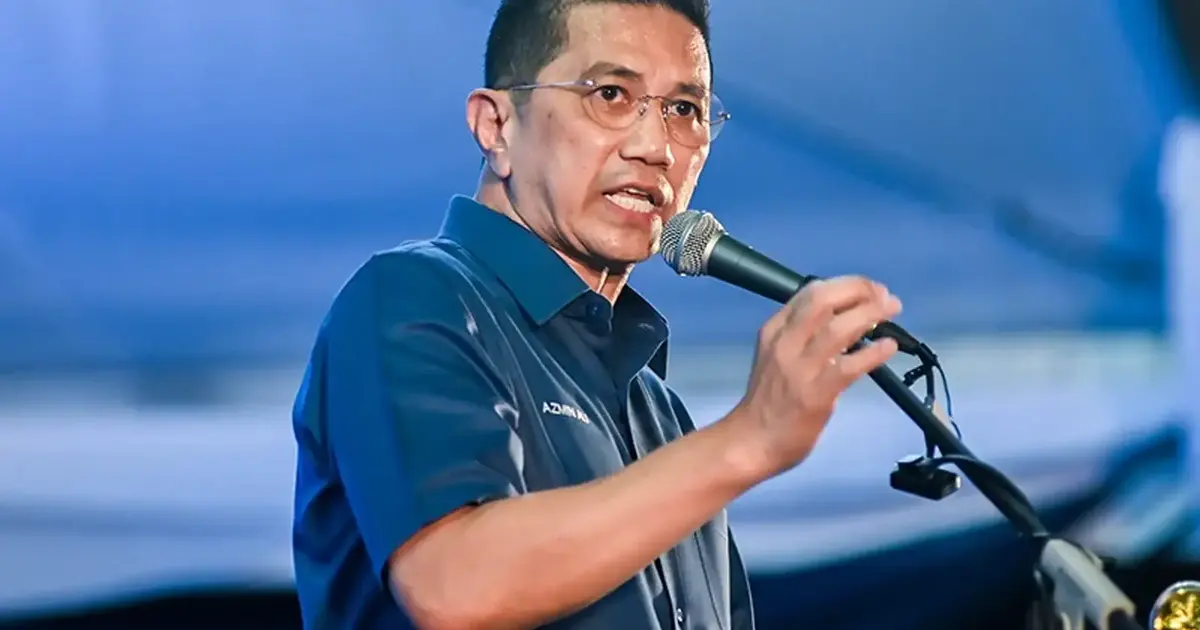
Azmin Ali has increasingly become the focal point of speculation regarding Bersatu's future leadership trajectory, with political analysts viewing him as a potentially crucial figure should party chairman Muhyiddin Yassin opt to relinquish his position. The Bersatu secretary-general's standing within both the party and the broader Malaysian political ecosystem has drawn comparisons to his extended track record in the opposition ranks, where he cultivated relationships and institutional knowledge over an extended period.
Observers of Malaysian politics have drawn attention to Azmin's ten-year stint as deputy president of PKR, a tenure that established him as a seasoned operator within the country's largest opposition party. This extensive period of service provided him with deep knowledge of the legislative process, party mechanics, and the delicate interpersonal dynamics that govern high-level political negotiations. Such experience has positioned him uniquely as someone who understands how coalition agreements function and how competing interests within multi-party alliances can be navigated.
The significance of Azmin's history within PKR extends beyond mere administrative familiarity. His prolonged presence at the party's leadership echelon meant he developed substantive relationships with members across PKR's fractious ecosystem, relationships that remained meaningful even after his transition to Bersatu. These connections are viewed by analysts as potentially instrumental should any scenario unfold requiring mediation between Bersatu and Pakatan Harapan, the broader opposition coalition to which both parties nominally belong.
Bersatu's relationship with Pakatan Harapan has historically been complicated and conditional, marked by periods of collaboration punctuated by moments of tension. The party, which split from UMNO and subsequently joined the opposition, maintains a distinct political identity that does not always align seamlessly with PKR's interests or those of its Pakatan allies. An internal leadership transition within Bersatu could provide an opportune moment to recalibrate these relationships, should the party leadership seek to strengthen its position within the broader coalition structure.
Azmin's tenure as Bersatu secretary-general has itself accumulated meaningful capital. In this role, he has been responsible for day-to-day party operations, membership administration, and coordination of grassroots activities. This operational oversight has generated his own network of supporters and allies within Bersatu's organizational structure, distinct from but complementary to the relationships he retained from his PKR era. Party officials and grassroots activists who have worked directly with him in this capacity represent a constituency with direct experience of his leadership style.
The broader context of Malaysian coalition politics suggests that Azmin's background straddles two institutional worlds in a manner that could prove advantageous during sensitive political negotiations. Unlike politicians whose career trajectories have remained confined to single parties, his movement between PKR and Bersatu demonstrates flexibility and an ability to build credibility across organizational boundaries. For a figure tasked with potentially repairing or recalibrating relationships within Pakatan Harapan, such bridging experience holds tangible value.
However, the narrative around Azmin as a potential successor carries inherent complications. His shift from PKR to Bersatu was itself a significant political maneuver, and it occurred during a particularly turbulent period in Malaysian politics marked by intense factional rivalries. Some observers within PKR retained reservations about the circumstances of his departure, a context that could potentially complicate any future negotiation requiring his mediation between the two parties. The residual sensitivities around that episode remain latent within the political ecosystem.
Muhyiddin Yassin's continued leadership of Bersatu has itself been a subject of periodic speculation, with questions periodically surfacing regarding the party's long-term direction and its positioning relative to other opposition elements. Any transition in leadership would inevitably trigger discussions about ideological orientation, coalition strategy, and the balance of power within Pakatan structures. Azmin's potential candidacy would immediately activate these broader strategic questions.
For Malaysian political observers tracking developments within opposition alliances, the positioning of senior figures like Azmin carries implications extending beyond internal party management. The strength and cohesion of Pakatan Harapan directly influences the landscape facing the federal government and shapes the viability of alternative political configurations. Leadership transitions within major opposition components therefore warrant attention as potential inflection points in the nation's political trajectory. Azmin's decade of institutional knowledge from his PKR service, combined with his current party role, positions him as someone whose influence could potentially extend across multiple institutions simultaneously.