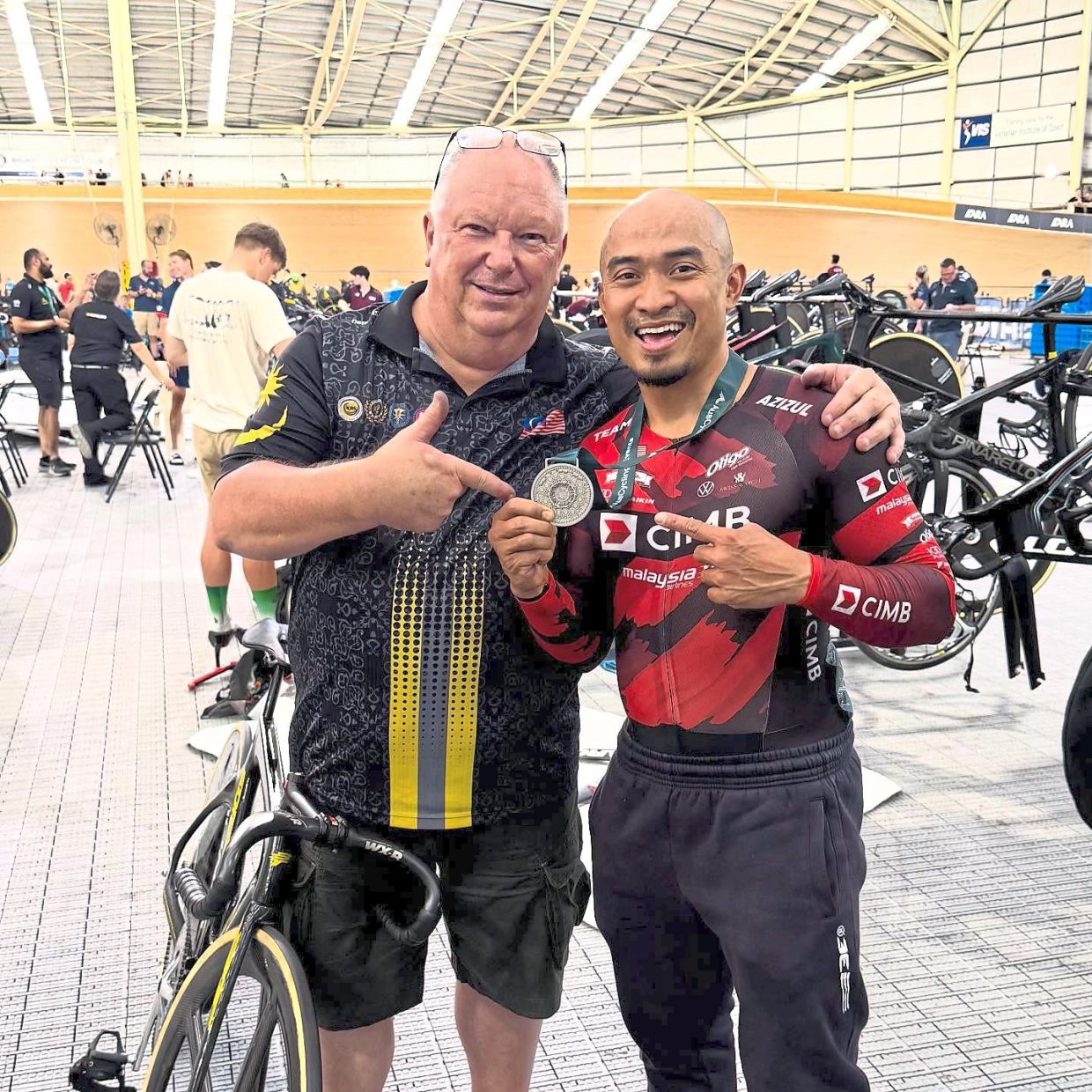
National track cyclist Azizulhasni Awang has openly acknowledged that his decision to publicly support technical director John Beasley will likely attract negative attention and potential personal attacks from detractors, yet he remains resolute in his stance. The two-time Olympic medalist made clear he understands the political minefield he has entered by taking Beasley's side during a period of scrutiny surrounding the Australian coach's leadership of Malaysia's cycling programme.
Azizul's candid admission reveals the precarious position athletes occupy when they inject themselves into administrative disputes. By stepping into the fray to defend Beasley, the track star has effectively made himself a secondary target for those critical of the coaching regime and federation decisions. He recognises that if Malaysia's cyclists underperform at the forthcoming Commonwealth Games and Asian Games, the narrative will swiftly shift to blame those who championed the current technical direction—a scenario he openly anticipates.
The Tokyo 2020 Olympics silver medalist emphasised that he had weighed these risks carefully before deciding to speak out. Rather than seeking to distance himself from potential fallout, Azizul has adopted a philosophical approach grounded in his personal faith convictions. He stated that whatever outcomes materialise—whether triumph or disappointment—are ultimately beyond human control and rest within divine providence. This perspective appears to have liberated him from the fear that typically constrains athletes from making controversial public statements.
Azizul's defence of Beasley centres on the technical director's substantial contributions to Malaysian track cycling over two decades. The coach has mentored numerous world-class cyclists and helped establish Malaysia as a regional force in the sport. Despite recent criticism from various quarters questioning Beasley's methods and results, Azizul maintains that the Australian's foundational work and ongoing commitment to athlete development remain underappreciated by those who have voiced public complaints.
The timing of Azizul's public support comes as the Malaysia National Cycling Federation has escalated its response to internal dissent. Federation president Datuk Amarjit Singh Gill recently announced that show-cause letters would be issued to two individuals affiliated with state cycling bodies. These officials had made critical comments about Beasley through public channels rather than following established administrative procedures, a breach the federation views as damaging to institutional reputation and cohesion.
For Malaysian sports observers, this episode illustrates the tension between athlete autonomy and institutional loyalty that characterises national sports programmes. Azizul's willingness to risk his credibility on behalf of Beasley suggests either genuine confidence in the coach's capabilities or a calculated decision that maintaining stability within the technical hierarchy serves athletes' interests better than allowing organisational dysfunction to fester. Either way, his stance differs markedly from the cautious silence most elite athletes maintain when internal conflicts surface.
The Commonwealth Games and Asian Games loom as crucial testing grounds for the current approach. These competitions will provide measurable evidence of whether the cycling programme's trajectory meets expectations or validates the critics' concerns. Azizul has positioned himself directly at the intersection of these outcomes; if Malaysia delivers strong results, his principled defence of Beasley will appear prescient and principled. Conversely, poor performances will likely resurrect questions about his judgment in backing the technical director so publicly.
Azizul's stated priority remains ensuring smooth preparation for both upcoming competitions. By framing his support for Beasley not as a personality endorsement but as a practical necessity for team stability, he has attempted to recontextualise the issue. From his perspective, allowing internal grievances to fester publicly undermines athletes' ability to focus on training and competition—a loss no national federation can afford at the highest levels of international competition.
The cyclist's invocation of faith as his anchor against potential criticism also reveals how elite Malaysian athletes navigate the intersection of personal conviction and public expectation. Rather than adopting the defensive posturing typical of embattled public figures, Azizul has chosen vulnerability and honesty about his reasoning. He has essentially told audiences that he understands the risks and chooses to accept them anyway because he believes in both the rightness of defending contributors to Malaysian sport and in forces larger than immediate public opinion.
This episode carries implications extending beyond individual personalities to questions about how Malaysian sports institutions manage dissent and maintain internal discipline. The federation's decision to issue show-cause letters suggests a preference for hierarchical order over open debate, a choice that may suppress further public criticism but risks driving grievances underground where they cannot be addressed. Azizul's willingness to engage openly with these tensions, by contrast, models a different approach based on transparency and personal accountability.
For Southeast Asian sports administrators watching Malaysia's cycling governance evolve, the situation underscores the challenges of maintaining technical continuity while responding to legitimate questions about performance and methodology. Beasley's two decades of contributions cannot be dismissed, yet neither can concerns about fresh perspectives and evolving coaching standards be ignored simply because veteran coaches have historical achievements. The real test will be whether the current structure produces results or whether the structural tensions Azizul has illuminated prove prescient warnings.