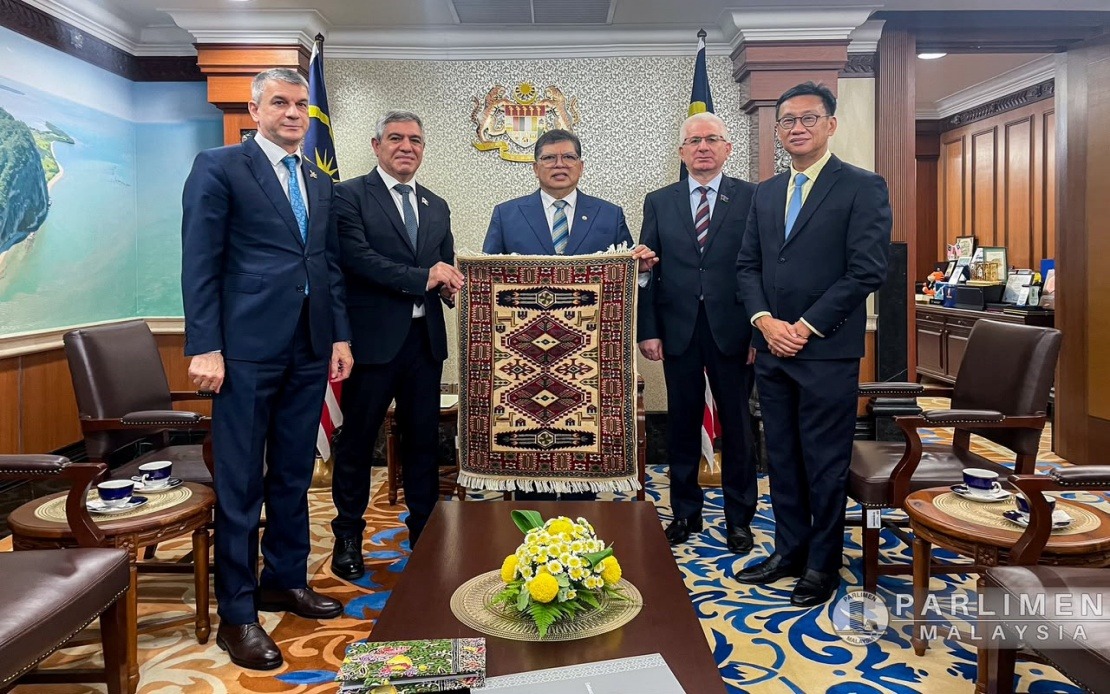
A delegation of Azerbaijani parliamentarians arrived in Malaysia recently to advance bilateral cooperation and open new avenues for economic engagement between Baku and Kuala Lumpur. Vugar Bayramov, who heads the Working Group for Azerbaijani-Malaysian Interparliamentary Relations in the Azerbaijani Parliament, led the mission alongside fellow Member of Parliament Bakhtiyar Aliyev. The visit underscores growing diplomatic momentum between the two nations and reflects broader efforts to cement partnerships in Asia-Pacific affairs.
The Azerbaijani delegation commenced their official programme with a courtesy call on Dewan Rakyat Speaker Tan Sri Johari Abdul, establishing immediate engagement with Malaysia's legislative body. This initial meeting set the tone for subsequent discussions focused on expanding parliamentary collaboration and addressing shared regional interests. Such high-level parliamentary contact serves as a foundation for sustained dialogue on matters of mutual concern to both countries' legislatures.
Further engagements included substantive talks with Wong Chen, chairman of the Malaysian Parliament's Special Select Committee on International Relations and International Trade. This committee handles Malaysia's most critical trade and diplomatic portfolios, making Wong's participation significant for any future economic agreements. The Azerbaijani representatives also met with Zahir Hassan, who chairs the West Asia Friendship Group in Parliament, reflecting strategic interest in strengthening Malaysia's connections with nations in the Caucasus and broader Western Asian region.
At the upper house, the delegation convened with Dewan Negara President Datuk Awang Bemee Awang Ali Basah, where both sides explored pathways for enhanced institutional cooperation between their respective parliaments. Such bilateral parliamentary exchanges typically facilitate knowledge-sharing on legislative processes, governance standards, and policy coordination. The discussions encompassed prospects for regular parliamentary visits, joint committees, and coordinated positions on international matters where interests align.
Beyond formal political engagement, the delegation prioritised economic outreach by meeting with S. Gnanasambanthan, secretary-general of the Malaysian National Chamber of Commerce and Industry. This session demonstrated Azerbaijan's recognition that sustained diplomatic relations must be anchored in tangible commercial benefits. The meeting brought together representatives from more than twenty Malaysian business entities, creating networking opportunities spanning multiple sectors.
During these business-focused discussions, both delegations identified promising avenues for deepening trade and investment cooperation. The delegation explored opportunities for Malaysian firms to engage in Azerbaijan's energy sector, infrastructure development, and emerging industries. Conversely, Azerbaijani companies expressed interest in Malaysia's expertise in Islamic finance, petrochemicals, and palm oil production. The emphasis on expanding business-to-business ties reflects recognition that sustainable bilateral relations thrive when private sectors actively participate alongside government institutions.
Speaker Johari subsequently shared reflections on the visit through social media, emphasising the broader significance of such parliamentary exchanges beyond conventional diplomacy. He articulated that people-centred initiatives and direct human contact constitute essential components of international relations, particularly when global circumstances present mounting uncertainties. His characterisation of diplomatic engagement as fundamentally rooted in building genuine human connections resonates with contemporary views on soft power and cultural diplomacy in Southeast Asia.
For Malaysia, strengthening ties with Azerbaijan holds strategic value in several dimensions. Azerbaijan occupies a geopolitically significant position bridging Europe and Asia, controlling important transportation corridors and energy resources. Enhanced parliamentary cooperation could position Malaysia to better understand Caucasian perspectives on regional stability and global governance. Additionally, as Malaysia seeks to diversify its economic partnerships beyond traditional markets, Azerbaijan presents emerging opportunities in energy trade and mineral imports.
Azerbaijan's interest in Malaysia reflects deliberate outreach toward Southeast Asian nations as it expands its diplomatic footprint beyond traditional allies. Malaysia's moderate Islamic democracy, successful multi-ethnic governance model, and role as a significant trading nation make it an attractive partnership prospect for Baku. Parliamentary delegations serve as low-cost, high-impact instruments for building relationships that can eventually translate into governmental and commercial benefits.
The timing of this visit suggests both nations recognise opportunities for expanded cooperation in an era of reconfiguring global alignments. Neither country faces historical antagonisms or competing interests, allowing their relationship to develop on a foundation of mutual benefit. As geopolitical competition intensifies globally, nations increasingly value partnerships with countries offering complementary economic strengths and compatible governance philosophies.
Moving forward, the visit likely represents a stepping stone toward more structured bilateral arrangements. Parliamentary delegations of this nature typically precede formal agreements on trade, cultural exchange, and institutional partnerships. Malaysian parliamentarians may reciprocate with visits to Baku, potentially leading to working group formations and regular dialogue mechanisms. Such institutional frameworks would institutionalise engagement beyond individual delegations, ensuring continuity regardless of political transitions.
The delegation's emphasis on involving Malaysia's business community underscores recognition that modern statecraft requires alignment between political leadership and private sector interests. When lawmakers engage directly with merchants and investors, they obtain firsthand understanding of commercial priorities and can work toward removing barriers to trade. For Malaysian businesses seeking expansion into new markets, official parliamentary support can facilitate market entry and provide assurances of stable operating environments.

