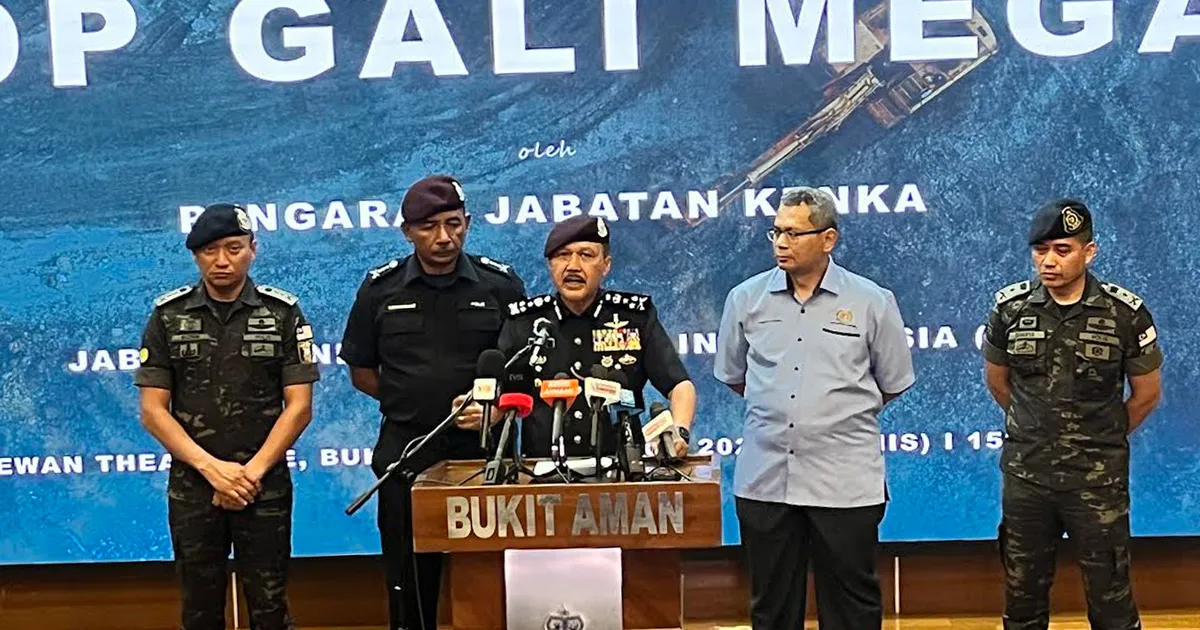
Malaysian authorities have intensified their battle against illegal mining operations, culminating in a major crackdown that resulted in 99 arrests and the seizure of RM119 million in illegal assets across multiple locations. The comprehensive operation, conducted between August 19 and 23, demonstrates the government's strengthened commitment to combating unlicensed extraction activities that have plagued the country's mining sector and caused significant environmental damage.
During the five-day enforcement sweep, authorities recovered approximately 33,000 tonnes of natural resources that had been illegally extracted from various sites. The confiscated materials included coal, quarry stone, earth, and sand, with the recovered minerals and aggregates valued at RM21 million. Beyond the physical seizure of extracted materials, the operation also targeted the financial infrastructure supporting these illegal activities, resulting in the confiscation of assets worth an additional RM98 million linked to proceeds and facilitating mechanisms of the illicit trade.
Illegal mining represents a persistent challenge across Southeast Asia, with Malaysia experiencing particular difficulties in controlling unlicensed quarrying and mineral extraction in states with weak enforcement capacity and porous borders. The scale of this operation—involving 99 individuals—suggests a well-organised network rather than isolated small-scale violations, pointing to the sophisticated nature of criminal mining enterprises that have developed sophisticated supply chains and distribution networks. These operations typically employ subcontracting arrangements and front companies to obscure ownership and evade regulatory oversight.
The economic implications of illegal mining extend beyond lost government revenue from licensing fees and royalties. Legitimate quarry operators and licensed mining companies face unfair competition from unlicensed rivals who bypass regulatory compliance costs, environmental remediation requirements, and tax obligations. This market distortion undermines the viability of licensed operators who must maintain higher operational standards and contribute to government coffers, creating pressure to either cut corners or exit the sector entirely.
Environmental degradation linked to illegal mining has become increasingly visible across Malaysian states. Uncontrolled extraction destroys topsoil, destabilises hillsides, contaminates water sources, and eliminates vegetation cover, leaving behind degraded landscapes that require expensive rehabilitation. In agricultural regions, illegal sand and stone mining alongside waterways threatens irrigation systems and agricultural productivity. The cumulative environmental cost far exceeds the monetary value of confiscated assets, particularly when considering long-term ecological restoration requirements.
The August operation highlights the importance of coordinated enforcement efforts involving multiple agencies and jurisdictions. Illegal mining operations frequently exploit gaps between state and federal authority, moving equipment and materials across state boundaries to evade detection. Success in this crackdown likely required intelligence sharing between agencies, surveillance capabilities, and rapid deployment of enforcement teams capable of simultaneous operations at multiple sites—a logistical challenge that demands significant resources and inter-agency cooperation.
International criminal networks have increasingly infiltrated Southeast Asian mining sectors, with evidence suggesting involvement in illegal extraction from multiple countries. Some of the confiscated assets may be linked to transnational operations moving extracted materials across borders for processing and sale in third countries. This international dimension means that purely domestic enforcement responses have limited effectiveness unless coupled with regional cooperation, mutual legal assistance, and coordinated border controls.
The detention of 99 individuals raises important questions about prosecution capacity and legal framework effectiveness. Malaysia's anti-mining enforcement laws must be robust enough to secure convictions and impose meaningful penalties that deter future violations. Weak sentencing or lengthy legal proceedings create perverse incentives where illegal operators calculate that potential fines and brief detention periods represent acceptable business costs compared to licensing fees and compliance expenses. Consistent, swift prosecution with substantial penalties is essential to changing cost-benefit calculations.
Local communities living near illegal mining sites often experience direct negative impacts, from dust and noise pollution to damaged water quality and traffic congestion from heavy vehicle movements. Communities sometimes participate in illegal extraction due to economic desperation or pressure from organised criminal elements. Addressing the root causes requires not only enforcement but also economic development initiatives that provide legitimate employment alternatives in affected regions, reducing the vulnerability of residents to recruitment into illegal operations.
The recovery of RM119 million in assets represents a significant blow to these criminal enterprises, but the ongoing challenge lies in preventing rapid reconstitution of operations and asset replacement. Criminal networks often maintain backup equipment, alternative supply routes, and hidden financial reserves to recover from enforcement actions. Sustained pressure through repeated operations, improved intelligence gathering, and asset tracking will be necessary to achieve lasting disruption rather than temporary setbacks.
Looking forward, this operation should inform policy discussions about strengthening regulatory frameworks, improving monitoring technology, enhancing penalties, and supporting legitimate industry development. Malaysia's mineral resources remain valuable economic assets that should benefit the nation through properly licensed, environmentally responsible extraction. Successful anti-illegal mining campaigns require not just enforcement actions but comprehensive strategies addressing economic incentives, criminal financing, and systemic vulnerabilities that enable underground operations to flourish.

