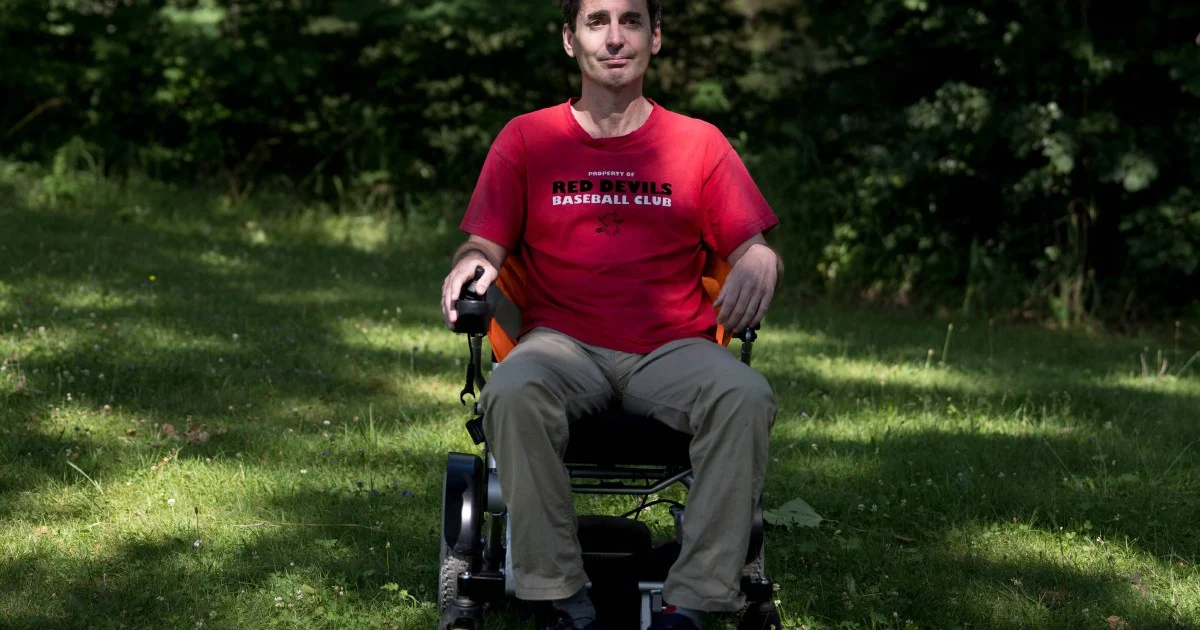
Mex Muellner, an Austrian resident who uses a wheelchair, has taken his government to the European Court of Human Rights in a significant legal gambit, arguing that Austria's inadequate response to climate change violates his fundamental rights. As heatwaves intensify across Europe, Muellner's case represents a novel approach to holding governments accountable for climate inaction through human rights mechanisms rather than traditional environmental law.
During recent extreme heat events, Muellner found himself physically immobilised by soaring temperatures, unable to navigate his wheelchair safely outdoors or remain comfortable indoors without adequate cooling. His situation underscores a critical but often overlooked dimension of climate crises: the disproportionate impact on people with disabilities and mobility challenges. Where others might simply stay indoors with air conditioning or relocate temporarily, wheelchair users face compounded vulnerabilities that extend beyond mere discomfort to encompass genuine threats to health and independence.
The case builds momentum within a broader European movement to establish climate change as a human rights issue. Courts from Strasbourg to national benches across the continent have increasingly recognised that government failure to mitigate climate impacts can breach obligations to protect citizens' rights to life, health, and private family life. This legal shift reflects a growing recognition that climate policy is not merely an environmental or economic matter but fundamentally a question of human dignity and social justice.
Austria's climate credentials, while stronger than many nations, remain insufficient in Muellner's legal argument. The Alpine nation has committed to achieving climate neutrality by 2040 and has implemented various renewable energy targets. However, Muellner's lawyers contend that these measures fall short of protecting vulnerable populations from already unavoidable temperature increases. The disconnect between national climate pledges and on-the-ground protections for at-risk groups reveals a persistent gap in climate governance across Europe.
The timing of Muellner's action reflects escalating climate impacts already reshaping European life. Heatwaves that once occurred irregularly have become recurring seasonal phenomena, with 2023 and 2024 witnessing record-breaking temperatures across the continent. Austria, despite its cooler Alpine reputation, has not escaped this trend. Urban areas particularly suffer from heat island effects, where concrete and asphalt concentrate warmth, creating dangerous microclimates for those unable to seek refuge through personal mobility.
For Malaysian and Southeast Asian observers, Muellner's case carries significant implications. Although tropical nations face different immediate climate challenges—predominantly flooding and humidity rather than extreme heat waves—the principle underlying his lawsuit applies universally. Across Southeast Asia, marginalised populations including persons with disabilities, the elderly, and economically disadvantaged communities face disproportionate climate risks. The legal framework Muellner is testing could potentially inspire similar human rights-based climate litigation in the region, particularly as Malaysian courts and others increasingly engage with rights-based jurisprudence.
The European Court of Human Rights has already signalled openness to climate-related claims. In 2024, the court's Grand Chamber recognised that climate change can engage member states' obligations under the European Convention on Human Rights. However, establishing that Austria specifically failed its obligations toward Muellner presents a higher evidentiary bar. The court must determine whether Austria's climate policies are manifestly inadequate and whether the government took sufficient steps to protect vulnerable populations from foreseeable heat-related harms.
Muellner's legal team faces the complex challenge of drawing direct causation between Austria's climate policies and his individual suffering. This demands demonstrating not only that the government's measures were insufficient, but that timely, stronger action would have prevented or substantially mitigated his experiences. Such individualised climate harm claims represent uncharted legal territory, testing the limits of how human rights courts can address systemic, global challenges through individual complaints.
The case also highlights how disability rights and climate justice intersect. Persons with disabilities constitute approximately 15 percent of the global population, yet climate adaptation planning frequently overlooks their specific needs. Wheelchair users, those with heat-sensitive conditions, and people dependent on electrical medical equipment all face compounded climate vulnerabilities. Integrating disability perspectives into climate policy represents not merely a charitable gesture but a human rights imperative that governments have largely neglected.
Austria's response to the case will reveal how the nation balances its climate ambitions with human rights obligations. Should Muellner prevail, the judgment could establish precedent forcing European governments to consider vulnerable populations more explicitly in climate policy design. Even if he loses, the case will clarify the legal standards governing state obligations to protect citizens from climate impacts, shaping climate litigation strategies across the continent.
Beyond the courtroom, Muellner's action reflects a fundamental shift in how citizens are demanding climate accountability. Rather than accepting government timelines and targets at face value, affected communities are insisting that climate action be measured not by international pledges but by tangible protection of human wellbeing. This accountability mechanism, operating through human rights courts rather than environmental tribunals, may prove more effective at compelling genuine policy change.

