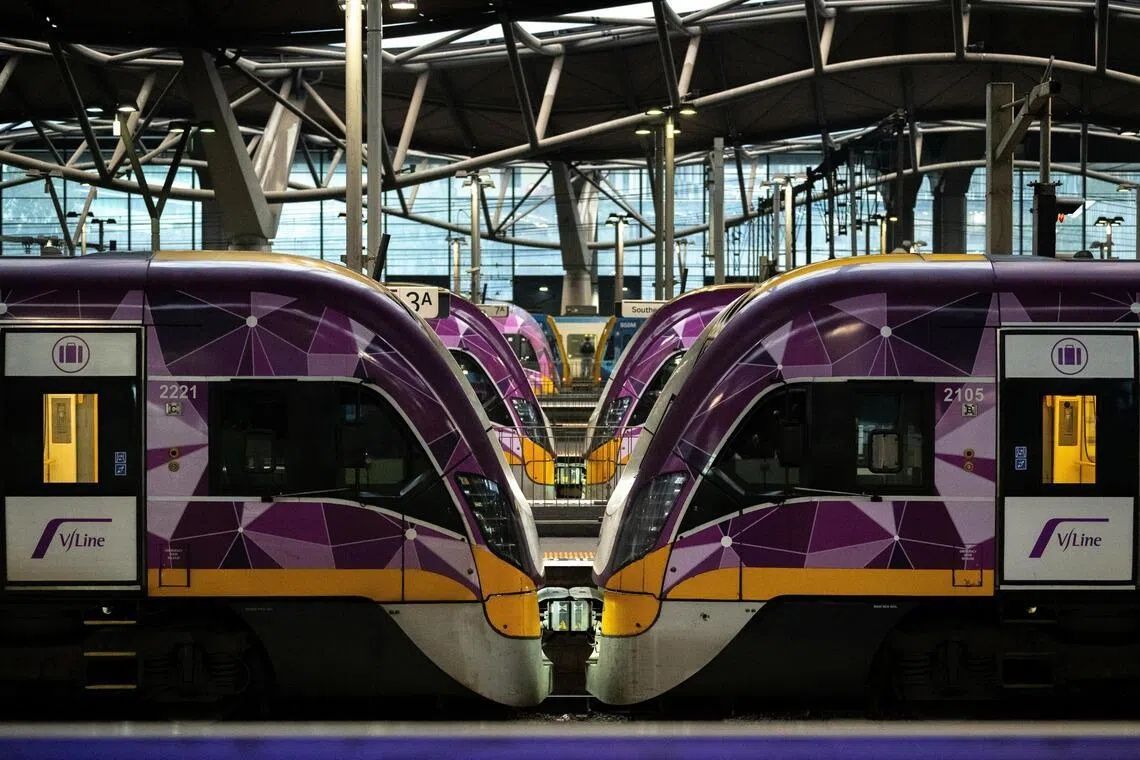
Australia's freight and passenger rail network began returning to normal operations Thursday afternoon following a sweeping Telstra Group Ltd. outage that had paralysed services the previous day across multiple states. The incident, which crippled mobile and data connectivity nationwide, left operators struggling to communicate with train drivers and forced the suspension of passenger services on lines dependent on the telecommunications provider's infrastructure. Australian Rail Track Corp., the operator managing the network across five states, signalled that staged resumption would commence later in the day once operators confirmed readiness to restart their fleets.
The outage exposed a critical vulnerability in Australia's essential services infrastructure: the heavy dependence of the rail system on a single telecommunications provider's 4G network for real-time driver communication. ARTC prioritised the restoration of high-impact routes, including metropolitan and regional services throughout New South Wales, V/Line operations in Victoria, and interstate passenger connections, signalling the cascading nature of telecommunications failures across multiple transport systems.
Communications Minister Anika Wells revealed Thursday morning that engineers had uncovered a secondary complication emerging overnight Wednesday, wherein certain calls routed directly to voicemail while some emergency calls to Triple Zero failed to connect. This second-order problem surfaced only after Telstra resolved an initial software glitch affecting the synchronisation nodes that maintain system timing. Telstra Chief Financial Officer Michael Ackland disclosed during a briefing that the timekeeper issue had initially triggered the widespread outage, with the subsequent call-routing malfunction discovered during recovery operations.
The scale of Telstra's emergency services failure proved deeply troubling. The company conducted 639 welfare checks following failed Triple Zero attempts, meaning nearly 640 Australians attempting to reach emergency services experienced connection failures during the crisis. Ackland acknowledged the gravity of the situation whilst emphasising that solutions had now been deployed to prevent recurrence, though he conceded that ongoing modifications to the network would continue as engineers worked toward a "most robust solution."
Telstra Chief Executive Vicki Brady curtailed a family vacation abroad and would return to head office Friday, underscoring the seriousness with which the company's leadership viewed the incident. Market reaction remained subdued, with Telstra shares climbing one per cent by early afternoon Sydney trading Thursday, recovering slightly from a three per cent decline the previous day as investors assessed whether the crisis would trigger regulatory action or reputational damage.
Telecommunications Industry Ombudsman Cynthia Gebert articulated broader public concern about the reliability of Australia's critical infrastructure. Residents experienced lost income, travel disruptions, and the psychological toll of unreliable emergency access during a period when connectivity serves as a fundamental prerequisite for modern life. Gebert's intervention reflected growing anxiety that telecommunications failures had become an unacceptable pattern rather than isolated incidents, with Australians increasingly questioning whether essential service providers could deliver the dependability modern society demands.
The Telstra outage represents the latest in a disturbing sequence of telecommunications failures affecting Australia's critical services. Singapore Telecommunications Ltd.-owned Optus faced widespread condemnation after an outage in September 2025 disrupted emergency service access, resulting in fatalities and exposing the lethal consequences of infrastructure fragility. That incident had occurred less than two years following a previous major Optus failure affecting millions of customers, suggesting systemic vulnerabilities rather than one-off technical mishaps. Vodafone Australia compounded these concerns when the company reported connectivity issues affecting mobile customers just the previous month.
For Malaysian and Southeast Asian observers, the Australian telecommunications crisis carries profound implications. Australia's outages demonstrate that even developed nations with sophisticated regulatory frameworks remain vulnerable to catastrophic infrastructure failures when critical systems depend excessively on single providers or single points of failure. The repeated nature of these incidents—Optus, Vodafone, and now Telstra within a compressed timeframe—suggests that competitive pressure and cost-cutting may be eroding the redundancy and resilience that essential services require.
The reliance of modern rail operations on telecommunications infrastructure creates novel interdependencies that traditional transport regulators may not have adequately addressed. When a mobile network fails, trains cannot operate safely because drivers lose communication with control centres. This reveals how digital integration, whilst enhancing efficiency, simultaneously concentrates systemic risk in ways that earlier generations of transport operators never encountered. Southeast Asian countries developing their rail networks must grapple with whether to pursue similar telecommunications-dependent models or maintain greater operational autonomy.
Australia's regulatory response will determine whether these outages trigger meaningful industry-wide reforms. Telecommunications Industry Ombudsman Cynthia Gebert's call to "get to the bottom" of the issue suggests that stakeholders expect thorough investigation and preventive measures. However, the pattern of recurrence indicates that existing regulatory mechanisms may lack sufficient teeth to compel the infrastructure investment and operational discipline necessary to prevent future failures.
The incident also highlights tensions between service integration and system resilience. Modern telecommunications networks operate at extraordinary complexity, with interdependent nodes managing time synchronisation, call routing, and network management across distributed systems. A software issue affecting one node—in this case, timing synchronisation—cascaded into national-scale paralysis, illustrating how high-density, interconnected infrastructure can amplify rather than contain failures.
For Malaysia's own telecommunications sector and transport operators, the Australian experience offers cautionary lessons about infrastructure interdependence. As the nation develops integrated smart transport systems and expands digital connectivity, maintaining backup systems and operational redundancy becomes increasingly critical. The Telstra outage demonstrates that even temporary, recoverable technical failures can impose severe economic and social costs when essential services depend critically on telecommunications availability. Planning for alternative communication protocols and backup systems should become mandatory requirements for any transport operator whose safety depends on continuous connectivity.

