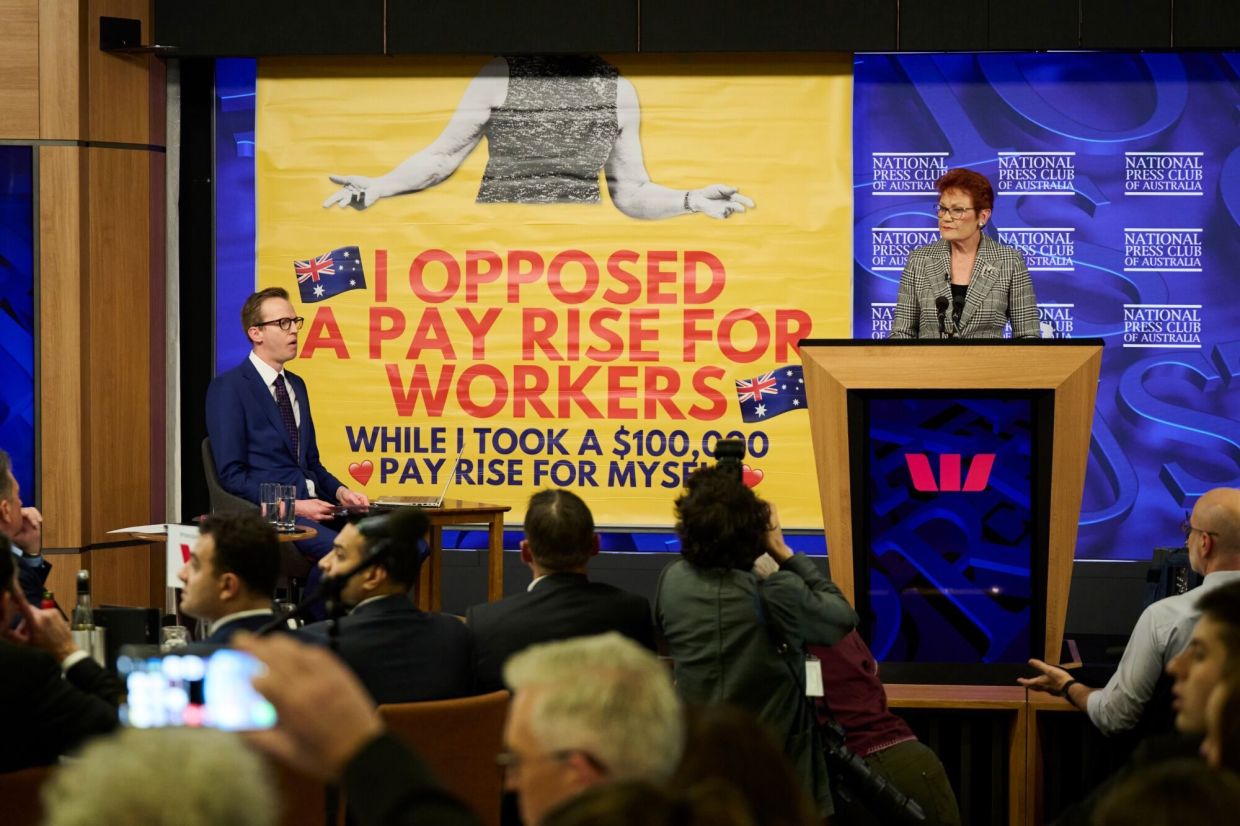
Pauline Hanson, the leader of Australia's One Nation party, has thrown down a provocative challenge to decades of established multicultural policy, declaring that the nation must transform itself into a monocultural society. Speaking at the National Press Club in Canberra on Wednesday, Hanson made her most explicit call yet for dramatically reshaping Australian identity and values, marking a significant escalation in the populist movement's messaging ahead of the next election cycle.
The hard-right politician drew a critical distinction between what she characterised as racial diversity and cultural unity. While acknowledging that Australia is "a multiracial society," Hanson insisted that citizens "must be monocultural" and "live under the one cultural umbrella." This framing attempts to separate demographic composition from cultural integration, arguing that shared values and a singular dominant culture should supersede the pluralistic approach that has guided Australian policy for more than four decades. The speech represented her first appearance at the prestigious National Press Club during her 30-year political career, suggesting the movement's growing confidence and mainstream acceptance.
Hanson's remarks explicitly connected immigration policy to Australia's severe housing affordability crisis, one of the most pressing concerns affecting working families across the country. She attributed the housing crunch to "extremely high levels of immigration," presenting population growth as incompatible with the nation's capacity to provide adequate shelter. This argument resonates with many Australians struggling with mortgage payments and rental costs that have climbed dramatically, though economists offer more complex explanations involving supply constraints, zoning restrictions, and investment demand.
The One Nation leader proposed aggressive measures to curtail migration flows, pledging to "slash" immigration numbers substantially. More contentiously, she specifically targeted individuals from "places immersed in extremism like radical Islam," signalling a return to identity-focused immigration criteria that explicitly discriminates based on religious and cultural background. Such language echoes earlier controversial political moments in Australian discourse and draws clear lines between acceptable and unacceptable migrant populations.
The timing of Hanson's remarks reflects shifting political momentum in Australian electoral politics. One Nation's polling numbers have surged considerably over the past year, accelerating particularly after the centre-right Coalition government experienced a dramatic electoral collapse in May. This suggests that large segments of the Australian electorate are receptive to the party's populist messaging and grievance-focused political framework. The political establishment's apparent vulnerability has created space for more radical voices to gain traction.
Economic pressures have provided fertile ground for One Nation's rise. Australians have endured multiple overlapping crises: resurgent inflation eroding purchasing power, elevated interest rates increasing mortgage burdens, and spiking fuel costs partly attributable to geopolitical tensions in the Iran region. These interconnected challenges have created widespread economic anxiety, particularly among working and middle-class voters who feel squeezed by circumstances beyond their control. In this environment, One Nation's simple narrative attributing complex problems to immigration and green energy policies offers emotional resonance even if the causal logic remains contested.
Prime Minister Anthony Albanese's Labor government has attempted to directly address economic hardship through targeted interventions. The administration implemented a temporary reduction in fuel excise to ease immediate transportation costs and has explored tax reform mechanisms intended to improve housing affordability. These conventional policy responses represent a fundamentally different approach to the same problems that Hanson diagnoses through the lens of cultural and demographic change.
Albanese has explicitly warned against what he characterizes as "simplistic grievance based politics," arguing that One Nation and similar movements exploit public frustration without offering substantive solutions. The Prime Minister frames the rise of hard-right populism as a symptom of an economy that has failed ordinary people, suggesting that genuine economic reform rather than cultural retrenchment represents the appropriate response. This ideological divide reflects fundamentally different diagnoses of Australia's challenges and competing visions for the nation's future direction.
The debate unfolding in Australian politics carries implications extending beyond the country's borders. Southeast Asian nations, including Malaysia, maintain significant diaspora communities in Australia and track Australian political developments carefully. Rising anti-immigration and anti-multiculturalism sentiment in Australia potentially signals shifting attitudes toward Asian migration and integration, affecting how regional citizens and governments assess their relationship with the Australian society. Furthermore, Australia's embrace or rejection of multicultural values influences the broader regional conversation about integration, diversity, and national identity across Southeast Asia.
Hanson's monoculturalism proposal also reflects a global trend of populist parties questioning established multicultural frameworks. From Europe to North America, similar movements challenge the consensus that emerged in the post-Cold War period favoring pluralistic societies and managed immigration. Australia's potential adoption of such policies could accelerate comparable movements elsewhere and reshape international conversations about migration and integration standards.
The political moment represents a genuine inflection point for Australian society. Whether Hanson's One Nation movement successfully translates current polling momentum into electoral success, or whether voters ultimately reject such stark cultural retrenchment, will substantially determine the nation's trajectory. The outcome will also influence how other democracies grappling with similar pressures from populist movements assess their own policy responses and cultural commitments.