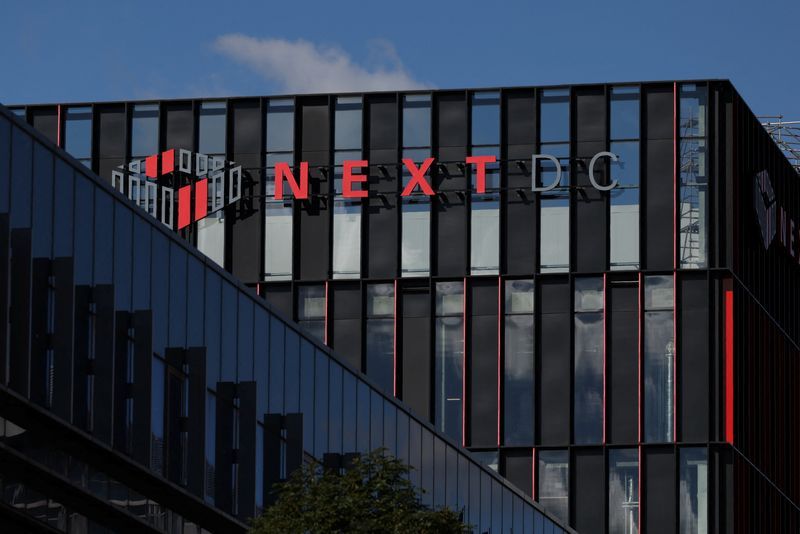
The profitability surge at Australia's leading data centre operator NextDC masks a growing resource efficiency challenge that is resonating across policymakers and communities throughout the Asia-Pacific region. The company swung to a A$82.1 million profit in the year to June from a A$60.5 million loss the previous year, with revenue climbing 16 percent and underlying earnings before interest, tax, depreciation and amortisation rising 15 percent to A$248.8 million—figures that surpassed analyst expectations. Yet these financial gains come alongside deteriorating environmental metrics that reflect the mounting strain of the artificial intelligence revolution on fundamental infrastructure systems.
The efficiency problems are most evident in NextDC's water and energy consumption patterns. The company's water usage effectiveness ratio, which measures water consumption per unit of computing output, deteriorated to 2.40 litres per kilowatt-hour from 2.25 in the preceding year. Simultaneously, its power usage effectiveness ratio, the key metric indicating how much additional electricity is required for cooling systems and supporting infrastructure beyond direct computing needs, climbed to 1.49 from 1.44. More concerning is the trajectory: both metrics have worsened consistently over the past three years, suggesting the efficiency degradation is a systemic trend rather than a temporary operational aberration.
NextDC's management attributed the rising consumption partly to operational realities inherent in expanding data centre capacity. The company explained that newly installed infrastructure requires extensive testing and commissioning of cooling systems before full information technology deployment, inevitably driving up interim resource consumption. Additionally, more rigorous data reconciliation procedures—the company conducted comprehensive validation and investigation of water records—uncovered previously undetected leaks, utility meter anomalies and discrepancies between site monitoring and utility company readings. These technical factors suggest that some historical consumption data may have underestimated the true resource requirements, though they do not fundamentally resolve the underlying efficiency trend.
The deterioration in these metrics carries profound implications extending well beyond NextDC's balance sheet. Across developed economies and emerging markets alike, water usage and energy consumption at data centres have become critical performance indicators scrutinised by legislators, regulators, environmental advocates and communities competing for scarce resources. These ratios represent quantifiable proxies for the broader environmental and infrastructure costs associated with the explosive growth in artificial intelligence and cloud computing demand. As governments weigh policy interventions and communities debate hosting data centre complexes, efficiency metrics like NextDC's directly influence public perception and regulatory decision-making.
The mounting concern has triggered policy responses globally. An expanding coalition of governments, urban authorities and independent regulators have initiated freezes on new data centre approvals, introduced construction restrictions, or implemented outright bans in certain jurisdictions. These interventions reflect deepening anxieties about electricity system strain and cost escalation, depletion of freshwater reserves in water-stressed regions, competing land use demands, and broader impacts on local communities and supply chains. The regulatory environment is shifting perceptibly toward imposing stricter conditions on data centre development.
Australia itself is at the forefront of this regulatory evolution. The federal government in Canberra is developing mandatory, nationally consistent regulatory frameworks governing multiple dimensions of data centre operations, including energy consumption standards, water management protocols and geographical location requirements. More strikingly, Australian policymakers recently proposed requiring new data centres to construct and finance additional renewable energy generation capacity to meet their electricity demands, rather than simply drawing power from the national electricity grid. Such a mandate would fundamentally alter the economics and feasibility calculations for data centre expansion, shifting financial burden and infrastructural responsibility from grid operators and communities to the facilities themselves.
NextDC operates within a competitive landscape alongside formidable rivals including AirTrunk, which is backed by the Blackstone infrastructure investment fund, and CDC, owned by the New Zealand infrastructure company Infratil. The competitive intensity is driving capacity expansion even as efficiency metrics deteriorate and regulatory scrutiny intensifies. The stock market initially responded positively to NextDC's financial performance, with shares advancing 3.3 percent by mid-session trading on Friday following the results announcement, suggesting investor confidence in the company's growth trajectory despite the environmental performance concerns.
For Malaysia and other Southeast Asian nations, NextDC's experience offers instructive lessons as the region grapples with balancing artificial intelligence infrastructure investment and economic growth against environmental sustainability and resource security. Several Southeast Asian jurisdictions are attracting data centre investment and considering supportive regulatory frameworks. The NextDC case demonstrates that strong financial returns and improving efficiency metrics do not necessarily move in tandem—rapid capacity expansion can strain both water systems and electrical grids, particularly in regions with existing infrastructure constraints or water scarcity challenges. Policymakers considering data centre development should anticipate that efficiency degradation may accompany rapid growth unless robust regulatory standards and technological investments are implemented proactively.
The efficiency challenges also underscore the capital-intensive nature of achieving meaningful improvement in data centre resource consumption. Addressing water leaks, correcting meter anomalies and reconciling data discrepancies requires dedicated investment and operational focus. More fundamentally, reducing power usage effectiveness and water usage effectiveness ratios demands technological innovation, design improvements, and potentially substantial capital expenditure. As data centre operators pursue growth, these efficiency investments may face budget prioritisation against facility expansion and capacity commissioning—creating tension between near-term growth objectives and longer-term sustainability commitments.
The NextDC results arrive amid global recognition that artificial intelligence infrastructure demands represent a meaningful component of total electricity consumption and water usage in developed economies, with projections suggesting this share will grow substantially. The company's deteriorating efficiency metrics, despite its operational scale and technical sophistication, raise questions about whether current technological approaches and operational practices can adequately manage resource consumption as artificial intelligence adoption accelerates worldwide. The regulatory response from authorities in Canberra and other jurisdictions reflects political acknowledgment that market forces alone may not generate sufficient pressure for efficiency improvements, necessitating mandatory standards and performance requirements.
Looking ahead, NextDC and its competitors face a dual challenge: sustaining profitability and capacity growth while simultaneously improving environmental efficiency metrics and accommodating increasingly stringent regulatory requirements. The company's strong financial results provide resources for investment in efficiency improvements, but regulatory frameworks like those proposed in Australia may impose constraints that limit profitable growth pathways. The resolution of this tension—between infrastructure demands, environmental limits, regulatory intervention and commercial viability—will shape data centre development patterns across the Asia-Pacific region and influence the broader feasibility and sustainability of the artificial intelligence revolution.

