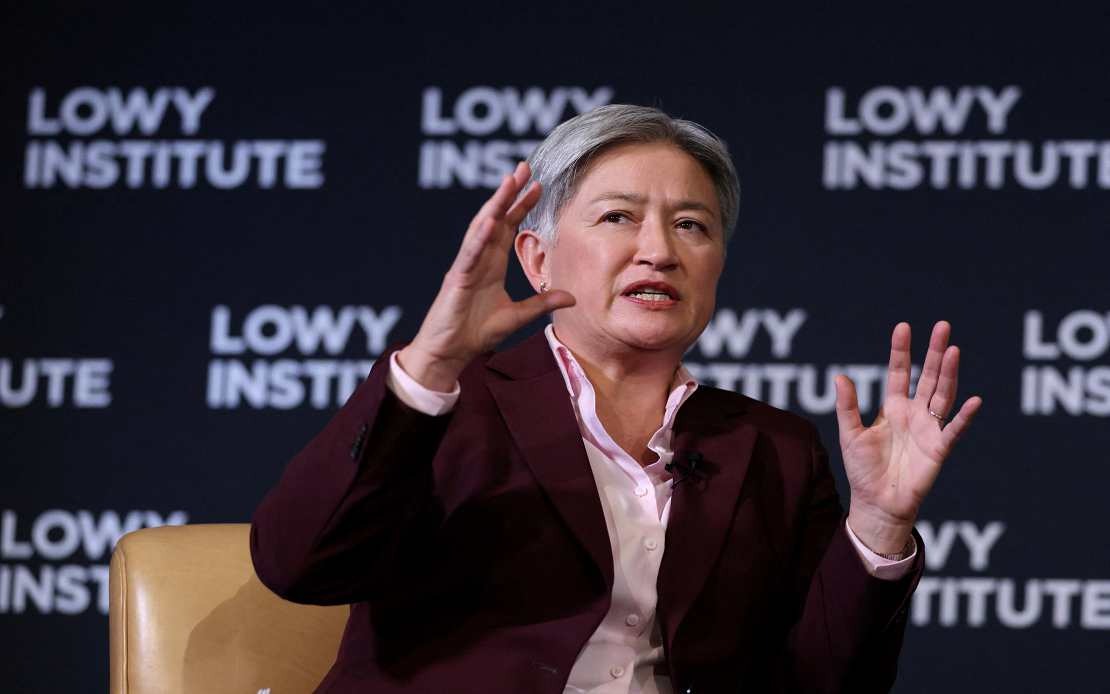
Australia's Foreign Affairs Minister Penny Wong has delivered a pointed warning against mounting calls for the country to abandon its multicultural identity, arguing that such a direction would fundamentally undermine national strength and international standing. Speaking at the Lowy Institute in Sydney on Friday, Wong articulated a forceful defence of diversity, framing the pursuit of monoculturalism as a retreat from the foundations upon which modern Australia has been built and prospered.
Wong's remarks represented a direct response to Senator Pauline Hanson, leader of the right-wing One Nation party, who publicly declared in June that Australia must transition to a monocultural society. The Foreign Minister characterised this vision as a "melancholic fantasy," emphasising that such a shift would transform Australia into a more fractious and internally divided nation. Her critique extended beyond mere domestic concern, painting the monocultural aspiration as fundamentally at odds with Australia's global interests and diplomatic objectives.
The minister's core argument centred on economic and geopolitical vulnerability. Wong contended that abandoning multiculturalism would force Australia to sever the international partnerships, trading relationships, and collaborative opportunities that have underpinned its prosperity. She articulated the risk starkly: a monocultural turn would require Australia to retreat inward, severing connections with the wider world and forfeiting the economic and strategic advantages that diversity and openness have enabled. This framing seeks to reposition the immigration debate from a security or cultural axis onto one of national competitiveness and economic self-interest.
Yet Wong's warning arrives against a backdrop of surging political momentum for the very agenda she opposes. Recent polling from YouGov Australia conducted in July reveals a dramatic shift in voter preferences, with One Nation support climbing to 26 per cent—a fourfold increase from the 6.4 per cent the party secured at the 2025 election. This surge reflects broader electoral turbulence, with support for the incumbent Labour government declining from 34.5 per cent to 28 per cent, while the opposition Coalition has fallen even more steeply from 31.8 per cent to just 20 per cent. These figures suggest a significant realignment in Australian politics ahead of the 2028 general election.
One Nation's platform directly reflects the monocultural sentiment that Wong criticises. The party has committed to drastically curtailing immigration levels, slashing foreign aid expenditure, and withdrawing Australia from multilateral institutions should it achieve power. Such policies would represent a fundamental rupture with decades of Australian foreign policy orthodoxy and would carry substantial implications for regional stability and economic integration across the Indo-Pacific. For Malaysia and other Southeast Asian nations, any Australian pivot toward isolationism would carry direct consequences for trade flows, strategic partnerships, and regional security arrangements.
The political opening that One Nation has exploited reflects genuine anxiety among Australian voters regarding immigration levels. The annual Lowy Institute poll released in June found that 55 per cent of Australians believe the total intake of migrants is excessive, representing a steady upward trend from 53 per cent the previous year and 48 per cent in 2024. This consistent growth in concern suggests that immigration scepticism is not a fleeting phenomenon but rather a durable shift in public sentiment. The data reveals that substantial portions of the electorate harbour reservations about current migration settings, creating political space for parties willing to challenge the bipartisan consensus on multicultural immigration policy.
The widening gap between elite and public opinion on immigration presents a fundamental challenge for Australia's major parties. Both Labour and the Coalition have traditionally endorsed multicultural frameworks and moderate-to-high immigration levels, yet both have experienced electoral erosion as One Nation captures voters dissatisfied with this consensus. Wong's intervention from the foreign policy establishment reflects an attempt to reframe the immigration argument around national strength rather than cultural preservation, yet this appeal may struggle to resonate with voters expressing fundamental concerns about rapid demographic change and cultural cohesion.
From a Southeast Asian perspective, Australia's potential political trajectory carries significant implications. Malaysia, Indonesia, and other regional partners depend on Australia as a stable, internationally-engaged liberal democracy committed to rules-based regional architecture. A One Nation government committed to withdrawing from multilateral institutions would disrupt the QUAD partnership, weaken AUKUS security arrangements, and potentially destabilise the broader regional balance as China capitalises on perceived Australian retrenchment. Additionally, trade relationships that have deepened across the region depend upon Australian openness to global commerce—something a monocultural, inward-looking Australia would inevitably compromise.
Wong's defence of multiculturalism also carries an implicit message about Australia's place in an increasingly Asian-oriented geopolitical landscape. Modern Australia's multicultural character has facilitated deep people-to-people connections with Asian neighbours, enhanced business networks, and provided diplomatic advantages in regional engagement. The Foreign Minister's argument suggests that retreating from multiculturalism would sever these connections precisely at a moment when Australia's regional integration remains strategically vital. Her emphasis on partnership and international cooperation implicitly acknowledges Australia's dependence on regional goodwill and economic engagement.
The political challenge facing Australia's government lies in addressing genuine public anxieties about immigration without conceding the entire debate to anti-multicultural voices. Current polling suggests that substantial portions of the electorate harbour concerns about immigration pace, integration capacity, and cultural change—concerns that are rational and deserve serious policy engagement rather than dismissal. Yet One Nation's appeal appears to rest not merely on calibrating immigration levels but on fundamentally rejecting the multicultural project itself, which represents a more radical proposition than simple policy adjustment.
Wong's intervention from the Foreign Ministry signals that the Australian government intends to defend the multicultural consensus from the foreign policy and national interest angle. This approach may prove more effective than purely cultural defences, as it connects immigration policy directly to tangible national benefits including economic performance, international standing, and strategic positioning. However, whether this reframing can arrest One Nation's momentum remains uncertain, particularly if the Labour and Coalition parties fail to address legitimate public concerns about managing rapid social change and ensuring effective integration outcomes.

