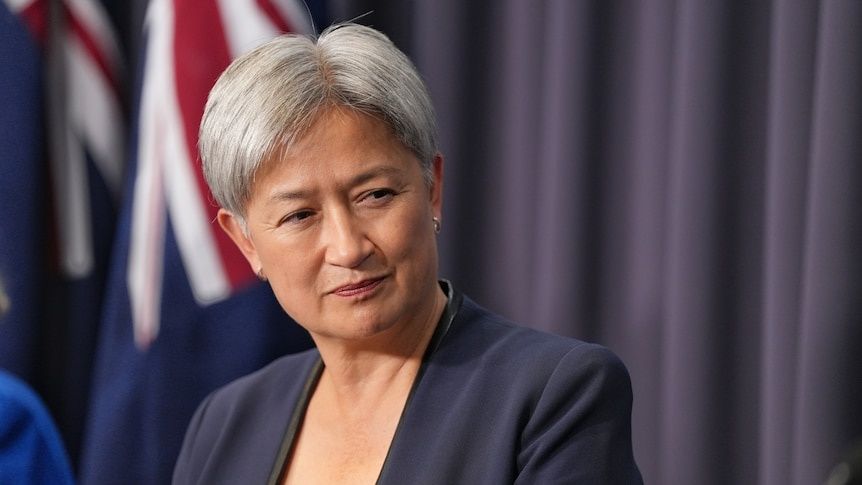
Australia's Foreign Minister Penny Wong is set to deliver a forceful rebuke of monoculturalism in a speech at Sydney's Lowy Institute on Friday, positioning multiculturalism as the foundation upon which modern Australia has been built. Wong, herself Malaysian-born and the first Asian-Australian to reach federal ministerial rank, will argue that multiculturalism is not merely a contemporary policy choice but rather the defining characteristic of Australian society throughout its modern history. Her intervention represents an escalating pushback from the government against rising support for One Nation, the far-right party that has surged to become Australia's most popular political force this year and could wield decisive influence in the 2028 federal election.
The Foreign Minister's speech carries significant weight given her personal background and ministerial portfolio. In rejecting what she describes as the "melancholic fantasy of a monoculture," Wong plans to highlight how Australia's diversity has underpinned the nation's economic resilience and international standing. Her remarks will emphasise that external and internal forces are actively working to exploit divisions within Australian society, a warning that extends beyond domestic politics to encompass geopolitical considerations. The timing of her address reflects growing concern within government circles about how nationalist sentiment could undermine Australia's capacity to maintain strategic partnerships and economic relationships in an increasingly competitive Indo-Pacific region.
Demographic realities provide substantial backing for Wong's argument. Census data reveals that approximately half of all Australians were either born overseas or have at least one parent born outside Australia, underscoring the centrality of immigration and cultural diversity to the nation's demographic and social composition. This statistical foundation suggests that monoculturalism represents not a return to historical authenticity but rather a radical rejection of the lived experience and family histories of millions of Australians. Wong intends to draw upon specific examples demonstrating how refugee communities have flourished in business ventures and sporting achievements, framing immigration not as an economic burden or cultural threat but as a source of entrepreneurial dynamism and national pride.
The rise of Pauline Hanson's One Nation presents a tangible political challenge to the government's multicultural consensus. Hanson, frequently compared to Donald Trump and Marine Le Pen for her nationalist rhetoric, has explicitly called for Australia to embrace a monoculture while simultaneously reducing international aid and re-evaluating participation in global organisations. Most controversially, Hanson drew widespread condemnation this year when she evoked the "White Australia" policy, a legislative framework that restricted non-white immigration and remained in force through much of the twentieth century. By invoking this discredited historical precedent, Hanson has signalled that One Nation's policy ambitions extend beyond immigration management to encompass a fundamental reimagining of Australian national identity along more ethnically homogeneous lines.
Wong's framing of monoculturalism as a strategic liability reflects genuine concerns about Australia's capacity to navigate an increasingly multipolar world. Middle powers like Australia depend on maintaining diverse international partnerships, access to global markets, and cultural soft power to sustain their strategic influence. A turn toward monoculturalism, Wong argues, would deliberately narrow Australia's options and sever connections that have proven economically and diplomatically valuable. The Foreign Minister will contend that those who promote divisive rhetoric for electoral gain are ultimately weakening Australia's position both domestically and internationally, undermining the very prosperity and security they claim to protect.
Prime Minister Anthony Albanese has reinforced this governmental position by emphasising that modern Australia is inherently multicultural, referencing his own Italian surname as a personal embodiment of this reality. However, Albanese has also acknowledged that "legitimate concerns" about the economy and housing crisis are driving support for far-right parties, suggesting the government recognises that addressing One Nation's rise requires confronting material anxieties alongside cultural arguments. This dual approach indicates that the Labor government is preparing significant policy adjustments on immigration even as it defends multiculturalism as a core value.
The government's immigration policy recalibration will occur without what Albanese characterises as vilification or community division, at least in rhetorical terms. The Prime Minister has stated that immigration levels, which peaked recently, will decline from their highs while maintaining national unity. This positioning attempts to thread a narrow needle: demonstrating responsiveness to genuine concerns about housing pressure and labour market conditions whilst refusing to scapegoat migrant communities or validate nativist framing of immigration as culturally threatening. The strategy reflects uncertainty about whether the government can manage public anxiety about immigration without ceding ground to One Nation's nationalist worldview.
For Malaysian and broader Southeast Asian observers, Australia's political trajectory carries significant implications. The region's middle powers depend upon Australia maintaining open, rules-based international relationships and avoiding the isolationist turns that nationalist governments often pursue. A shift toward monoculturalism in Australia could reverberate through regional institutions, trade relationships, and security arrangements that have anchored regional stability. Moreover, given Australia's substantial Malaysian and broader Asian diaspora communities, Australian political movements that invoke monoculturalism carry particular resonance for citizens with deep family and cultural ties to Southeast Asia.
The contest between Wong's multicultural vision and Hanson's monoculturalist alternative represents more than a domestic Australian debate about national identity. It reflects a fundamental disagreement about whether wealthy Western nations should embrace interdependence and cultural diversity as sources of strength or retreat into ethnic nationalism as a response to economic anxiety and geopolitical uncertainty. Wong's argument that multiculturalism has always characterised modern Australia offers a historical counter-narrative to One Nation's nostalgic invocation of a supposedly more homogeneous past. Whether this appeal to historical continuity and strategic logic can arrest One Nation's political momentum will significantly influence not only Australia's domestic trajectory but also its role within regional and global affairs throughout the remainder of this decade.

