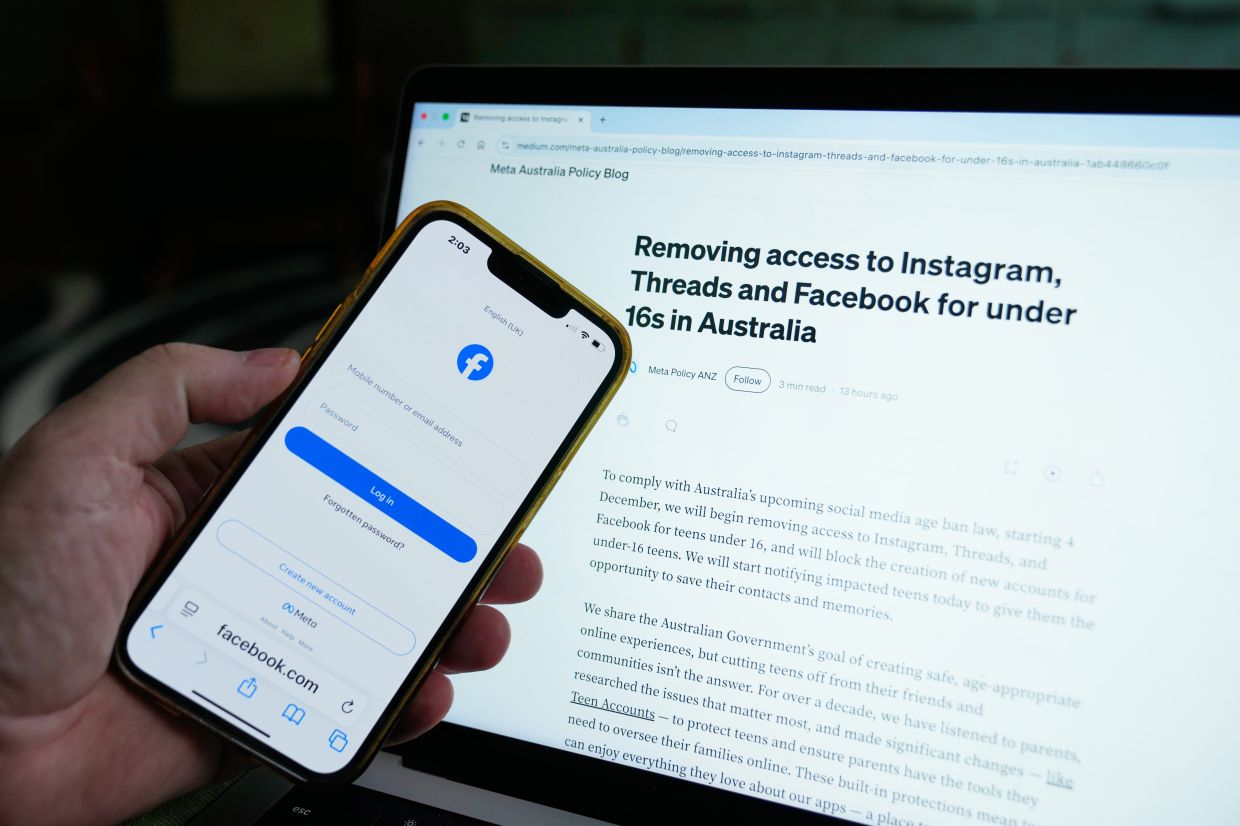
Australian Prime Minister Anthony Albanese has condemned the delay of legislative amendments that would substantially strengthen the enforcement mechanisms of the nation's child social media ban, accusing the opposition of obstructing reforms needed to protect young Australians. The government introduced the amendments to Parliament with the express aim of expanding the powers granted to eSafety Commissioner Julie Inman Grant, Australia's online safety watchdog, to prosecute the prohibition that has prevented children younger than 16 from maintaining accounts on major platforms including Facebook, Instagram, and YouTube since December 2024.
The core dispute centres on whether the amendments should have passed immediately or faced closer scrutiny. The proposed changes would furnish Inman Grant with authority to demand documents and detailed information from digital platforms regarding their compliance efforts with the child exclusion mandate—a significant expansion beyond her current capacity to request information alone. According to Albanese, this distinction matters fundamentally because delays allow platforms to systematically delete evidence of their enforcement failures. "It is outrageous the delay because what the eSafety Commissioner has said very clearly is that that will allow the platforms to go and just delete a whole lot of material," Albanese told the Australian Broadcasting Corporation, explaining that immediate passage would have established a clear date from which the commissioner could issue demands and subsequently levy penalties against non-compliant companies.
However, the conservative Liberal Party opposition and the minor Australian Greens party moved on July 2 to refer the draft legislation to an eight-week Senate inquiry, a procedural manoeuvre that has stalled the government's timetable. This delay assumes particular significance because Albanese's Labour Party lacks a Senate majority, meaning the government cannot simply override parliamentary obstruction through numbers alone. The opposition's strategy reflects broader scepticism about whether the amendments represent genuine reform or merely window-dressing on a flawed approach to online child safety.
Beyond the demand for documents, the amendments would grant Inman Grant authority to requisition information from third-party providers, particularly age assurance technology vendors, permitting her to independently verify claims made by platforms about barriers preventing minors from circumventing the ban. This investigative capacity addresses a persistent gap in the current legislative framework, enabling the commissioner to test whether platforms' technical safeguards genuinely function as advertised or whether they constitute performative compliance measures designed to appear rigorous without substantive effect.
The financial penalties framework would also undergo significant revision. The amendments propose doubling the maximum fine to A$99 million (approximately RM276.56 million) for platforms that demonstrably fail to undertake reasonable measures to exclude children. This escalation reflects growing frustration with platform non-compliance, though it has attracted criticism from unexpected quarters. Greens Senator David Shoebridge, who fundamentally opposes the social media ban itself, questioned the logic of escalating penalties that authorities have never actually deployed. "Doubling penalties that they've never used doesn't seem to me to be a meaningful measure," Shoebridge told Sky News Australia, advancing the counterintuitive argument that enforcement capacity matters more than theoretical penalty levels.
The opposition Liberal Party, meanwhile, has adopted a different tack, arguing that the amendments do not go far enough. Opposition communications spokesperson Senator Sarah Henderson characterised the original legislation as "a social media ban which is failing; a half-baked law which is poorly designed, which was rushed, which is badly implemented and which is not working." Rather than supporting the government's proposed amendments as incremental improvement, Henderson insists that substantially tougher measures are required, suggesting the Senate inquiry should demand more comprehensive reforms before proceeding to a vote.
Parliament had originally enacted the initial legislation with overwhelming bipartisan support in 2024, granting targeted platforms more than twelve months to implement the exclusion requirements. Yet the dramatic gap between initial compliance reports and subsequent enforcement data has undermined confidence in the framework's effectiveness. The government initially reported that platforms had removed, deactivated, or restricted accounts belonging to more than 5 million children following the ban's December implementation. Nevertheless, when the eSafety Commissioner's office conducted follow-up analysis in March 2025, the results proved deeply troubling: approximately seven in ten children who maintained accounts on restricted platforms on December 10 when the ban took effect continued to access Facebook, Instagram, Snapchat, and TikTok.
This persistent non-compliance prompted Commissioner Inman Grant to signal in April that legal action against Facebook, Instagram, YouTube, and other major platforms remained under active consideration, with allegations that these companies were not demonstrating reasonable effort to exclude minors. By contrast, Inman Grant expressed satisfaction with compliance progress from X, Kick, Reddit, Threads, and Twitch, suggesting that enforcement approaches vary significantly in effectiveness across different platform ecosystems. Communications Minister Anika Wells subsequently confirmed that monthly progress reports from the eSafety Commissioner since March had revealed stagnation rather than improvement in platform compliance rates.
The Australian situation carries particular significance for Southeast Asian and broader regional policymakers who have been closely monitoring the ban's implementation as a potential model for their own child protection frameworks. Countries ranging from Thailand to Singapore have considered or begun implementing comparable restrictions on youth social media access, making Australia's enforcement challenges directly relevant to regional policy development. The apparent ease with which young Australians continue to circumvent technical and administrative barriers raises fundamental questions about whether age-gating social media represents a viable policy instrument or merely symbolic legislation that generates compliance theatre without substantive protective outcomes.
The Senate inquiry's eight-week timeline means that a decision on whether to enhance the eSafety Commissioner's enforcement powers will not materialise until mid-September 2025 at the earliest. This temporal gap creates a practical advantage for platforms seeking to minimise regulatory exposure—as Albanese noted, the delay permits deletion of evidence and the creation of procedural ambiguity around enforcement authority. The political mathematics of the Senate inquiry underscore a broader pattern in Australian politics where minority government status in the upper house enables determined opposition minorities to reshape the legislative agenda through procedural mechanisms rather than direct votes. For Malaysian observers monitoring international approaches to social media regulation, Australia's experience demonstrates that legislative intent and actual enforcement capacity represent distinct challenges requiring careful attention.

