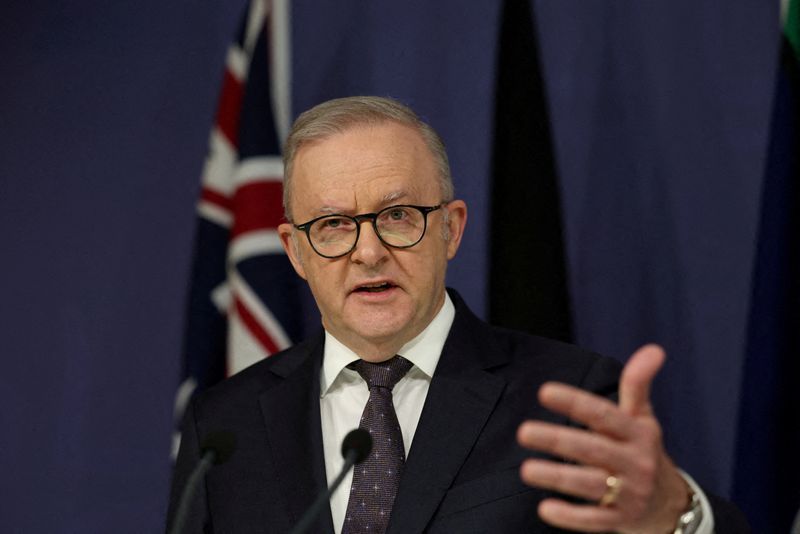
Australia is moving to create a dedicated government office tasked with managing artificial intelligence standards and ensuring coordinated policy responses across all ministries. The newly formed "Office of AI" will operate from within the Department of the Prime Minister and Cabinet, marking what officials describe as a world-first approach to centralizing AI governance at the highest levels of state administration. Prime Minister Anthony Albanese is set to formally announce the initiative during a major policy address in Sydney, signalling the government's determination to treat AI regulation as a matter of strategic national importance rather than allowing it to develop piecemeal across different sectors.
The creation of this office reflects a fundamental shift in how Australian policymakers intend to approach technological governance. Until this point, the nation's regulatory response to artificial intelligence has been fragmented, with individual agencies addressing AI-related issues within their own remits without a cohesive overarching framework. Albanese is expected to draw parallels to how previous Australian governments successfully managed the emergence of transformative technologies, citing the coordinated approach taken to civil aviation in the 1920s and genetic science in the 1990s. This historical framing positions the new AI office as part of a long-standing tradition of government intervention when emerging technologies require careful stewardship.
By centralizing AI regulation within the Prime Minister's department, the government aims to provide both private sector investors and technology firms with a clearer pathway through the approval process. Officials contend that a streamlined compliance regime, coordinated across all relevant agencies, will enhance Australia's attractiveness as a destination for major AI development investments and data centre expansion. This argument reflects a broader competition among developed nations to position themselves as leaders in the artificial intelligence economy, with governments concerned that excessive or unclear regulation might drive investment and talent to more permissive jurisdictions.
The announcement arrives at a critical juncture for Australian policymakers. The nation currently lacks any comprehensive, AI-specific legislation, instead relying on a patchwork of existing privacy laws, consumer protection statutes, and a voluntary ethical framework for AI development. This regulatory vacuum has left gaps in oversight as the technology proliferates across healthcare, finance, employment, and government services. The establishment of a dedicated office suggests recognition that voluntary measures and existing general laws are insufficient to manage the particular challenges that artificial intelligence presents.
Concerns about AI's societal impact have intensified across Australia in recent months, with stakeholders raising alarms about several interconnected risks. The prospect of widespread job displacement as AI systems automate routine cognitive and administrative tasks has generated anxiety among workers and unions. Simultaneously, the environmental costs of expanded data centre operations have become increasingly visible, particularly regarding water consumption in regions already facing drought pressures. There are also mounting concerns about how AI systems might compromise personal privacy, infringe intellectual property rights, and create new security vulnerabilities as the technology becomes embedded in critical infrastructure.
The energy demands of large-scale AI systems represent a particular concern for Australia, a nation with significant renewable energy resources but also established coal interests and communities dependent on traditional power generation. Data centres required for AI training and deployment consume enormous quantities of electricity and water, raising questions about sustainability and whether the economic benefits of hosting such facilities align with environmental commitments. These tensions will likely occupy much of the Office of AI's early work as it develops standards and approval processes for new data centre projects.
Safety and security dimensions of artificial intelligence also feature prominently in the policy discussions driving this new office. AI systems make decisions that increasingly affect citizens' access to services, creditworthiness assessments, employment opportunities, and even interactions with law enforcement. Without clear standards and oversight mechanisms, the risk of algorithmic bias, discrimination, and security breaches rises substantially. The government's decision to elevate AI governance to the Prime Minister's department signals that officials view these issues as touching fundamental questions of fairness, national security, and social cohesion.
The timing of this announcement also reflects Australia's efforts to establish itself as a credible participant in global AI governance discussions. As nations including the European Union, United States, and Singapore develop their own regulatory frameworks, Australia risks being perceived as a laggard if it continues operating without clear standards. By moving proactively to establish coordinated oversight, the Australian government can position itself at international forums as a responsible actor committed to both innovation and accountability, potentially influencing how global AI standards eventually develop.
For Southeast Asian countries including Malaysia, the Australian approach offers instructive lessons about how developed nations are responding to AI governance challenges. As the region considers its own regulatory frameworks, the centralized model being adopted in Australia provides one template for coordination across agencies and sectors. The explicit effort to balance investment attraction with effective oversight also reflects tensions that emerging economies in the region will face as they develop their own AI strategies and regulatory responses.

