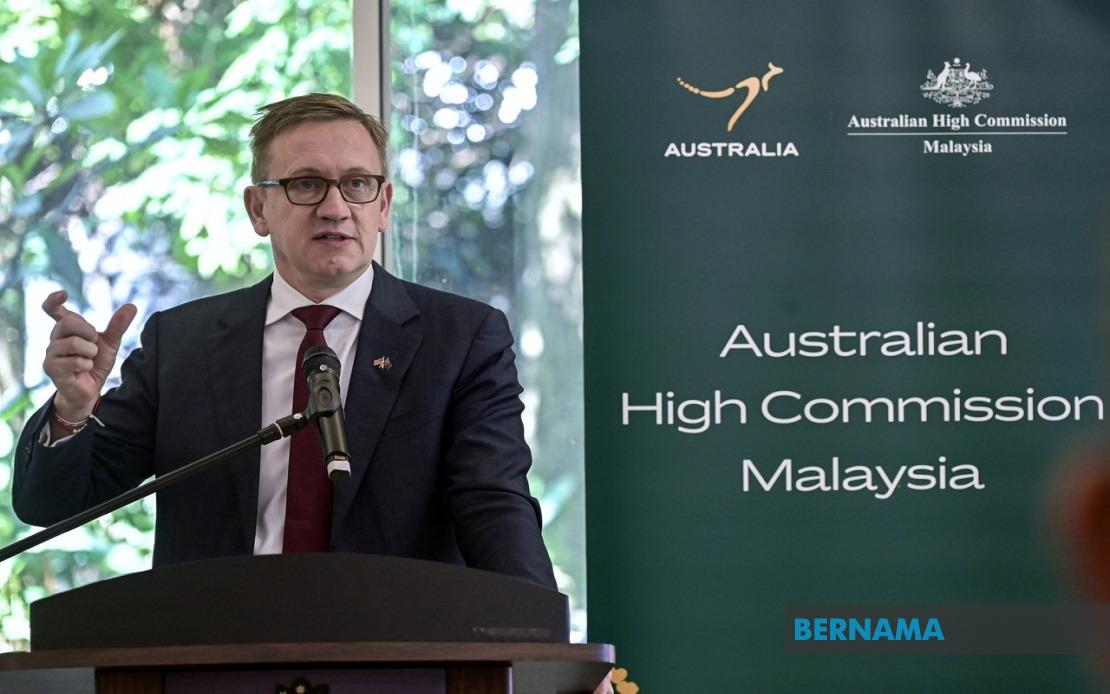
Australia has taken a significant step to expand educational opportunities for Malaysian students by launching the Australia Awards-Malaysia Semester Programme, a fresh scholarship initiative designed to enable larger numbers of young Malaysians to undertake portions of their tertiary studies at Australian institutions. The scheme, unveiled at the Australian High Commission in Kuala Lumpur, represents part of a broader strategic effort to cement bilateral ties through human capital development and cultural exchange.
Officiating the programme launch, Australian Assistant Minister for International Education Julian Hill characterised the initiative as emblematic of Australia's sustained dedication to fostering deeper connections between the Malaysian and Australian people. By creating pathways for Malaysian students to gain direct experience of Australian university life and research environments, Hill explained, the scheme aims to cultivate a generation of individuals who will serve as informal ambassadors, carrying their Australian educational experiences back to Malaysia and maintaining lifelong bonds between the two societies. This approach targets the intangible but consequential dimensions of international relations, recognising that enduring bilateral partnerships are built on personal relationships and mutual understanding among citizens.
The significance of this educational nexus cannot be overstated. Hill drew attention to the historical depth of Australia-Malaysia educational engagement, noting that over half a million Malaysians have previously studied in Australia. Many of these graduates have returned home to pursue careers in Malaysia, yet Hill suggested they invariably retain intellectual and emotional connections to their Australian experiences. These returnees function as organic bridges between the two countries, influencing everything from professional standards and best practices to consumer preferences and cultural attitudes. By systematising and expanding such exchanges through formal scholarship programmes, Australia aims to institutionalise what was previously a more organic process.
The mutual nature of educational cooperation remains paramount to Australia's strategic vision for the relationship. Hill emphasised that Australia views successful bilateral engagement as fundamentally reciprocal, and he expressed hope that Australian students would increasingly choose to enrol at Australian university branch campuses operating in Malaysia. Programmes such as the New Colombo Plan and semester exchange arrangements are positioned as mechanisms to facilitate this two-way flow. This emphasis on reciprocity reflects Australia's understanding that sustainable partnerships require equilibrium in flows of people, ideas, and investments, rather than one-directional benefit.
Beyond cultural enrichment, Australian officials present at the launch—including High Commissioner Danielle Heinecke and representatives from leading Australian universities—framed the programme as instrumental to advancing shared economic interests. Hill specifically highlighted the capacity of Australian universities operating in Malaysia to function not merely as teaching institutions but as research hubs capable of generating applied knowledge addressing challenges relevant to both nations. Medical science, renewable energy development, mining technology, and agricultural innovation were identified as priority domains where Australian and Malaysian researchers might collaborate, pooling expertise to tackle problems of mutual concern. This framing positions education as foundational infrastructure for bilateral economic cooperation.
The inaugural cohort participating in the scheme numbers sixteen Malaysian students who began their Australian studies following the July intake earlier this year. These pioneering participants are enrolled at one or more of three Australian university branch campuses currently participating in the pilot: Curtin University Malaysia, Monash University Malaysia, and the University of Wollongong Malaysia. Notably, all four Australian university branch campuses in Malaysia, including Swinburne University of Technology Sarawak Campus, have been extended invitations to join the programme, suggesting room for expansion as the initiative matures. This staged approach allows administrators to accumulate data on outcomes, identify operational challenges, and refine processes before scaling.
Financial support provided through the Australia Awards-Malaysia Semester Programme extends across the full spectrum of costs confronting international students. Beneficiaries receive funding for international airfare, residential accommodation, living allowances, visa processing fees, travel insurance, and ancillary expenses. By eliminating or substantially reducing financial barriers, the scheme aims to ensure that educational access is determined by academic merit and motivation rather than family affluence. This focus on accessibility reflects Australia's stated commitment to preventing financial hardship from blocking talented individuals from pursuing international education—a principle with particular resonance in Southeast Asia, where income inequality remains pronounced.
The Australian government has committed to funding the programme for an initial four-year cycle aligned with its standard budget appropriation timeline. Hill's expressed optimism that the scheme might eventually transition to permanent status suggests confidence in the model's success, though he refrained from guaranteeing long-term continuation. This conditionality reflects fiscal realities, but it also creates incentives for participating Malaysian institutions and students to demonstrate tangible returns on investment, whether measured through graduate employment outcomes, research contributions, or strengthened institutional partnerships.
From Malaysia's perspective, the programme carries strategic implications for human capital development and regional positioning. Malaysian students gaining exposure to Australian educational practices, research methodologies, and professional cultures accumulate valuable comparative knowledge. Upon return to Malaysia, such individuals can influence institutional practices and introduce international benchmarks in their respective fields. Furthermore, expanded networks linking Malaysian institutions to Australian counterparts create conduits for research collaboration, faculty exchanges, and technology transfer. For Malaysia's higher education sector, partnerships with established Australian universities—many of which rank prominently in global university rankings—enhance institutional prestige and provide learning models for quality assurance and curriculum development.
The launch also underscores Australia's strategic pivot toward Southeast Asia as a region of heightened importance. Education-focused initiatives represent comparatively cost-effective instruments of soft power and long-term influence, generating goodwill and deepening relationships in ways that survive changes in political leadership or shifts in official relations. By investing in Malaysian students' experiences and development, Australia positions itself as a constructive regional partner invested in Southeast Asian prosperity and institutional capacity. This approach complements Australia's broader economic, security, and diplomatic engagement strategies across Southeast Asia.
Looking ahead, the success of the Australia Awards-Malaysia Semester Programme will likely hinge on the experiences of pioneer cohorts and their subsequent contributions to bilateral ties. Positive outcomes—evidenced through successful academic achievement, demonstrated professional impact, and enduring engagement with Australia—would strengthen the case for programme expansion and longer-term funding commitment. Conversely, challenges in student adjustment, employment transition, or relationship maintenance would necessitate programme refinement. Either way, the initiative represents an institutional acknowledgment that durable partnerships between nations are constructed through patient, methodical investment in the people who will shape future relations.

