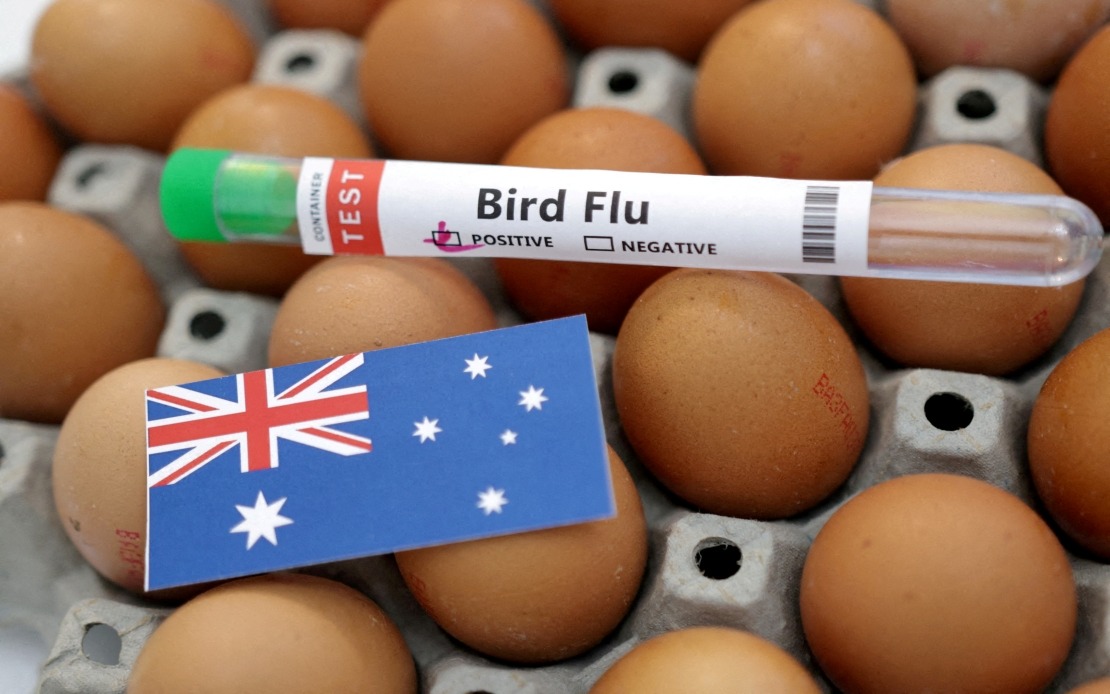
Australia has entered a new phase in its battle against avian influenza, with authorities confirming the first detection of the highly pathogenic H5N1 strain in local, non-migratory wildlife on the mainland. The discovery came when a greater crested tern found dead near the coastal town of Robe in South Australia tested positive for the deadly virus. Agriculture Minister Julie Collins announced the finding on Friday, acknowledging both the seriousness of the development and the effectiveness of Australia's detection systems in identifying the threat swiftly.
The significance of this case extends beyond a simple count of confirmed infections. Until this detection, all previously recorded instances of H5N1 on Australian soil involved migratory bird species originating from the sub-Antarctic region, suggesting the virus arrived through seasonal migration patterns from distant sources. The identification of the virus in a resident seabird species signals a troubling shift, indicating that the pathogen may now be circulating among Australia's permanent avian population rather than merely passing through during migration seasons. This represents a more entrenched threat to local ecosystems and wildlife management efforts.
The greater crested tern that triggered the alert offers important clues about transmission patterns. As a coastal species with specific habitat preferences and feeding behaviours, the tern's infection suggests the virus has adapted to local environments and wildlife communities. Researchers are now pursuing investigative avenues to determine how precisely the bird contracted the strain, with Minister Collins indicating that scientists are actively exploring the transmission pathway. Understanding whether the infection stemmed from contact with migratory species, contaminated food sources, or other vectors remains crucial for predicting future spread patterns and implementing targeted containment measures.
South Australian authorities have moved quickly to establish enhanced surveillance protocols in the region surrounding Robe, where the infected tern was discovered. This proactive approach reflects standard pandemic response procedures, where initial detections prompt expanded monitoring networks to identify additional cases before they multiply undetected. The enhanced surveillance framework enables authorities to track the virus's movement through local bird populations and identify geographic hotspots requiring intervention. For regional wildlife managers, this escalated monitoring also provides opportunities to gather epidemiological data that may inform long-term management strategies across Southeast Asia and the Pacific.
The announcement revealed that authorities have now confirmed a total of twelve cases on the Australian mainland, substantially more than the single case initially reported. In addition to the greater crested tern, testing has identified two further H5N1-positive birds in South Australia and one additional case in Western Australia. This cluster of detections within a compressed timeframe suggests either rapid spread through local populations or, more likely, intensified testing efforts that have uncovered previously undetected infections. The geographic distribution spanning multiple states underscores the virus's capacity to spread across considerable distances, whether through bird movement or environmental transmission routes.
Australia's positioning as the final inhabited continent to experience confirmed H5N1 cases in wildlife carried significant implications for global disease tracking and biosecurity assessments. The Australian mainland had maintained this distinction until June, when the first detection occurred in Western Australia, transforming the continent's disease landscape. That initial case established the virus's capability to reach even the most geographically isolated regions, challenging assumptions about natural barriers to pathogen spread. The subsequent discoveries reaffirm that isolation, while beneficial, offers incomplete protection against emerging zoonotic threats in an interconnected world.
Minister Collins characterised the situation with measured reassurance, describing the detection as concerning yet unsurprising while simultaneously praising Australia's biosecurity architecture for identifying the infections. This framing reflects a calculated communications strategy balancing transparency with public confidence maintenance. Authorities acknowledge that H5N1 arrival in mainland wildlife populations was a probability rather than a possibility, given the virus's demonstrated capacity to spread globally and adapt to new hosts. The strength of Australia's detection systems proved instrumental in identifying cases rapidly, enabling swift response implementation before widespread circulation could occur.
For Southeast Asian nations, Australia's experience offers critical lessons in preparedness and response coordination. The region has emerged as a focal point for avian influenza surveillance, with countries including Malaysia, Indonesia, and Thailand maintaining robust monitoring programmes given historical transmission events. Australia's detection protocols, scientific infrastructure, and interagency communication mechanisms provide a comparative benchmark for evaluating regional capabilities. As migratory bird species traverse routes connecting Australia to Southeast Asian wetlands and coastal zones, understanding how the virus spreads through these shared ecosystems becomes increasingly vital for coordinated disease management across the Indo-Pacific region.
The pathway investigation underway represents a critical scientific undertaking with implications extending beyond Australian borders. Determining how the greater crested tern contracted H5N1 will illuminate transmission mechanisms previously unobserved in Australian wildlife contexts. Whether investigations reveal direct contact with infected migratory birds, contamination through shared food or water sources, or entirely novel transmission routes will shape forecasting models for virus behaviour in temperate marine ecosystems. This intelligence feeds into broader international disease surveillance networks, enhancing collective understanding of H5N1 epidemiology and enabling more targeted prevention strategies across vulnerable regions.
Biosecurity officials face the complex challenge of containing the virus without causing unnecessary disruption to wildlife populations and tourism-dependent economies. South Australia's coastal towns rely substantially on birdwatching and nature tourism, sectors potentially affected by public anxiety surrounding avian influenza. Authorities must communicate risks accurately while avoiding sensationalism that could damage regional economies or trigger inappropriate culling responses. The enhanced surveillance approach allows precise geographic targeting of response measures, minimising broader restrictions while maintaining public health protections. Such nuanced strategies demonstrate the sophisticated biosecurity thinking now essential for managing zoonotic threats in complex ecosystems where human interests, wildlife conservation, and disease control intersect.
The Australian government's characterisation of the H5N1 detection as evidence of biosecurity system effectiveness reflects an important perspective on disease surveillance in modern contexts. Rather than viewing H5N1's arrival as a security failure, authorities frame rapid detection as validation of monitoring infrastructure investments. This conceptual reframing acknowledges that preventing all pathogen entry remains impossible given globalisation and ecological interconnections; the genuine measure of biosecurity capability lies in swift identification and response implementation. For Malaysian policymakers and regional stakeholders, this perspective offers valuable guidance in evaluating investment priorities and success metrics within their own disease surveillance frameworks.

