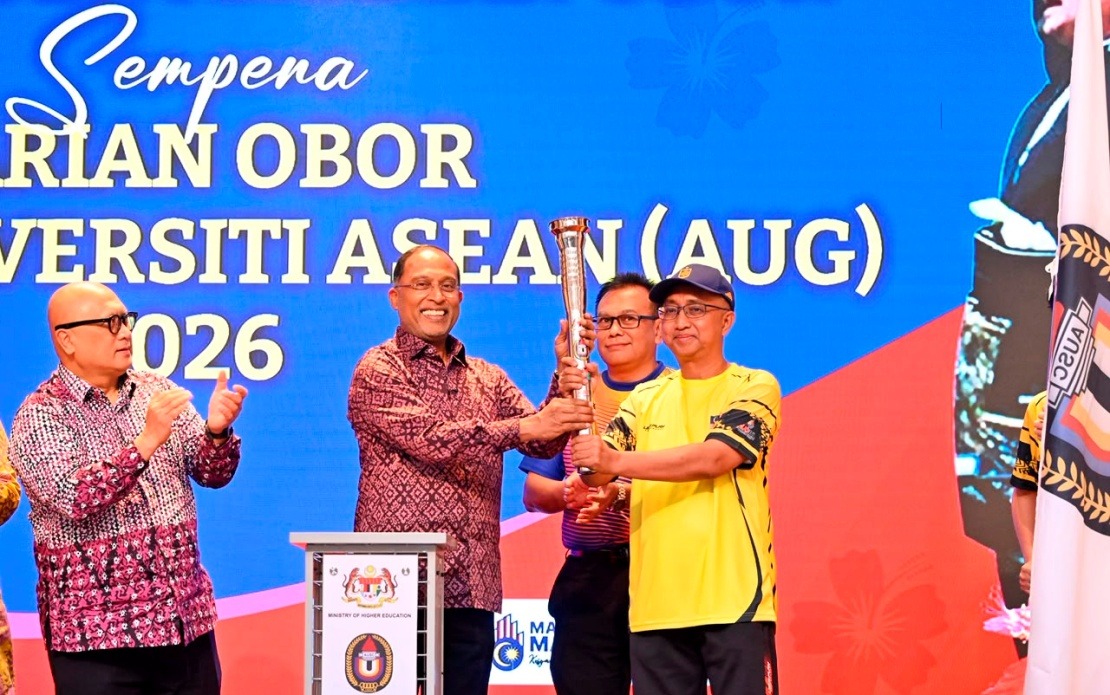
The ASEAN University Games torch relay commenced at the Ministry of Higher Education headquarters in Putrajaya on Wednesday, serving as a powerful symbolic moment for Malaysia's preparation ahead of one of Southeast Asia's premier university sports competitions. The ceremonial handover, overseen by Higher Education Minister Datuk Seri Dr Zambry Abd Kadir and conducted during the ministry's monthly assembly, represents an official transition from administrative planning into the competitive phase of the Games.
Datuk Seri Dr Zambry entrusted the flame to Prof Dr Mohammad Ismail, Deputy Vice-Chancellor of Universiti Malaysia Kelantan and chief of Malaysia's contingent, emphasising the deeper meaning behind the symbolic gesture. The minister's remarks underscored a critical message for the national athletic delegation: they carry not merely personal ambitions but the collective pride of Malaysia on the regional stage. His exhortation to "carry the Malaysian torch and the torch of victory" framed the forthcoming competition as both a sporting endeavour and a patriotic responsibility requiring excellence and dedication.
The initial torch journey involved four accomplished university athletes who embody Malaysia's competitive strength across diverse disciplines. Long jumper Andre Anura Anuar and shot putter Nani Sahirah Maryata both competing for Universiti Putra Malaysia represent Malaysia's traditional field athletics prowess, whilst karate exponent Thevendran Kaliana Sundram from Universiti Pertahanan Nasional Malaysia and taekwondo athlete Lee Hui Yee from Sultan Salahuddin Abdul Aziz Shah Polytechnic showcase the nation's depth in martial sports. Their selection as torch bearers acknowledges both their athletic credentials and their roles as ambassadors of university sports excellence.
The inaugural torch run followed a deliberate route through Putrajaya's government precinct, departing from the Higher Education Ministry and traversing to the Ministry of Tourism, Arts and Culture before returning to MOHE. This geographical routing underscores the multi-ministerial coordination essential for hosting such a major regional event. The subsequent phases of the torch relay will extend into Malaysia's premier universities—Universiti Kebangsaan Malaysia, Universiti Putra Malaysia, Universiti Pertahanan Nasional Malaysia, Universiti Malaya, and Universiti Teknologi MARA—creating grassroots engagement and fostering institutional pride across the nation's higher education sector.
AUG 2026 represents a significant showcase for Malaysia's capacity to organise and host international sporting events of considerable scale. Scheduled for December 10 to 19, the Games will assemble approximately 4,669 participants drawn from 11 ASEAN nations, comprising 2,849 athletes and officials alongside 700 referees and technical personnel and an additional 920 volunteers supporting operations. This infrastructure requirement reflects the complexity of coordinating a multinational event whilst maintaining competitive standards and participant welfare across multiple venues and disciplines.
The geographic distribution of competition venues across Shah Alam, Kuala Lumpur, Serdang, and Bangi demonstrates Malaysia's strategic utilisation of existing sporting infrastructure and university facilities across the Klang Valley region. Rather than concentrating all events in a single location, this dispersed arrangement maximises the utilisation of purpose-built university sports complexes whilst distributing logistical demands across multiple host sites. The thematic umbrella of "HOLISTIC.EXCELLENCE" frames the Games beyond mere athletic competition, emphasising comprehensive development of student-athletes as whole persons balanced across academic and sporting pursuits.
Nineteen sports across diverse categories will provide comprehensive opportunities for university athletes to compete at regional level, creating pathways for emerging talent whilst enabling established champions to test themselves against peer competitors. This breadth of sporting disciplines ensures representation across traditional and emerging sports, catering to the diverse athletic interests present within ASEAN's university populations. For Malaysian competitors, the regional stage offers crucial preparation for international university sports competitions including World University Games and continental championships.
The torch run carries particular significance for Malaysian universities' athletic communities, which have traditionally performed strongly in ASEAN university competitions. The symbolic gesture reinforces institutional investment in student athlete development and positions higher education institutions as primary vehicles for cultivating sporting excellence. For Malaysian readers, the Games represent an opportunity to witness their peers competing against regional counterparts, fostering regional sporting camaraderie and identifying emerging talents who may transition into senior national competitions.
The timing of the torch run launch during August provides a five-month preparation window enabling final team finalisation, tactical preparation, and logistical refinement. This extended lead time permits participating universities to intensify training programmes, address any infrastructural requirements, and coordinate smooth integration of volunteer personnel into operational frameworks. For Malaysian contingent planners, this timeline enables comprehensive scouting of ASEAN competitors whilst finalising tactical approaches across each sport.
Beyond pure athletic measurement, AUG 2026 represents Malaysia's commitment to the ASEAN community through sports diplomacy and cultural exchange. University athletes function as informal ambassadors, building interpersonal relationships with peers across the region that transcend political and economic boundaries. These human connections cultivated through shared sporting experience often endure into professional careers, strengthening people-to-people bonds that underpin regional stability and cooperation.
For Malaysian higher education institutions, hosting AUG 2026 provides significant infrastructure and capability-building benefits. Universities invested as competition venues gain experience managing large-scale international events, developing expertise in volunteer coordination, event management, and sports logistics that enhance institutional capacity for future endeavours. The Games catalyse infrastructure improvements and facility upgrades that provide lasting benefits to Malaysian student communities beyond the competition period.
As the torch relay extends through Malaysia's university network in coming months, it will galvanise student support and community engagement, transforming AUG 2026 from abstract administrative concept into tangible reality. Each university's participation in hosting the torch symbolises institutional commitment to the Games' success, mobilising athletic departments, student unions, and administrative personnel toward common objectives. This grassroots engagement ultimately determines whether AUG 2026 achieves its aspiration as a defining moment for ASEAN university sports and Malaysian sporting excellence.

