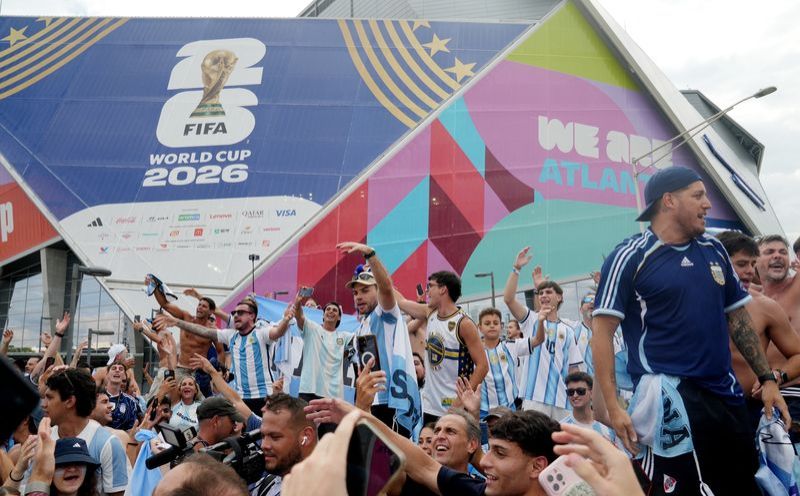
Atlanta, traditionally synonymous with hip-hop culture and American football, temporarily exchanged its usual soundtrack for the chants and anthems of global football supporters during a transformative month of Women's World Cup matches. The southeastern hub witnessed Cape Verde's maiden tournament appearance, England's dramatic late victory over DR Congo, and Argentina's remarkable comeback wins that ultimately carried them to the final—a series of performances that showcased the unpredictable beauty of international football and created indelible moments for the international visitors and local residents who packed the stadiums.
The city's involvement in hosting the tournament originated from an unexpected email invitation in July 2017, when the host committee leadership received a call to action from organisations pursuing hosting rights. Dan Corso, president of Atlanta's host committee, recalled the swift decision-making process that followed: the city's leadership needed little persuasion to pursue this opportunity. Atlanta's existing sporting infrastructure and proven ability to manage large-scale international events positioned it as an attractive candidate, but the city's recent emergence as a credible football market proved decisive in the selection process.
The foundation for Atlanta's football credibility had been laid just years earlier with the establishment of Major League Soccer franchise Atlanta United in 2017. The club's immediate success—including winning the MLS Cup in 2018—dramatically elevated the sport's profile within the region. Playing their home matches at the shared Atlanta Stadium alongside the National Football League's Falcons, the franchise developed into an attendance powerhouse, consistently leading MLS in fan turnout. This sustained popularity demonstrated that Atlanta residents had developed genuine passion for football, making the city a logical choice for a marquee tournament.
Arthur Blank, the ownership figure behind both Atlanta United and the Falcons, further strengthened the city's football infrastructure through a transformative $50 million investment in the recently completed U.S. Soccer National Training Center located just outside the metropolitan area. This facility symbolised the city's commitment to becoming the epicentre of American football development. Corso emphasised how these cumulative factors—the successful franchise launch, consistent attendance records, and the presence of U.S. Soccer's national centre—created a compelling narrative when FIFA evaluated host cities, signalling that Atlanta possessed both infrastructure and demonstrated community interest.
Atlanta's hosting credentials extended well beyond football. The city has become a veteran of major sporting events, having staged the 1996 Olympic Games and earning selection to host the Super Bowl for the fourth time in 2028. While the city notably missed hosting any matches during the inaugural 1994 World Cup, the current tournament represented a triumphant return to global football prominence after a three-decade interval. For local leadership, bringing one of international sport's largest spectacles back to Atlanta carried symbolic weight—validation of the city's growth and development since the Olympic Games.
The tournament's immediate impact reverberated across Atlanta's social fabric and economy. More than 544,000 fans attended eight competitive matches, including three knockout-stage fixtures, with Wednesday's semi-final between Argentina and England delivering particular drama through Argentina's comeback performance. The accompanying Fan Fest celebration, spanning 19 days, attracted over half a million additional attendees, creating sustained economic activity and cultural engagement throughout the host period. The volunteer mobilisation demonstrated grassroots enthusiasm, with more than 2,000 Atlantans and Georgians committing their time to event operations, suggesting authentic community investment beyond mere commercial spectacle.
Beyond the immediate tournament experience, the event's organisers designed lasting community benefits through strategic infrastructure development. A new mini-pitch emerged as a collaborative initiative involving the host committee, the Metropolitan Atlanta Rapid Transit Authority (MARTA), and Soccer in the Streets, a local programme providing free football access to children regardless of economic circumstances. This facility represents the tournament's tangible legacy—a permanent asset intended to democratise participation in a sport historically concentrated among more affluent demographics. The emphasis on youth development and equitable access reflects growing recognition within the sports industry that hosting obligations extend beyond entertainment to community development.
Corse articulated the broader aspirational impact beyond physical infrastructure, suggesting that the tournament functioned as a discovery mechanism for visitors unfamiliar with contemporary Atlanta. The global crowd's exposure to the city's multicultural character and dynamic urban environment potentially seeds future visitation and investment. International visitors who experienced the stadium atmosphere and street celebrations may carry impressions that reshape perceptions of the American South, particularly regarding diversity and cosmopolitan sophistication—qualities that Atlanta's leadership has actively cultivated and promoted.
Looking forward, Atlanta's football ambitions have accelerated considerably. The host committee has already established timelines for complementary football development: a new National Women's Soccer League franchise will commence operations in 2028, the same year Atlanta hosts the Super Bowl. This parallel expansion in women's professional football reflects broader conversations across world sport about gender parity in investment and visibility. More ambitiously, the city is positioning itself as a candidate to host the 2031 Women's World Cup, seeking to build institutional knowledge and existing relationships into a larger hosting opportunity.
For Southeast Asian observers and Malaysian football stakeholders particularly, Atlanta's transformation offers instructive lessons about how strategic infrastructure investment, franchise development, and major tournament hosting can reshape a city's sporting culture relatively rapidly. The acceleration from hosting a club competition to bidding for World Cup status within a decade demonstrates that emerging football markets can compress development timelines through coordinated public and private investment. Malaysia's own aspirations in football governance, facility development, and potentially hosting regional or international tournaments might benefit from studying how Atlanta's leadership prioritised consecutive initiatives—building a successful franchise, securing national federation resources, and then leveraging these foundations toward major events.
The economic spillover effects from tournament hosting extend beyond immediate matchday revenue. The improved training facilities, expanded volunteer networks, established relationships with international football federations, and enhanced brand positioning as a sports destination create compound returns over subsequent years. Atlanta's emergence demonstrates how World Cup hosting, properly executed, transcends temporary spectacle to catalyse longer-term positioning as a football development hub within a nation's sports ecosystem.

