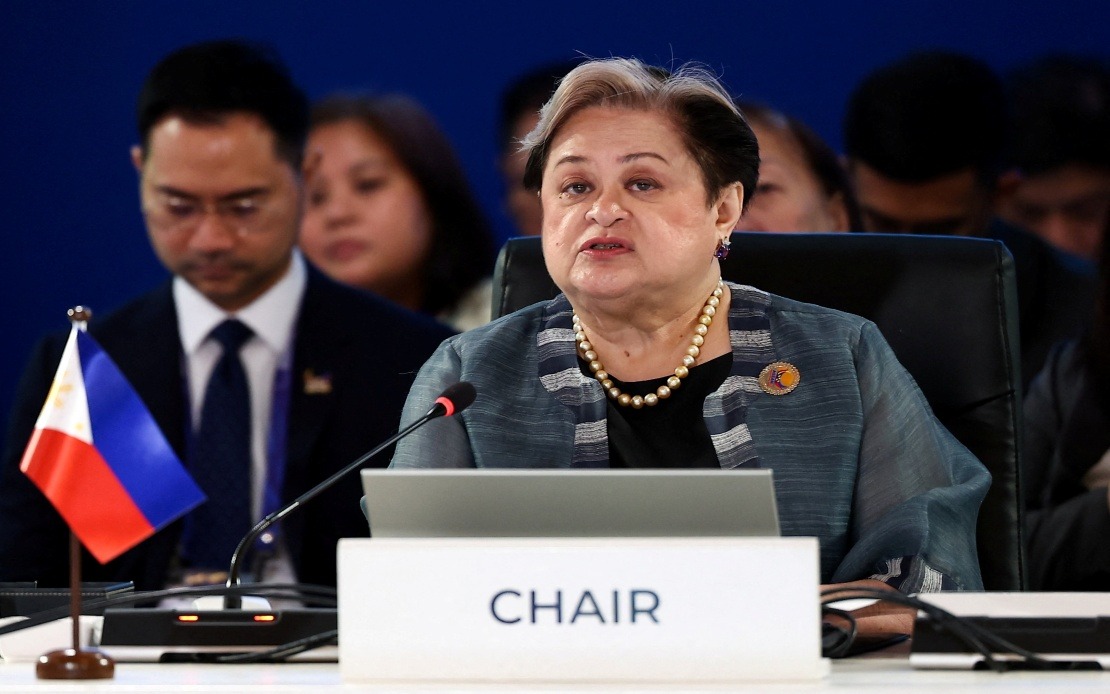
The Association of Southeast Asian Nations has endorsed plans for a major humanitarian intervention in Myanmar, with Philippine Foreign Affairs Secretary Ma. Theresa Lazaro set to spearhead the mission before the year concludes. In her capacity as the ASEAN chair's special envoy, Lazaro committed to directing the initiative, which has garnered backing from all key stakeholders involved in Myanmar's political resolution process. The announcement signals renewed diplomatic momentum within the regional bloc to address the deepening humanitarian crisis plaguing the Southeast Asian nation.
Lazaro's commitment emerged following intensive diplomatic engagement in Thailand, where she held consecutive meetings with her regional counterparts and Myanmar representatives over July 12 and 13. These gatherings represented a critical phase in ASEAN's efforts to maintain dialogue channels with Myanmar despite the country's fractured political landscape. The meetings reflected the bloc's determination to keep engagement alive even as the situation on the ground remains highly volatile and complicated by competing claims to legitimacy.
The proposed humanitarian mission carries considerable significance for the region, as it represents ASEAN's most concrete operational initiative regarding Myanmar in recent months. According to statements from the Philippine Department of Foreign Affairs, the mission aims specifically to broaden the delivery of humanitarian assistance to communities in urgent need across Myanmar's various conflict zones. The precise geographical scope and operational modalities remain under discussion, but officials emphasised that the framework has already achieved consensus among all relevant parties, a notable achievement given the fractious nature of Myanmar's stakeholder landscape.
During meetings with Myanmar Foreign Minister U Tin Maung Swe, Lazaro focused discussions on implementing the Five-Point Consensus, ASEAN's foundational roadmap for Myanmar's political normalisation. The Five-Point Consensus, adopted in 2021, comprises key commitments including cessation of violence, dialogue facilitation, provision of humanitarian assistance, and engagement with Myanmar's neighbours. Lazaro reinforced ASEAN's position that Myanmar remains fundamentally integral to the regional organisation's mission and future, underscoring the bloc's commitment to inclusion rather than isolating the military-dominated administration.
The meetings also covered Myanmar's self-styled 100-day peace initiative and efforts to combat transnational organised crime, issues that extend beyond political considerations to encompass practical security and social stability concerns affecting the broader Southeast Asian region. ASEAN foreign ministers collectively reaffirmed that the Five-Point Consensus framework remains the essential foundation for addressing Myanmar's multifaceted crisis. This consensus, despite obvious strains, demonstrates that ASEAN members continue to prioritise collective engagement over individual approaches that might fragment the bloc's influence.
Particularly notable was the gathering's status as the first in-person engagement between ASEAN foreign ministers and Myanmar's government representative since 2021. This meeting itself carries symbolic weight in Myanmar's diplomatic trajectory, representing a deliberate reconnection after years of strained relations following the military takeover in February 2021. The fact that dialogue resumed in Thailand, a neighbouring country with its own complicated relationship with Myanmar, underscores ASEAN's careful choreography of regional diplomacy and the importance of neutral ground in these sensitive negotiations.
On the second day of consultations, Lazaro held separate talks with representatives from Myanmar's ethnic armed organisations and the National Solidarity and Peacemaking Negotiation Committee. These discussions focused on promoting an inclusive national political dialogue encompassing all significant political and armed actors within Myanmar. The emphasis on inclusivity reflects international understanding that durable solutions require participation from Myanmar's complex ecosystem of ethnic minorities, armed groups, civil society representatives, and competing power centres.
Feedback from these stakeholder meetings proved encouraging, with all parties reportedly demonstrating openness toward dialogue processes while emphasising the critical importance of careful preparation before formal negotiations commence. This careful sequencing approach, prioritising groundwork before formal talks, reflects lessons learned from previous failed mediation attempts throughout the region and internationally. The willingness of diverse and historically antagonistic groups to affirm commitment to dialogue, even conditionally, suggests that space for diplomatic progress exists despite the conflict's intensity.
For Malaysia and the broader Southeast Asian region, this humanitarian mission initiative holds several implications worth considering. Myanmar's internal conflict generates refugee flows, cross-border security challenges, and regional instability that affects neighbouring nations economically and socially. A successful humanitarian mission could alleviate acute suffering while reinforcing ASEAN's credibility as a meaningful actor in regional crisis management. However, the mission's success will depend on securing unfettered access to conflict zones and cooperation from all armed parties, conditions that remain uncertain given the fragmented military landscape.
The initiative also reflects ASEAN's struggle to balance multiple imperatives: maintaining relationships with the military administration, engaging opposition elements, supporting humanitarian needs, and preserving organisational unity. This balancing act grows increasingly precarious as Myanmar's conflict deepens and international pressure on ASEAN intensifies. The Philippines' leadership through Lazaro places specific diplomatic responsibility on Manila to navigate these treacherous waters while maintaining ASEAN's consensus-based decision-making approach.
Implementing the humanitarian mission by the fourth quarter of 2026 presents a tight timeline for mobilising resources, securing access agreements, and coordinating complex logistics across Myanmar's contested territories. Success will require sustained political will from ASEAN members and genuine cooperation from Myanmar's military authorities, who control most territory but face increasing pressure from ethnic armed organisations and anti-military forces. The mission's ultimate impact will depend not only on delivering immediate humanitarian assistance but on whether it strengthens conditions for meaningful political dialogue leading toward reconciliation.
Looking forward, this initiative represents both ASEAN's continuing commitment to Myanmar and the bloc's acknowledgment that the status quo remains untenable. The humanitarian mission can serve as a practical confidence-building measure, demonstrating that dialogue and cooperation remain possible even amid ongoing conflict. For Malaysia and other ASEAN members, supporting this mission reinforces the principle that regional collective action, while imperfect, offers better prospects than fragmented national responses to Myanmar's ongoing humanitarian emergency.

